
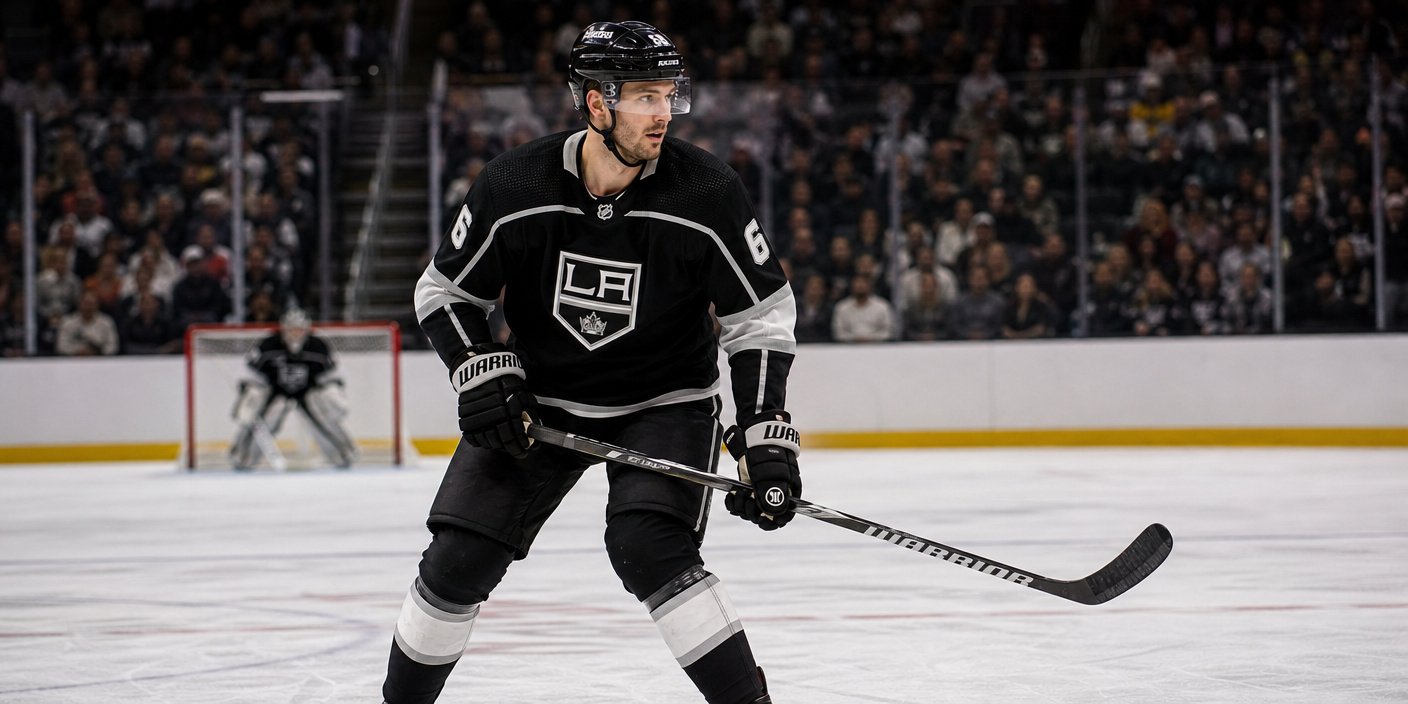
The National Hockey League has officially cracked down on the Los Angeles Kings’ blue line, announcing that defenseman Brian Dumoulin has been fined $5,000—the maximum amount permitted under the terms of the Collective Bargaining Agreement (CBA)—following an incident involving Ottawa Senators defenseman Jordan Spence during their November 21 contest. This disciplinary action serves as a stern reminder of the league’s ongoing emphasis on player safety and the strict enforcement of rules regarding excessive use of the stick.
The Incident: Examining the Cross-Check
The play in question occurred during the high-paced matchup between the Kings and the Senators on November 21. During a scramble for position, Dumoulin was assessed for his actions against Spence, specifically categorized as cross-checking. While physical play is a hallmark of the sport, the Department of Player Safety (DOPS) distinguishes between standard defensive engagement and infractions that cross the line into recklessness.
In this instance, the DOPS determined that the force and placement of the stick against Spence warranted the maximum financial penalty allowed for a minor infraction of this nature. The league reviews these incidents using multiple camera angles to evaluate intent, impact, and potential for injury. The decision to levy the maximum fine signals that the league viewed the play as preventable and unnecessary, regardless of the game-flow circumstances.
Dissecting the Collective Bargaining Agreement Penalty
For casual fans, a $5,000 fine may seem negligible given the multi-million dollar contracts standard in the NHL. However, the significance of this penalty extends beyond the dollar amount. Under the current CBA, $5,000 is the ceiling for a fine following a non-major penalty. Because the league hit the absolute limit, it sends a message that the infraction was serious enough to occupy the highest tier of discretionary discipline.
Furthermore, fines in the NHL function similarly to a ‘strike’ system. While this incident does not automatically result in a suspension, it establishes a disciplinary record for Dumoulin. If he were to be involved in another incident in the near future, the DOPS will reference this fine during their review process to determine if a repeat offender status should be applied, which could lead to significantly heavier sanctions, including multi-game suspensions and forfeited salary.
Tactical Impact: What This Means for the Kings
The Los Angeles Kings are currently navigating a competitive stretch of their season, where defensive stability is paramount. The loss of Dumoulin in any potential future disciplinary proceedings would be a significant blow to the team’s depth. As a veteran defenseman, Dumoulin provides the kind of experience and consistency that coaching staffs rely on during high-pressure minutes.
Beyond the immediate lineup concerns, this fine forces a conversation within the locker room regarding discipline. Coaching staffs frequently utilize league-mandated fines as teaching moments to reinforce the importance of ‘stick on puck’ defense rather than ‘stick on body’ interference. For the Kings, the challenge lies in maintaining their physical identity without drawing the ire of officials or the Department of Player Safety, especially as the season moves toward the playoff-push months where penalties become increasingly costly.
The Role of the Department of Player Safety
The NHL’s Department of Player Safety, led by officials tasked with monitoring and policing dangerous play, has faced intense scrutiny over the years regarding consistency. By issuing the maximum fine to Dumoulin, the league is reinforcing its current stance: cross-checking is an area of emphasis. Recent trends show the league is attempting to lower the incidence of stick infractions that can lead to long-term injuries.
This specific ruling acts as a deterrent. By punishing the incident, the league is effectively telling all players that the specific mechanics used by Dumoulin—the angle of the check, the point of contact, and the force applied—are unacceptable. The goal is to alter player behavior in real-time, encouraging defensive players to use their skates and positional angling rather than stick force to separate opponents from the puck.
Future Outlook and Strategic Adjustments
As the season progresses, the scrutiny on defensive maneuvers will only intensify. With the NHL prioritizing player health and injury prevention, players like Dumoulin must adapt to a tightening standard of officiating. This incident serves as a pivot point for the Kings’ defensive corps. Moving forward, the team will need to ensure that their physical approach remains within the bounds of the rulebook. The financial hit to Dumoulin is, in a sense, a lesson paid for by the player to ensure the team avoids more damaging consequences, such as power plays for opponents or potential suspensions, in the future.
FAQ: People Also Ask
How is the $5,000 fine amount determined by the NHL?
The $5,000 figure represents the maximum allowable fine for a player under the current Collective Bargaining Agreement (CBA) when the incident does not reach the threshold for a suspension. This is a capped amount, ensuring consistency across the league regardless of the player’s individual salary.
Does this fine impact the Kings’ salary cap?
No. Fines levied by the Department of Player Safety are paid into the Players’ Emergency Assistance Fund. These payments do not count against the team’s salary cap, nor do they affect the player’s earnings in a way that impacts the team’s cap space.
Can Brian Dumoulin appeal this fine?
While players have the right to challenge disciplinary actions through the NHL Players’ Association (NHLPA), appeals are rarely successful unless there is a clear case of mistaken identity or if the incident was completely mischaracterized in the official report. In cases of standard cross-checking fines, players typically accept the ruling to move past the distraction.
Why was this play considered a ‘maximum’ fine incident?
The ‘maximum’ designation indicates that the NHL Department of Player Safety reviewed the play and determined it to be at the highest severity level for a fineable offence. This often takes into account the player’s history, the force of the hit, and the specific danger posed to the opponent, in this case, Jordan Spence.