
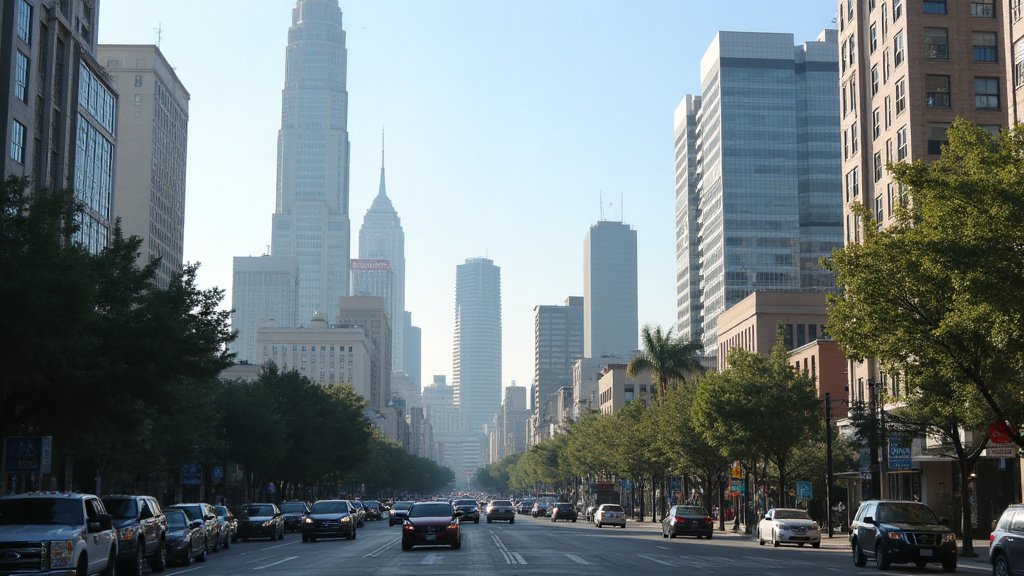
The early morning tranquility of Downtown Los Angeles was sharply interrupted on November 20, 2026, when a 4.2 magnitude earthquake struck the city center, sending residents and commuters into a state of immediate, high-alert response. Centered near the densely populated Financial District, the seismic event occurred at approximately 8:14 a.m. local time, according to data provided by the United States Geological Survey (USGS). While the earthquake was classified as moderate, its shallow depth of approximately 7.2 miles amplified the intensity of the shaking, which was felt as far away as the San Fernando Valley and parts of coastal Orange County.
Key Highlights
- Magnitude and Location: A 4.2 magnitude seismic event was recorded at 8:14 a.m. PT on November 20, 2026, with the epicenter located directly beneath the Downtown Los Angeles Financial District.
- Infrastructure Response: Los Angeles Metro rail services experienced temporary automated safety stoppages, leading to slight delays during the peak morning commute, though no structural failures were reported.
- Seismic Data: The USGS and the Southern California Seismic Network (SCSN) characterized the event as a strike-slip fault movement, common for the region, with no immediate threat of a major aftershock sequence.
- Safety Assessment: Los Angeles emergency management teams conducted rapid inspections of older masonry buildings in the historic core, reporting only minor cosmetic cracks and dislodged architectural debris.
Shaken Foundations: Navigating the November 20th Tremor
The jolt, which lasted roughly 15 seconds, served as a stark reminder of Los Angeles’ precarious geological position atop a web of complex fault lines. As the ground shifted, the immediate priority for city officials and first responders was the verification of structural integrity across the skyline, home to some of the most advanced engineering in the world.
The Anatomy of the Event
According to the Caltech Seismological Laboratory, the 4.2 event was the result of stress release along a smaller, localized strike-slip fault segment. Unlike the massive thrust faults capable of producing catastrophic “megathrust” earthquakes, these localized slips are relatively common in the Los Angeles basin. However, because the epicenter was localized so near the dense urban core of Downtown LA, the vertical and lateral acceleration was significant enough to trigger widespread “stop-and-drop” protocols in office high-rises and residential towers.
Transit and Infrastructure Resilience
The immediate aftermath saw a synchronized response from public infrastructure. Los Angeles Metro systems immediately engaged automated “earthquake detectors” integrated into the rail signaling network. This system is designed to halt trains the moment seismic waves exceed a specific threshold to prevent derailments. While this kept commuters safe, it resulted in a ripple effect of delays across the B and D lines, causing significant congestion during the morning rush hour. Engineering teams were deployed within minutes to inspect elevated track supports and tunnel portals, confirming by 9:30 a.m. that no significant structural compromise had occurred.
The Psychology of Urban Readiness
For residents of Downtown LA, the event reopened conversations regarding personal and structural preparedness. While the city has made aggressive strides in seismic retrofitting for older buildings over the last decade, a 4.2 magnitude tremor creates a unique psychological impact in a high-density vertical environment. Many office workers in the Financial District reported the “sway” of skyscrapers—a design feature intended to absorb energy. While functionally effective, the sensation of tall buildings oscillating is a disorienting experience that underscores the persistent tension of living in a major seismic zone.
Looking Ahead: Preparedness in the Modern Age
The event of November 20, 2026, was not a catastrophe, but it was an essential stress test. Urban planners and seismologists are now analyzing the sensor data to better understand how the local soil composition—which varies significantly across the Downtown basin—amplified the shaking. The city’s Department of Building and Safety has pledged to release a comprehensive report by the end of the week, detailing the performance of structures built under different seismic code eras. This data will be instrumental in prioritizing the next phase of voluntary and mandatory retrofitting programs.
FAQ: People Also Ask
1. Was this earthquake part of a larger fault system?
Yes, this tremor occurred on a smaller, secondary strike-slip fault that is part of the larger Los Angeles fault complex. While it released local stress, it is not believed to be a precursor to a larger event on the San Andreas Fault.
2. Is it safe to be in high-rise buildings in Downtown LA after this?
Yes. Engineers confirm that the modern skyscrapers in Downtown LA are designed with flexible frames to dissipate seismic energy. The shaking felt by occupants is actually a sign that the building is functioning as designed.
3. Why did the earthquake feel stronger than a 4.2?
Because the epicenter was very shallow (roughly 7 miles deep) and located directly beneath the urban core, the energy had less distance to travel through the earth’s crust, resulting in more intense “ground motion” felt by residents and workers.
4. Where can I find official emergency reports?
Residents are encouraged to monitor the official channels of the Los Angeles Emergency Management Department and the USGS “Did You Feel It?” portal, which collects community-reported data to create accurate shakemaps.