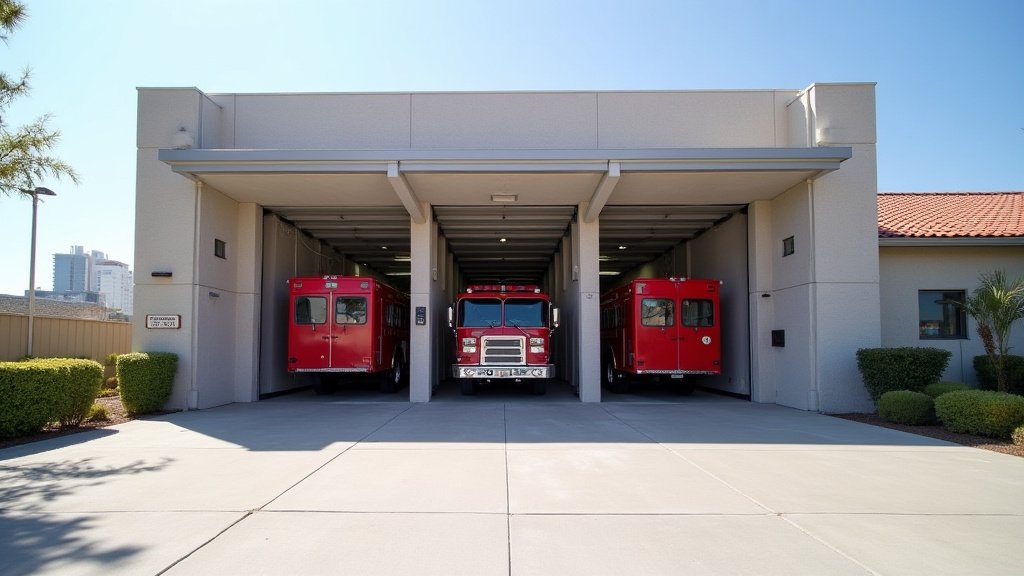
Early Friday morning, residents across the Los Angeles basin were startled awake as a 4.2-magnitude earthquake centered near the city of Commerce rattled the region. The seismic event, which occurred in the early hours, served as a potent reminder of the volatile geological landscape upon which Southern California is built. While the tremor was widely felt across the metropolitan area, the Los Angeles Fire Department (LAFD) moved quickly to initiate standard damage assessment protocols, confirming by dawn that there were no reports of injuries or significant structural compromises.
Key Highlights
- Magnitude and Location: The 4.2-magnitude earthquake originated near Commerce, California, with tremors felt across a wide radius of the Los Angeles basin.
- Emergency Response: The Los Angeles Fire Department immediately enacted standard earthquake protocols, conducting tactical surveys to ensure public safety.
- Impact Assessment: No injuries or structural damage have been officially reported to authorities as of the latest update.
- Seismic Context: The event serves as a critical checkpoint for local infrastructure, testing the resilience of current seismic building codes in the region.
Analysis: Seismic Resilience in the LA Basin
While a 4.2-magnitude event is classified as a light-to-moderate earthquake, its proximity to the densely populated and industrial hub of Commerce necessitated immediate attention from emergency services. The Los Angeles Fire Department’s (LAFD) response was swift, deploying units to survey critical infrastructure and residential areas. This rapid mobilization is standard procedure in a city where seismic readiness is woven into the fabric of urban management.
The Mechanics of the Commerce Tremor
Geologists monitoring the United States Geological Survey (USGS) data identified the earthquake as having a focal depth that contributed to its wide perceptibility. Even at a 4.2 magnitude, the shallow nature of many faults in the Los Angeles basin can cause significant surface shaking. The city of Commerce sits in an area with complex fault systems, and this specific incident highlights the persistent, low-level tectonic grinding that characterizes the region. Unlike larger events that cause catastrophic failure, this quake provided a functional stress test for the area’s infrastructure, proving that modern retrofitting efforts are performing as expected.
Building Codes and Infrastructure Safety
One of the primary reasons for the lack of structural damage during this incident lies in the evolution of California’s building codes. Following the devastating 1994 Northridge earthquake, the state implemented some of the most rigorous seismic safety regulations in the world. Modern construction in the Commerce area—a hub for logistics, distribution, and manufacturing—must adhere to strict standards designed to withstand precisely the kind of lateral shaking experienced on Friday. Buildings constructed within the last two decades are engineered to be flexible rather than rigid, allowing them to absorb energy and prevent the shear failures that once plagued older, masonry-heavy structures.
The Historical Context of Southern California Faults
The Los Angeles basin is crisscrossed by a network of blind thrust faults, which are subterranean fractures that do not break the surface, making them difficult to map and predict. The Commerce area is particularly close to the Puente Hills Thrust Fault system, a major structure that has been the subject of extensive study by seismologists. This fault system is capable of producing much larger earthquakes, which is why even a moderate 4.2-magnitude event triggers such a robust reaction from municipal agencies. The quake serves as a “teachable moment” for local emergency management, providing fresh data on how energy propagates through the basin’s sedimentary layers.
Psychological Impact and Preparedness
Beyond the physical movement of the earth, the event highlights the “earthquake fatigue” that often affects long-time residents of Los Angeles. In a region where moderate shaking is a recurring reality, the tendency to normalize seismic activity can sometimes lead to complacency. However, experts from the California Governor’s Office of Emergency Services (Cal OES) stress that every event, regardless of magnitude, should be used as a prompt to check “go-bags,” secure heavy furniture, and review family communication plans. The fact that this quake occurred in the early morning hours—when many residents were asleep—further underscores the importance of being prepared for seismic events at any time of day or night.
Looking Ahead: The Big One Resilience
While scientists maintain that this specific earthquake does not necessarily signal an imminent larger event, it remains a reminder of the “Big One” scenario that looms over the scientific community’s long-term forecasts. Preparedness initiatives continue to focus on hardening the region’s power grid, water distribution lines, and telecommunications infrastructure. The success of the response to this 4.2-magnitude event suggests that while the city remains vulnerable to large-scale geological forces, the ongoing investment in infrastructure resilience is providing a crucial buffer against the day-to-day realities of life on the Pacific Plate.
FAQ: People Also Ask
Was this earthquake related to the ‘Big One’?
According to seismologists, there is no evidence that this 4.2-magnitude earthquake is a precursor to a larger event. Earthquakes of this size occur frequently in California and are generally considered independent events.
Why did the earthquake feel stronger in some areas than others?
Perceived shaking intensity depends on several factors, including the distance from the epicenter, the depth of the quake, and the local soil conditions. Areas built on softer, sedimentary soil often experience more pronounced shaking than those on solid bedrock.
What should I do during an earthquake?
Experts recommend the “Drop, Cover, and Hold On” method. Drop to your hands and knees, take cover under a sturdy desk or table, and hold on until the shaking stops.
Are there any reported power outages?
As of the latest report from the Los Angeles Fire Department, no major infrastructure damage or widespread power outages were linked to this seismic event.