The ambitious $2 billion-plus Automated People Mover (APM) at Los Angeles International Airport (LAX) faces renewed scrutiny as officials and the construction consortium trade barbs over significant project delays. With the projected completion date potentially slipping from January 2027 to March 2027, the vital infrastructure project now risks missing the high-traffic window for Super Bowl LXI, leaving city stakeholders in a high-stakes standoff. The conflict centers on a complex web of technical disputes, including disagreements regarding solar energy power agreements and unauthorized construction site access, threatening to derail one of the most anticipated transit improvements in the city’s history.
Key Highlights
- Project Delay: The APM completion target has shifted from January 2027, with a new potential finish date of March 2027.
- Contractor Dispute: LAX and the contractor, LINXS, are engaged in public conflict regarding solar power energy protocols and site access issues.
- Super Bowl Risk: The delay jeopardizes the goal of having the system fully operational for the influx of visitors during the Super Bowl LXI hosting period in Los Angeles.
- Economic Impact: The APM is a cornerstone of the LAX modernization effort, intended to alleviate terminal traffic and integrate with the Los Angeles Metro rail system.
The Gridlock at LAX: A Project in Peril
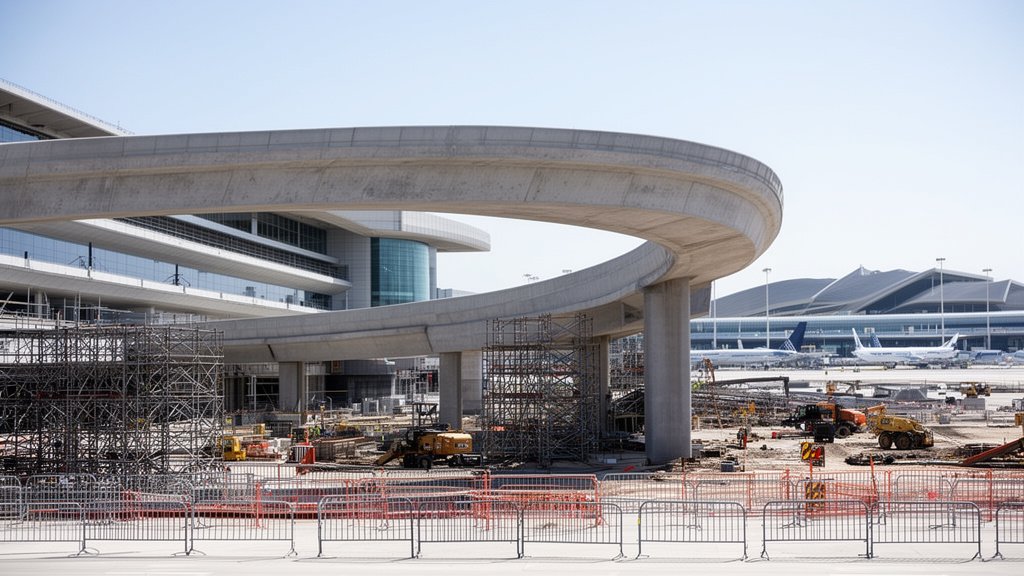
The Automated People Mover is designed to be the crown jewel of the $14 billion LAX modernization program, an elevated 2.25-mile guideway system meant to revolutionize how passengers move into and out of the airport terminals. However, the path to completion has been far from smooth. The current dispute between Los Angeles World Airports (LAWA) and LINXS Constructors—a consortium comprised of Fluor, Balfour Beatty, Flatiron, and Dragados—has reached a boiling point. The friction is not merely about scheduling; it is about the operational nuances of a facility that must interface with complex municipal energy grids.
The Solar Power Standoff
One of the primary technical triggers for the recent friction involves the integration of solar energy components. Under the terms of the original agreement, the APM system was to incorporate significant sustainability features. However, discrepancies have emerged regarding the implementation and authorization of these power agreements. LAWA has reportedly expressed frustration over the pace of implementation, while LINXS has cited barriers to site access as a limiting factor in their ability to meet the technical mandates. This disagreement over power infrastructure is more than a administrative hurdle; it is a critical path item that dictates when the guideway can be powered and tested.
Site Access and Construction Logistics
Construction in the heart of one of the world’s busiest airports is a logistical nightmare. The dispute over site access highlights the friction between operational needs and the reality of an active construction zone. LINXS has flagged issues regarding their ability to access work areas, which they argue has compounded the schedule slippage. Conversely, airport management, balancing the daily operations of LAX with long-term construction goals, has pushed back, noting that unauthorized access and safety protocols have been points of contention. The inability to reconcile these operational realities has created the current bottleneck that is now threatening the revised timeline.
The Super Bowl LXI Stakes
Los Angeles is set to host Super Bowl LXI in 2027, a global event that brings unprecedented pressure on the city’s infrastructure. The APM was specifically touted as a key component to manage the massive influx of tourists and media personnel, aiming to reduce the notorious traffic congestion that plagues the airport loop. If the project slips to March 2027, the infrastructure will not be fully stress-tested or ready for the February event. This is not just a transit delay; it is a potential PR crisis for the city, which has leaned heavily on the promise of an upgraded airport experience to support its reputation as a premier host city for international mega-events.
Historical Context of the APM
This is not the first time the APM has faced schedule adjustments. Since its inception, the project has battled pandemic-era supply chain issues, labor shortages, and complex underground utility relocations. The cumulative effect of these challenges has been a persistent erosion of the construction timeline. Observers note that while mega-projects of this scale are prone to fluctuation, the current level of public discourse between LAWA and LINXS signals a deeper breakdown in communication that exceeds standard contractual disagreements.
Economic Implications and Future Predictions
The financial consequences of the delay are substantial. Beyond the potential for liquidated damages and cost overruns, the delay impacts the city’s ability to maximize the revenue generated by improved terminal efficiency. As the airport continues to grow, the need for a seamless transit link becomes increasingly urgent. If the project is pushed into the spring of 2027, it sets a precarious precedent for the remaining phases of the LAX modernization project, which includes other planned improvements and terminal upgrades. Analysts suggest that unless a definitive resolution to the power and access disputes is reached, further slippage could occur, potentially pushing the project into the latter half of 2027.
Managing the Fallout
Moving forward, the primary goal for city officials will be to mediate a reconciliation between LINXS and LAWA that prioritizes project completion over litigation. The focus must shift from identifying blame to accelerating the testing and commissioning phases. The APM is a critical piece of technology; it requires rigorous, months-long testing before it can safely transport passengers. This testing phase cannot be rushed, which is why any additional days lost to the current dispute are magnified in their impact on the final opening date.
FAQ: People Also Ask
What is the LAX People Mover?
The Automated People Mover (APM) is an elevated electric train system designed to carry passengers to and from the central terminal area at LAX, aiming to reduce traffic congestion and connect the airport to the city’s broader transit network.
Why is the project facing new delays?
The project is facing delays due to a combination of technical disputes between LAX management and the contractor, LINXS, specifically involving solar energy implementation and construction site access protocols.
When is the projected completion date?
The project is currently trending toward a potential March 2027 completion, moving away from the previously stated target of January 2027.
What is the connection to the Super Bowl?
Los Angeles is hosting Super Bowl LXI in 2027. The airport infrastructure was intended to be fully operational by then to help manage the increased volume of passengers and provide a modern transit experience for visitors.
Who is LINXS?
LINXS is the construction consortium responsible for designing, building, financing, and operating the APM, consisting of major construction and engineering firms including Fluor, Balfour Beatty, Flatiron, and Dragados.