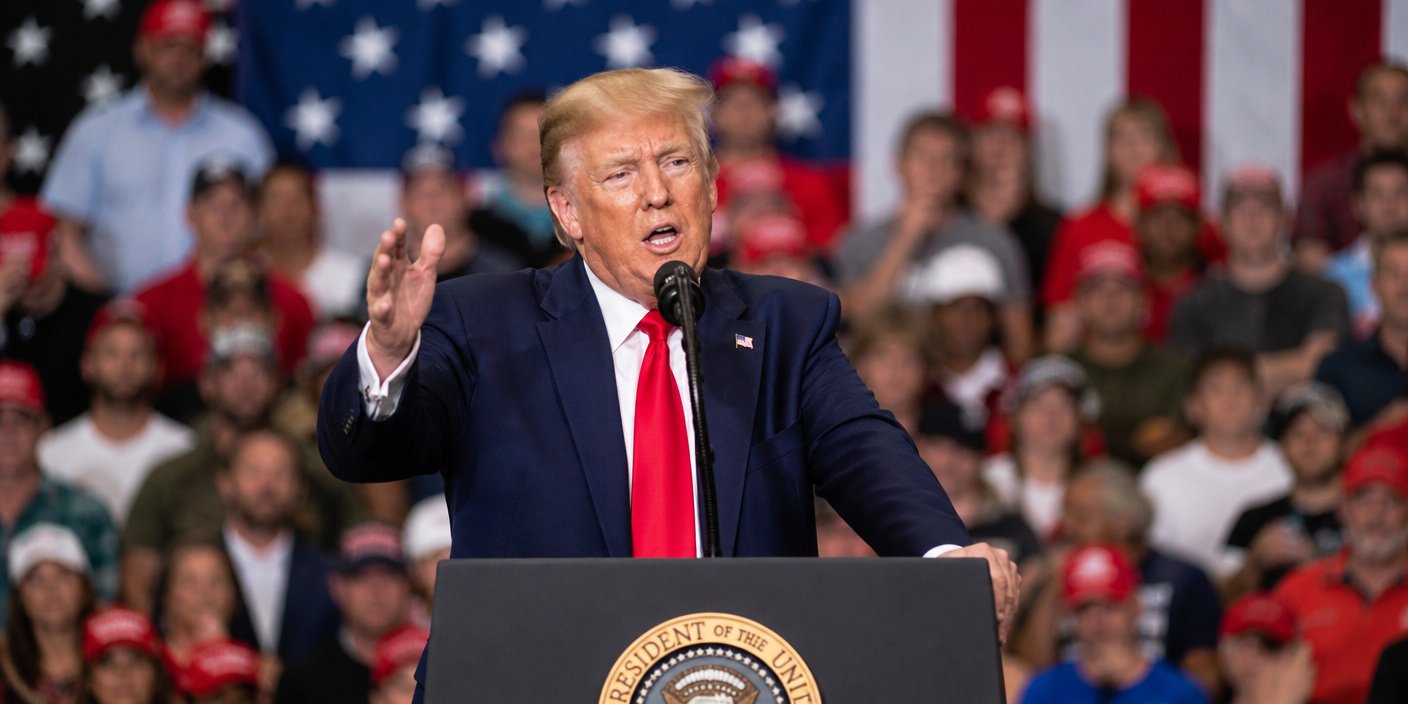
Former President Donald Trump has drawn intense scrutiny after suggesting that Iran should be allowed to “take out” Los Angeles and San Diego. The inflammatory remarks, delivered during a recent campaign rally, have ignited a firestorm of criticism, with California Governor Gavin Newsom labeling the rhetoric as both “deranged and dangerous” while escalating concerns over the intersection of campaign trail hyperbole and the reality of national security implications.
Key Highlights
- Donald Trump’s comments regarding Iran’s potential military posturing against California cities have surfaced, drawing widespread attention.
- Governor Gavin Newsom denounced the statements as “deranged and dangerous,” citing significant risks to public discourse and state security.
- The rhetoric highlights the ongoing tensions surrounding Trump’s aggressive foreign policy approach and the potential real-world impact of his domestic campaign messaging.
The Rhetoric of Conflict: Analyzing California’s Security
The political landscape has been upended by a series of remarks made by former President Donald Trump during a recent campaign event. Addressing the crowd, Trump referenced the geopolitical tensions with Iran, suggesting a hypothetical scenario in which the Islamic Republic might target U.S. soil. Specifically, Trump mentioned Los Angeles and San Diego as potential targets, a move that critics argue crosses the line from political hyperbole into dangerous rhetoric. For a candidate who has built his brand on an “America First” platform, these comments represent a departure from traditional campaign decorum, aiming to frame his political adversaries as weak on international defense while simultaneously targeting the perceived political stronghold of the opposition: California.
The Governor’s Rebuttal
California Governor Gavin Newsom was quick to address the comments, characterizing the former President’s words as “deranged and dangerous.” Newsom, often a prominent figure in the national Democratic discourse, argued that such rhetoric does not merely represent a difference in policy but rather a fundamental disconnect from the responsibility required of a former head of state. Newsom’s team emphasized that by naming specific American cities as targets—even in a hypothetical or rhetorical sense—Trump is effectively normalizing the concept of foreign aggression against U.S. citizens. This, according to Newsom, creates a dangerous precedent that undermines the unified front necessary to handle foreign adversaries like Iran.
Foreign Policy and the Security Paradigm
To understand the gravity of these remarks, one must look at the actual state of U.S.-Iran relations. The Islamic Revolutionary Guard Corps (IRGC) has long been the primary entity managing Iran’s external operations. While geopolitical experts acknowledge that Iran frequently utilizes proxy militias in the Middle East to project power, the suggestion of a direct strike against mainland U.S. cities remains, according to defense analysts, a remote strategic possibility. However, the use of such specific locations in a stump speech complicates national security messaging. By politicizing the potential for an attack, the former President forces a debate not on foreign policy strategy, but on internal fear and division, which security experts worry could be exploited by foreign intelligence services looking to amplify domestic discord.
The California Political Divide
Why focus on California? The state has long been the epicenter of the American “culture war.” For conservative voters outside of the state, California is often depicted as the ultimate symbol of liberal governance, representing policies on climate, immigration, and social issues that they vehemently oppose. By invoking the potential vulnerability of Los Angeles and San Diego, Trump is effectively appealing to a populist sentiment that views the state not as a partner in the union, but as an adversarial entity. This rhetorical strategy serves to deepen the chasm between red and blue states, making the cohesive national response to international threats increasingly difficult to maintain.
The Impact of Campaign Hyperbole
This incident highlights a broader trend in modern political campaigning where the boundaries between strategic deterrence and rhetorical excess are increasingly blurred. In previous eras, presidential candidates were held to a stricter standard regarding military threats. Today, however, the digital age demands viral moments. Trump’s remarks, regardless of their intent, are designed to dominate the news cycle. This “shock value” strategy, while effective at keeping a candidate at the center of the media landscape, carries long-term risks. It desensitizes the public to the reality of international threats and complicates diplomatic efforts by providing foreign adversaries with material to use in their own propaganda against the United States.
FAQ: People Also Ask
1. Why did Donald Trump mention Los Angeles and San Diego specifically?
It is widely interpreted that Trump used these cities as symbolic representations of “liberal” California, the primary political opposition base. By tying them to a threat, he utilizes geographic polarization to appeal to his base.
2. What are the legal implications of this type of speech?
Generally, political speech, even when inflammatory, is protected under the First Amendment. There are no immediate legal repercussions for campaign rhetoric, regardless of how controversial or polarizing it may be.
3. How has the international community reacted to these comments?
While official diplomatic responses from global allies have been muted, the comments have been noted by security think tanks as potentially complicating U.S. foreign policy narratives, as they suggest a lack of consensus on national security priorities.
4. Is there a verified threat from Iran to target these cities?
There is no public intelligence report suggesting a credible, imminent threat of an Iranian strike on California. Analysts emphasize that Iran’s current military focus remains regional, primarily within the Middle East, rather than intercontinental ballistic threats against the U.S. mainland.