A tragic incident occurred on the eastbound 60 Freeway near Hacienda Heights, where a tour bus erupted into flames, resulting in the death of one individual. The incident, which paralyzed traffic on one of Southern California’s busiest transit corridors, has prompted a multi-agency investigation into the mechanics of the fire and the safety protocols governing private transit vehicles operating with potentially hazardous cargo.
Key Highlights
- A fatal tour bus fire occurred on the eastbound 60 Freeway in the Hacienda Heights area, leading to significant delays.
- Emergency crews discovered one fatality while conducting an exhaustive search of the vehicle wreckage.
- Investigators are focusing on the presence of cargo and propane tanks located inside the bus as potential factors in the fire’s severity.
- The scene remains an active site for investigators from the California Highway Patrol and fire forensic teams to determine the exact cause of the ignition.
Investigation into the Fatal 60 Freeway Bus Blaze
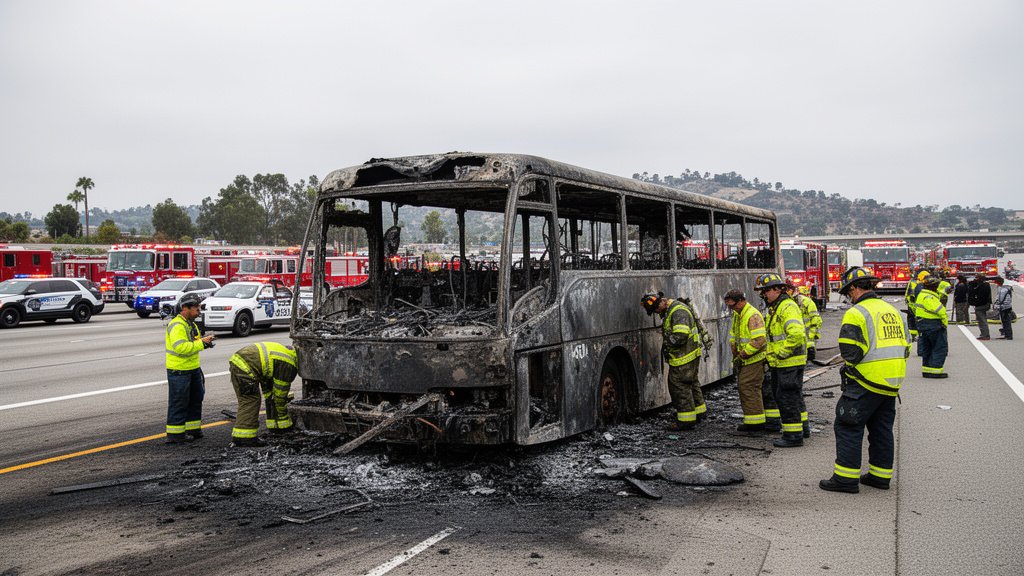
The tranquility of the Hacienda Heights commute was shattered when a private tour bus was consumed by fire on the eastbound lanes of the 60 Freeway. The incident drew an immediate and massive response from the Los Angeles County Fire Department, who arrived to find the vehicle engulfed in flames. While fire suppression efforts were underway, the immediate priority shifted from containment to a grim search of the interior wreckage. It was during this painstaking examination that responders discovered the body of the sole fatality.
Initial Emergency Response and Containment
When initial reports of the blaze reached dispatchers, the magnitude of the situation became immediately apparent. The 60 Freeway, a vital arterial route for East Los Angeles and the San Gabriel Valley, serves as a primary conduit for both commuter and commercial traffic. The fire forced a temporary but significant shutdown of the lanes, creating a cascading traffic backup that extended for miles. Firefighters worked under difficult conditions, navigating the heavy traffic congestion to gain access to the bus, which was positioned on the shoulder, now a blackened shell.
The Role of Hazardous Cargo
One of the most critical elements of the ongoing investigation centers on the cargo found within the bus. Early reports from the scene confirmed the presence of propane tanks, which complicates the forensic analysis. Propane, while a common fuel source for appliances and heating, presents extreme risks in a post-collision or fire scenario. If these tanks were compromised by the initial heat of the blaze, they could have acted as an accelerant, turning a containable mechanical fire into an inferno. Investigators are currently examining whether these tanks were properly secured and compliant with transport safety regulations for commercial or passenger vehicles.
Operational Challenges on the 60 Corridor
The 60 Freeway presents unique challenges for emergency responders. The stretch of highway near Hacienda Heights features specific topographic and structural constraints, including narrow shoulders and heavy-duty traffic volume that often hinders the rapid deployment of emergency heavy rescue equipment. The bus fire serves as a stark reminder of the vulnerability of mass transit vehicles when operating on high-speed, high-density freeways. The ability to evacuate passengers quickly in such an environment is paramount, and the circumstances surrounding this victim’s inability to exit the vehicle will likely be a focal point of the National Transportation Safety Board (NTSB) or state-level inquiries into commercial passenger transit safety.
Understanding Transit Safety Standards
The incident has sparked a wider conversation regarding the regulatory oversight of private tour bus companies in California. While public transit agencies operate under stringent, mandated maintenance and safety schedules, the private charter and tour bus sector often faces different challenges regarding the monitoring of vehicle condition and cargo safety.
Regulatory Oversight and Maintenance
California Highway Patrol (CHP) enforcement officers conduct regular inspections of commercial vehicles, but the sheer volume of charter buses passing through Southern California makes comprehensive, 24/7 oversight a logistical impossibility. This tragedy underscores the necessity for rigorous pre-trip inspections—not just for mechanical viability, but for the safety of onboard cargo. Any vehicle carrying fuel containers or pressurized tanks must adhere to strict hazardous materials protocols. The question currently being asked by transit safety advocates is whether this vehicle was operating within the parameters of its commercial license.
Fire Suppression in Transit Vehicles
Modern transit vehicles are equipped with fire suppression systems, but the effectiveness of these systems is often limited by the location and intensity of the fire source. If a fire starts in the cargo bay, it may propagate through the floorboards before the driver or automatic systems can intervene. The presence of propane adds a layer of complexity; standard water-based suppression may be insufficient. Fire forensic teams are likely to analyze whether the bus was equipped with the appropriate type of fire-rated bulkheads to protect passengers from cargo-related fire spread.
Future Implications for Road Safety
As Southern California continues to rely heavily on road-based mass transit, the industry faces pressure to adopt smarter, more responsive technology. This could include the installation of real-time temperature and gas sensors in cargo compartments that alert drivers immediately upon detecting a potential hazard. Furthermore, the incident will likely lead to a review of the routing and cargo guidelines for tour buses navigating the 60 Freeway, potentially leading to restricted lanes or more frequent weigh-station inspections for vehicles carrying large quantities of equipment or fuel supplies.
FAQ: People Also Ask
1. What is the current status of the 60 Freeway following the bus fire?
Authorities worked to clear the wreckage and reopen the affected lanes as quickly as possible. Motorists are advised to check local Department of Transportation (Caltrans) live feeds, as sporadic investigations or cleanup crews may cause lane restrictions during off-peak hours.
2. Has the identity of the victim been released?
The identity of the deceased is being withheld pending notification of next of kin. The Los Angeles County Medical Examiner is conducting an autopsy to determine the exact cause of death and assist with positive identification.
3. Is there an active investigation into why the bus caught fire?
Yes, the California Highway Patrol, in conjunction with fire investigators, has launched a formal probe. Key areas of investigation include mechanical failure, potential issues with the cargo (specifically the propane tanks), and driver logs to determine the history of the vehicle leading up to the incident.