The Los Angeles County Fire Department has officially confirmed that infrastructure owned and operated by Southern California Edison (SCE) was the primary ignition point for the devastating Eaton Fire of January 2025. The fire, which ripped through residential zones, resulted in the tragic loss of 19 lives and caused catastrophic structural damage throughout the region. This formal finding marks a critical inflection point in the aftermath of the blaze, providing the evidentiary cornerstone for thousands of pending legal claims against the utility giant.
Key Highlights
- Official Cause: LA County Fire Department investigators concluded that SCE equipment initiated the fire during high-wind conditions in early January 2025.
- Tragic Toll: The wildfire claimed 19 lives and destroyed hundreds of residential properties and community assets.
- Legal Action: Thousands of plaintiffs have joined class-action and individual lawsuits, seeking damages for wrongful death, property loss, and negligence.
- Regulatory Pressure: The findings have triggered immediate oversight reviews by the California Public Utilities Commission (CPUC) regarding SCE’s maintenance protocols.
The Anatomy of a Disaster: Investigating the Eaton Fire
The investigation into the Eaton Fire was a complex, multi-agency effort that spanned months of forensic analysis, atmospheric modeling, and on-site evidence collection. Following the containment of the blaze in late January, the Los Angeles County Fire Department, in coordination with state-level fire experts, scoured the origin area to determine the definitive spark source.
Forensic Evidence and Grid Failure
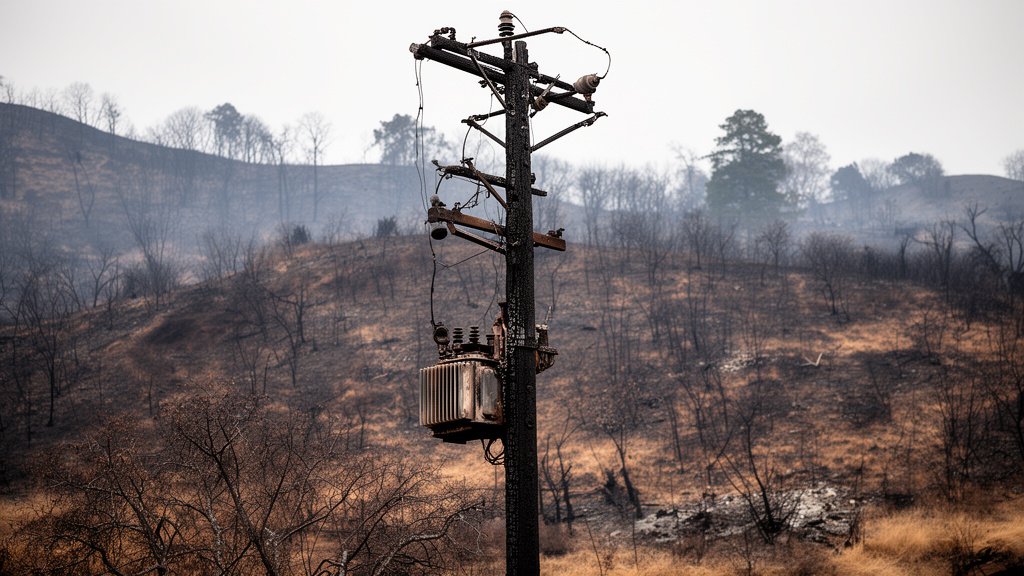
The final report highlights a critical failure of electrical distribution equipment near the identified origin point. Investigators focused on specific pole hardware—specifically a cross-arm and transformer configuration—that appeared to have suffered a mechanical failure during a period of high-velocity Santa Ana winds. The report suggests that the equipment, which should have been hardened or de-energized under extreme fire-weather protocols, experienced a ‘line-slap’ or conductor breach that sent molten debris into surrounding dry vegetation.
This specific finding contradicts earlier assertions from utility spokespeople who had initially urged caution regarding premature attribution. The forensic evidence, including charred wire samples and site-specific meteorological data, provides a clear chain of causation that legal teams are now utilizing to establish liability.
Meteorological Context
Weather patterns in January 2025 played a defining role in the catastrophe. The region was under a red-flag warning, with wind gusts exceeding 60 miles per hour in local canyons. Critics and legal experts argue that SCE’s failure to implement Public Safety Power Shutoffs (PSPS) in this specific corridor despite forecasted high-risk conditions constitutes a gross deviation from industry safety standards. The report notes that the utility’s internal grid management systems did not trigger an automatic power disconnection before the equipment failure occurred, effectively leaving the grid live during one of the year’s most dangerous weather events.
A Legal Firestorm: SCE Under Siege
The identification of SCE as the cause of the fire has opened the floodgates for litigation. With over 2,000 plaintiffs already represented by various high-profile law firms, the financial exposure for the utility is estimated to be in the billions of dollars.
The Class-Action Landscape
The legal strategy for the victims is twofold: first, establishing clear liability through the Fire Department’s official report; and second, proving a pattern of systemic negligence. Plaintiffs allege that Southern California Edison has known about the susceptibility of its older, aging infrastructure in high-risk fire zones for years but prioritized dividends and executive compensation over the necessary capital expenditure required to underground or harden those specific lines.
Legal analysts suggest that if the cases proceed to a jury trial, the emotional impact of the 19 lives lost will be a central pillar of the plaintiffs’ arguments. Unlike settlements involving only property damage, wrongful death suits often carry higher punitive damage awards, as juries are asked to hold corporations accountable for the loss of human life.
Corporate and Regulatory Responses
Southern California Edison faces not only civil liability but also increasing scrutiny from the California Public Utilities Commission (CPUC). The commission has the power to deny rate hikes, impose massive fines, or require specific operational changes that could fundamentally alter the utility’s business model. In the immediate wake of the report’s release, SCE’s leadership issued a statement acknowledging the Fire Department’s findings and expressing commitment to cooperating with ongoing legal proceedings, though they have yet to offer a comprehensive settlement plan.
The Broader Grid Crisis: Lessons from Eaton
The Eaton Fire has reignited the statewide debate over the future of electrical infrastructure in California. It serves as a grim reminder that the ‘new normal’ of extreme fire weather requires a radical rethink of grid management.
Infrastructure Hardening vs. Climate Change
The technology exists to prevent these disasters: covered conductors, undergrounding, and AI-driven grid sensing can detect faults before a spark ever reaches the ground. However, the cost and implementation speed remain the primary hurdles. The Eaton tragedy highlights the ‘last mile’ problem of utility safety—the gap between having the technology and actually deploying it in the highest-risk canyons and hillsides.
Future Outlook
For the communities affected by the Eaton Fire, the path to recovery will be long. Beyond the physical rebuilding of homes and businesses, the psychological toll on residents—who now view the power lines running through their neighborhoods with fear rather than utility—will persist for years. The legal outcome will likely set a precedent for how California utilities handle liability for future wildfire events, potentially forcing a shift toward a more aggressive, safety-first operational culture, regardless of the impact on short-term profits. As the litigation moves forward, all eyes will be on how the courts evaluate the fine line between an unavoidable natural disaster and corporate negligence.
FAQ: People Also Ask
Q: What is the primary cause of the Eaton Fire?
A: The Los Angeles County Fire Department officially determined that electrical equipment owned by Southern California Edison initiated the fire during high-wind conditions in January 2025.
Q: How many people died in the Eaton Fire?
A: The Eaton Fire tragically claimed the lives of 19 individuals and resulted in widespread destruction of property.
Q: Are there lawsuits pending against Southern California Edison?
A: Yes, thousands of plaintiffs have initiated litigation against the utility, including wrongful death and property damage claims, as the findings of the fire department report provide clear evidence for their cases.
Q: What is the CPUC’s role in this disaster?
A: The California Public Utilities Commission (CPUC) is responsible for regulatory oversight. They are investigating SCE’s grid management and maintenance protocols to determine if regulatory failures contributed to the tragedy and what penalties or operational changes are necessary.