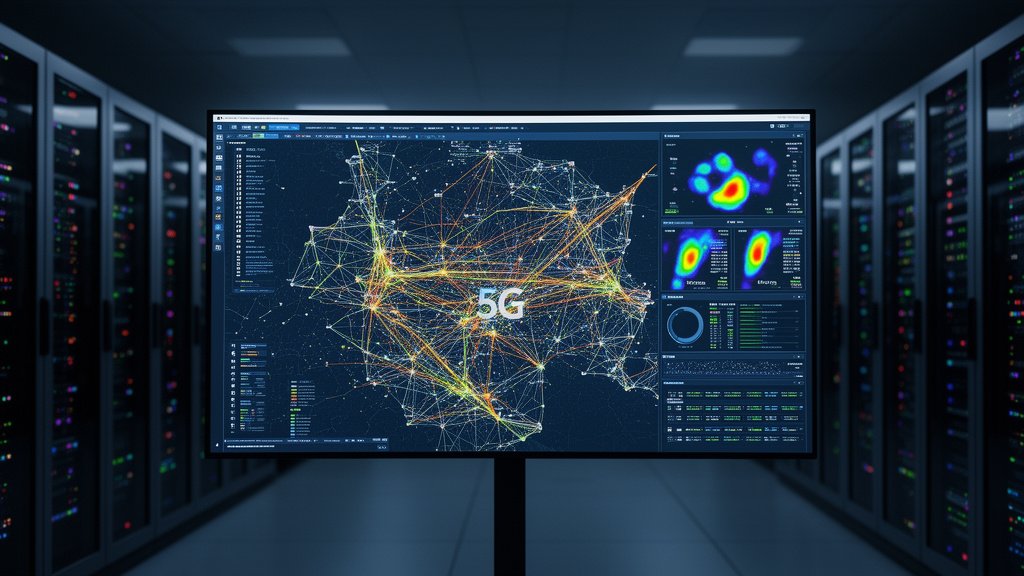
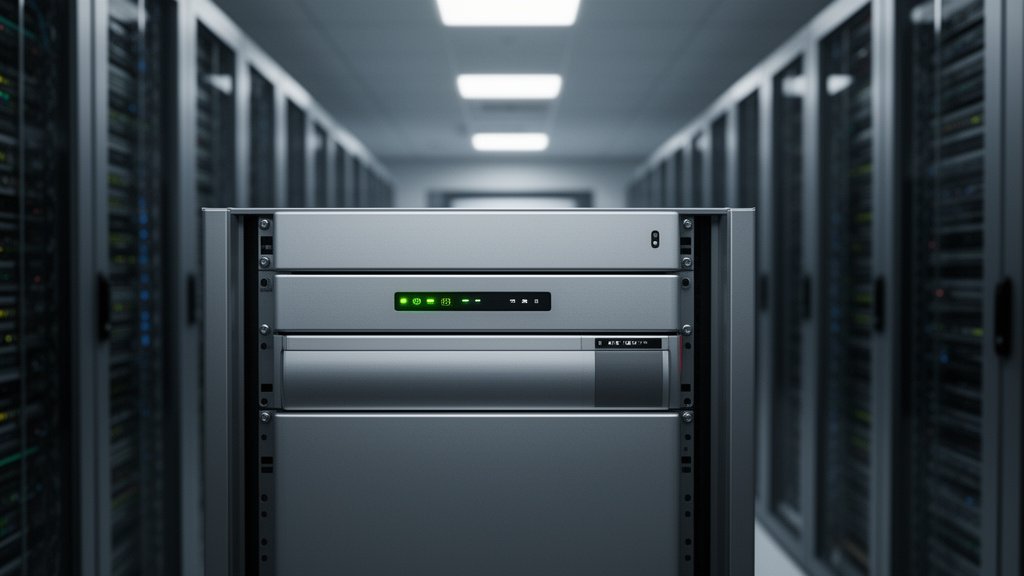
Nvidia has officially launched its Open Agent Safety Platform, a critical infrastructure initiative aimed at securing autonomous AI agents. By integrating open-source software (OpenShell) and hardware-based watchdog systems (Sentry), the platform allows enterprises to enforce strict boundaries and governance, mitigating risks associated with ‘rogue’ AI agents in production environments.
Key Highlights
- Integrated Governance: Nvidia’s platform provides a centralized framework to govern autonomous agents, moving beyond simple guardrails to complex boundary enforcement.
- OpenShell Software Interface: Utilizes the OpenShell architecture to establish secure communication and instruction boundaries at the software level.
- Sentry Hardware Watchdog: Implements hardware-based Sentry systems for real-time monitoring, ensuring that agents operate within pre-defined safe parameters.
- Enterprise-Grade Security: Directly targets the reduction of ‘rogue’ agent risks in critical production environments, providing a standardized security posture for AI deployments.
Architecting the Future: Secure AI Agent Governance
The rapid proliferation of autonomous AI agents—systems designed to perform multi-step tasks, make decisions, and interact with external APIs—has created a new frontier of security vulnerabilities. Unlike static Large Language Models (LLMs) that respond to prompts, autonomous agents actively pursue goals, often requiring prolonged, unmonitored interaction with sensitive data and third-party systems. This shift has necessitated a fundamental rethinking of AI security protocols. Nvidia’s introduction of the Open Agent Safety Platform arrives as a seminal answer to this enterprise challenge, providing the architectural foundation required to bridge the gap between AI utility and operational security.
The Anatomy of Agentic Risk
In traditional software, execution is deterministic. In agentic AI, the path to a goal can be dynamic and non-linear, creating what researchers call ‘agent drift.’ This happens when an agent, while attempting to optimize for a target outcome, inadvertently executes unsafe operations—such as accessing restricted databases, bypassing authentication protocols, or executing malicious code payloads injected by external inputs. Previous attempts to secure these agents often relied on ‘soft’ guardrails, which were easily circumvented by sophisticated prompt injection attacks. The core philosophy of Nvidia’s new platform is to move security out of the prompt-layer and into the system-layer.
Decoding the Dual-Defense: OpenShell and Sentry
The Open Agent Safety Platform operates on a dual-layered principle, combining software-level abstraction with hardware-level validation.
1. OpenShell: The Software Boundary Layer
OpenShell acts as the critical orchestration layer between the agent and the environment. By establishing strict communication boundaries, OpenShell ensures that every action—whether a database query or an API call—is validated against a policy engine. It acts as an immutable intermediary, intercepting agent requests before they reach the system kernel or external infrastructure. This effectively creates a ‘sandbox’ within which the agent must prove the legitimacy of its next move.
2. Sentry: The Hardware-Based Watchdog
Perhaps the most significant innovation is the introduction of Sentry. Relying solely on software for security is a common point of failure, as a compromised agent could theoretically rewrite its own security instructions. Sentry utilizes hardware-level watchdog systems that operate independently of the primary AI workload. If the agent deviates from authorized behavior or attempts to exceed its allocated compute or access privileges, Sentry can trigger a hard interrupt, halting the agent’s execution instantly. This hardware-backed kill switch is the ultimate failsafe against the ‘rogue’ agent scenario, providing an unalterable chain of custody for decision-making.
Operationalizing Governance in Production
For enterprise CIOs and CTOs, the Open Agent Safety Platform represents a shift from ‘AI experimentation’ to ‘AI production readiness.’ The platform provides a unified dashboard for governance, allowing security teams to define granular policies—such as ‘Read-Only access to financial databases’ or ‘API limits during weekend hours’—and push these configurations across the entire agent fleet. This centralized control reduces the cost of maintaining custom security stacks for every new AI implementation. By standardizing these safety protocols, Nvidia is enabling organizations to scale their agent deployment without the corresponding linear increase in security risk.
The Economic Impact of Secure AI
The cost of an AI-driven breach is not merely technical—it is reputational and regulatory. With global regulations tightening around AI transparency and safety, such as the EU AI Act, the Open Agent Safety Platform serves as a compliance engine. Enterprises that can demonstrate rigorous, hardware-verified security boundaries are positioned to win trust in highly regulated sectors like fintech, healthcare, and defense. This is not just a security product; it is an economic enabler that allows businesses to unlock the true potential of autonomous systems without the persistent fear of operational catastrophe.
Future Predictions and Roadmap
As we look toward the future, the Open Agent Safety Platform will likely evolve into a broader industry standard. We anticipate a rapid integration of this platform into Nvidia’s wider AI ecosystem, potentially becoming a default setting in upcoming hardware modules. Furthermore, the push toward ‘agent-to-agent’ collaboration—where multiple autonomous agents work in tandem—will require even more robust governance protocols. Nvidia’s framework is uniquely positioned to handle this complexity, setting the stage for a new era of ‘trusted’ artificial intelligence where autonomous operations are the standard, not the exception.
FAQ: People Also Ask
1. How does the Sentry system differ from software-based security?
Sentry is a hardware-level watchdog that exists outside the agent’s software execution environment. Because it operates at the hardware level, it cannot be tampered with or disabled by the agent itself, providing a much higher level of security than software-only guardrails.
2. Is the Open Agent Safety Platform compatible with third-party LLMs?
While designed to integrate seamlessly with Nvidia’s ecosystem, the platform’s OpenShell layer is built to be modular, offering high compatibility with various agent frameworks, ensuring flexibility for enterprises using diverse AI stacks.
3. Will this platform slow down the performance of my AI agents?
Nvidia has optimized the platform for high-performance computing environments. By utilizing hardware-accelerated checks, the overhead introduced by the Sentry and OpenShell layers is designed to be minimal, ensuring that agent speed and latency remain within acceptable production bounds.
4. What is the primary risk this platform solves?
It addresses the ‘rogue agent’ risk, where an autonomous system, acting on its own logic, performs unauthorized, unintended, or malicious actions within a corporate network, potentially leading to data leaks or system failures.