NVIDIA has officially launched the ‘RTX Spark’ laptop platform, a transformative leap in Windows computing developed alongside industry giants including ASUS, Dell, HP, Lenovo, Microsoft, and MSI. Built on the powerhouse Blackwell RTX architecture, these machines represent a paradigm shift in local AI performance, delivering an unprecedented 1 petaflop of AI compute and 128GB of unified memory to professional creators, data scientists, and power users alike. By moving high-intensity model execution from the cloud to the chassis, NVIDIA is effectively rewriting the definition of what a Windows PC is capable of in a mobile form factor.
Key Highlights
- Industry-Wide Adoption: A massive collaborative effort featuring flagship models from ASUS, Dell, HP, Lenovo, Microsoft, and MSI.
- Blackwell Architecture: Deployment of the new Blackwell RTX graphics, pushing the boundaries of mobile GPU efficiency.
- Performance Milestone: The first wave of portable devices to offer 1 petaflop of raw AI compute capacity.
- Memory Ceiling Breakthrough: Integration of 128GB of unified memory, allowing for the execution of complex, large-scale AI models entirely on-device.
The Dawn of the Petaflop Era: Why RTX Spark Matters
The launch of the RTX Spark platform is not merely an incremental upgrade; it is an architectural reset for the entire Windows ecosystem. For years, the bottleneck for local AI development has been memory bandwidth and raw floating-point operations per second (FLOPS). By achieving the 1-petaflop milestone in a laptop chassis, NVIDIA has effectively eliminated the need for cloud-tethered development workflows. This allows engineers and researchers to prototype, train, and run massive neural networks in coffee shops, boardrooms, or remote locations without a constant, high-speed data connection.
The Blackwell Advantage: Beyond Graphics
While NVIDIA’s history is rooted in gaming and real-time ray tracing, the Blackwell architecture signifies a pivot toward general-purpose artificial intelligence compute at the edge. The Blackwell architecture utilizes a sophisticated multi-chiplet design that minimizes latency between the compute cores and the massive 128GB unified memory pool. This memory architecture is the ‘secret sauce’ of the RTX Spark devices. Traditional laptops often struggle with model offloading—the process of moving data between system RAM and VRAM—which creates a performance chasm. With 128GB of unified memory, the RTX Spark system treats the entire capacity as high-speed scratch space, allowing for the concurrent processing of multi-modal AI models, including advanced video generation, real-time code synthesis, and large-scale data analysis.
The Strategic OEM Ecosystem: Microsoft to MSI
The most telling indicator of RTX Spark’s importance is the immediate, broad-spectrum support from the industry’s most influential OEMs. When ASUS, Dell, HP, Lenovo, Microsoft, and MSI simultaneously roll out hardware supporting a new architecture, it signals a standardization effort that is rare in the Windows PC market. This collaboration ensures that the ‘RTX Spark’ designation acts as a hallmark of quality and performance assurance. For enterprise clients, this means procurement departments can now confidently verify hardware specifications for data-secure, on-premise AI deployments without needing to build custom server rigs for every remote team member.
Secondary Angle: The End of Cloud Dependency
The economic impact of moving AI compute to the local machine cannot be overstated. Currently, businesses spend billions of dollars on cloud inference costs, paying for every token generated or pixel rendered. By localizing this compute power into the RTX Spark platform, companies can significantly reduce their long-term operational expenditures (OpEx). Furthermore, local execution mitigates the risks associated with data privacy and regulatory compliance. Sensitive intellectual property or proprietary datasets no longer need to be transmitted to third-party cloud servers, providing a massive security moat for industries ranging from pharmaceuticals to cybersecurity.
Secondary Angle: Creative Evolution
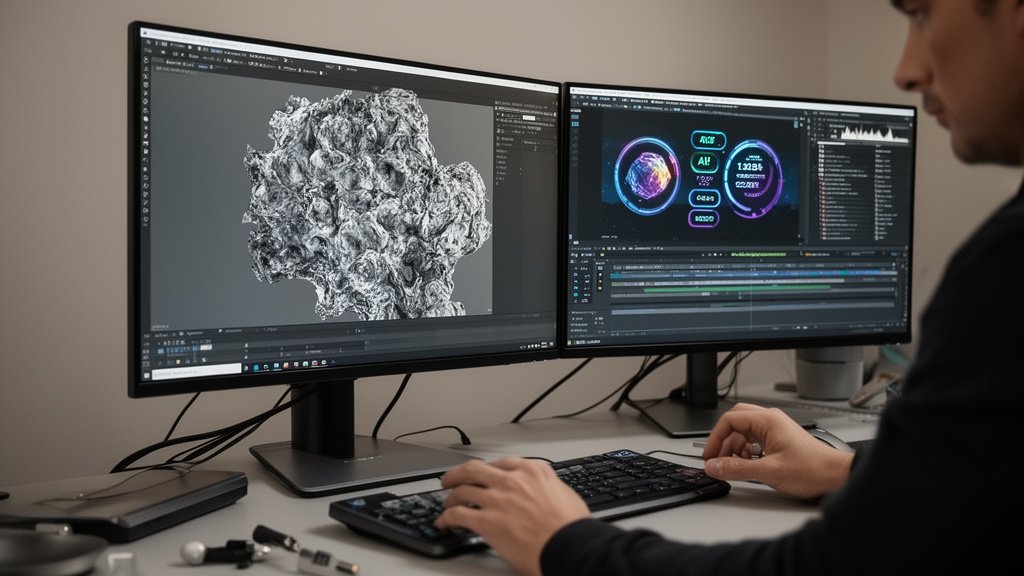
For the creative professional, 128GB of unified memory changes the nature of the workflow. Traditional 3D rendering and compositing workflows often involve hours of ‘cache waiting’ or proxy-based editing. With the RTX Spark platform, artists can now load entire 8K raw sequences and complex scene geometries into the GPU-accessible memory buffer. This facilitates true real-time, non-destructive editing workflows. What was previously reserved for high-end desktop workstations with multiple professional-grade GPUs is now portable, allowing for location-agnostic production work that was previously physically impossible.
Secondary Angle: Future-Proofing the PC
Finally, the RTX Spark launch represents a clear ‘future-proofing’ strategy. As AI models grow in size and complexity, the hardware requirements for even basic generative AI tasks increase exponentially. By establishing a 1-petaflop baseline, NVIDIA is ensuring that these machines will remain relevant for the next three to five years of rapid AI development. This is not hardware designed for the software of today, but rather for the compute-heavy software architectures of 2026 and beyond. By the time the average user fully adopts these machines, the software ecosystem will likely have caught up to the hardware’s massive potential.
FAQ: People Also Ask
1. Is the 1 petaflop performance standard across all RTX Spark models?
Yes, the ‘RTX Spark’ certification requires that all qualifying laptops meet or exceed the performance threshold of 1 petaflop of AI compute. This ensures consistent performance regardless of the manufacturer (ASUS, Dell, etc.).
2. Can the 128GB of unified memory be upgraded after purchase?
Due to the nature of Blackwell architecture and the design requirements for maintaining high-speed unified memory bandwidth, the memory is soldered to the board for optimal performance. Users should configure the memory size at the time of purchase based on their specific workload requirements.
3. How does the battery life hold up under high AI compute loads?
NVIDIA and its partners have optimized the Blackwell architecture with dynamic power scaling. While intensive 1-petaflop workloads will consume significant power, the architecture is designed to handle ‘burst’ tasks efficiently, allowing for optimized power consumption during general computing and standard office workflows.
4. Is RTX Spark compatible with existing NVIDIA software tools?
Absolutely. The RTX Spark platform is fully compatible with the existing NVIDIA CUDA ecosystem, TensorRT, and the full suite of developer tools that professionals currently use, ensuring a seamless transition for existing workflows.