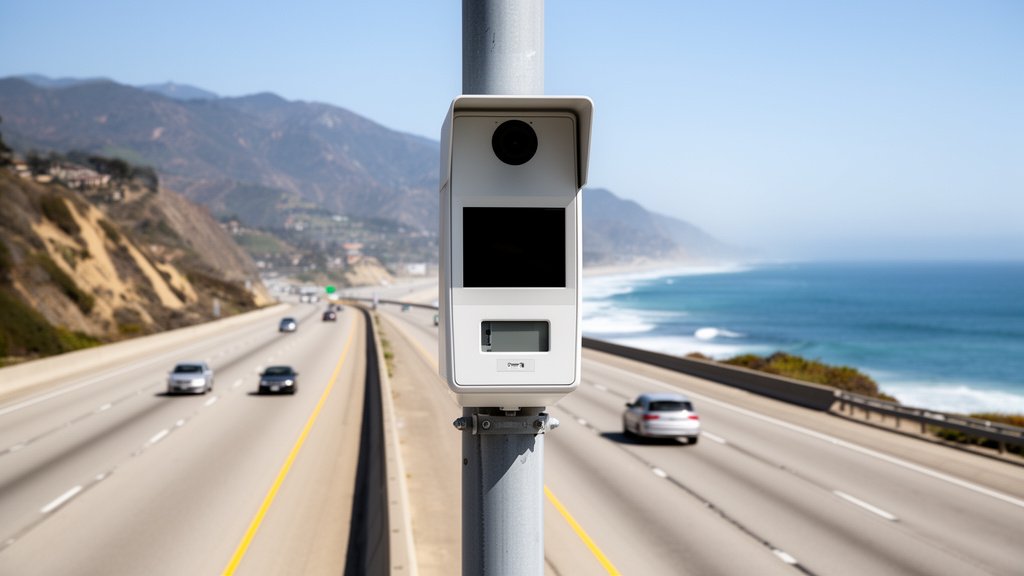
Malibu is set to begin a pilot speed camera safety program along a 21-mile stretch of the Pacific Coast Highway (PCH), a decisive measure authorized by Senate Bill 1297 to curb traffic fatalities and improve road safety. City leaders have officially launched a public education campaign to inform residents and visitors about the initiative, with a critical 60-day warning period expected to precede the formal issuance of citations starting in November. This marks a significant shift in how the city manages one of the most scenic yet hazardous roadways in California.
Key Highlights:
- 21-Mile Enforcement Zone: The speed camera pilot program covers a designated 21-mile stretch of the Pacific Coast Highway within Malibu city limits.
- Senate Bill 1297 Authorization: The program operates under the legal framework established by SB 1297, enabling automated speed enforcement in pilot cities.
- 60-Day Warning Period: Drivers will initially receive warnings rather than citations to ensure public awareness and compliance.
- Full Enforcement Launch: Real financial penalties and official citations are scheduled to begin in November following the initial educational rollout.
The Legislative Push for PCH Safety
The Pacific Coast Highway has long been a flashpoint for traffic collisions, with high speeds and complex road geometry contributing to frequent accidents. For decades, the City of Malibu has grappled with the dual challenge of maintaining the PCH as a primary commuter artery while protecting the safety of its residents and beachgoers. The approval and implementation of the speed camera pilot program represent a major milestone in addressing these systemic issues.
Why SB 1297 Matters
Senate Bill 1297 provides the necessary legal authority for Malibu to deploy automated speed enforcement systems. Unlike traditional traffic enforcement, which relies on the physical presence of California Highway Patrol (CHP) or Sheriff’s deputies—a resource-intensive approach—these automated systems offer 24/7 surveillance capabilities. By utilizing high-resolution cameras and automated license plate recognition (ALPR) technology, the city aims to reduce aggressive driving behaviors that have historically plagued the corridor.
Implementing the 21-Mile Enforcement Zone
Geographically, the 21-mile stretch serves as the backbone of the city’s traffic management plan. By concentrating enforcement within this specific pilot zone, Malibu is creating a controlled environment to measure the efficacy of speed cameras in real-time. This zone includes areas historically identified as high-risk, where speed differentials between commuters and local traffic are most pronounced.
Operational Logistics and the Warning Phase
The transition to automated enforcement is not intended to be a surprise, but rather a structured shift in driving culture. The 60-day warning period is a strategic design choice, intended to calibrate driver behavior without immediately burdening the public with fines.
How the Warning Period Works
During this initial two-month window, the cameras will detect violations, but instead of issuing a ticket, the system will trigger an educational mailer. These mailers serve as a courtesy, notifying the registered owner of the vehicle that they were traveling at speeds exceeding the posted limit. This phase provides a psychological buffer, allowing drivers to adjust their habits and become accustomed to the presence of the new surveillance technology without the immediate sting of financial penalty.
What Happens After November
Once the 60-day warning period concludes in November, the program will transition to full enforcement. At this stage, violations detected by the cameras will result in official notices of violation, carrying monetary fines. The revenue generated from these fines is generally earmarked, per the enabling legislation, to support public safety infrastructure and maintain the camera systems themselves, rather than functioning as a general tax windfall.
The Balancing Act: Privacy and Public Safety
As with any implementation of surveillance technology, the Malibu speed camera program has sparked conversations regarding civil liberties and privacy. The use of automated systems on a public highway inherently raises questions about the scope of government monitoring.
Technical Infrastructure and Data Privacy
To mitigate privacy concerns, the City of Malibu has emphasized that the data collected is limited strictly to speed enforcement purposes. The cameras are designed to capture vehicle information only when a speed violation is triggered, rather than continuously recording the movements of all motorists. This ‘event-driven’ approach is a key component of the city’s promise to respect the privacy of law-abiding drivers traversing the PCH.
Measuring Success Beyond Citations
City officials have noted that the success of the program will be measured not by the number of tickets issued, but by the reduction in average speeds and the subsequent decrease in collision rates. If the program achieves its goal, the long-term trend should show fewer citations being issued as drivers adapt to the new normal of automated speed management. This creates a feedback loop where the road becomes safer not through punishment, but through persistent, predictable enforcement that influences driver decision-making.
FAQ: People Also Ask
Will the speed cameras issue citations for all traffic violations?
No. The pilot program, authorized under SB 1297, is specifically focused on speed enforcement. The cameras are calibrated to detect vehicles exceeding the posted speed limit in the designated 21-mile corridor.
What is the specific start date for fines?
The 60-day warning period is designed to lead into a full enforcement phase starting in November. Drivers should expect financial penalties for violations detected after the conclusion of the initial warning window.
How do I know if I have been caught during the warning period?
If your vehicle is detected speeding during the 60-day warning phase, you will receive an educational notice by mail. This notice will explain that a violation occurred, why it is dangerous, and provide a warning that future violations will result in fines.
Where are the cameras located?
The cameras are being deployed strategically along the 21-mile stretch of the Pacific Coast Highway within the Malibu city limits. The focus is on high-traffic areas and zones with a history of speed-related incidents.