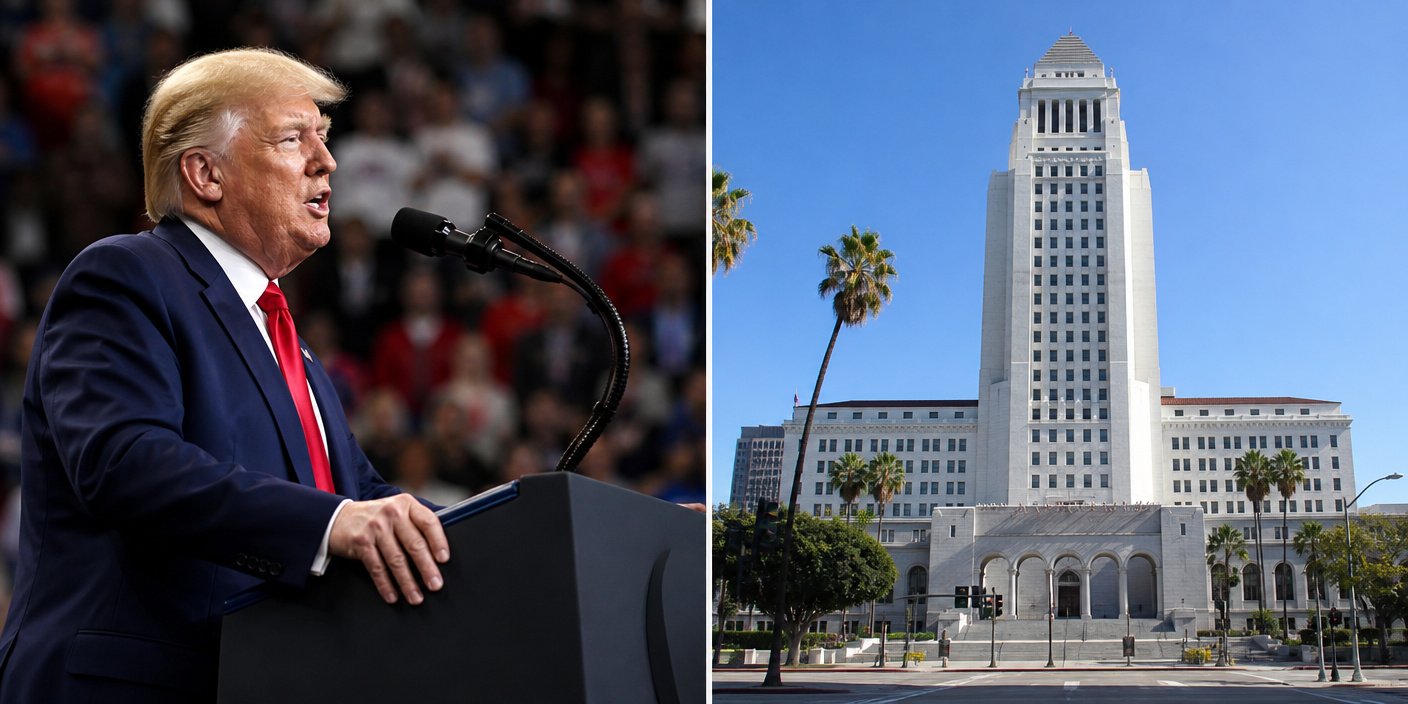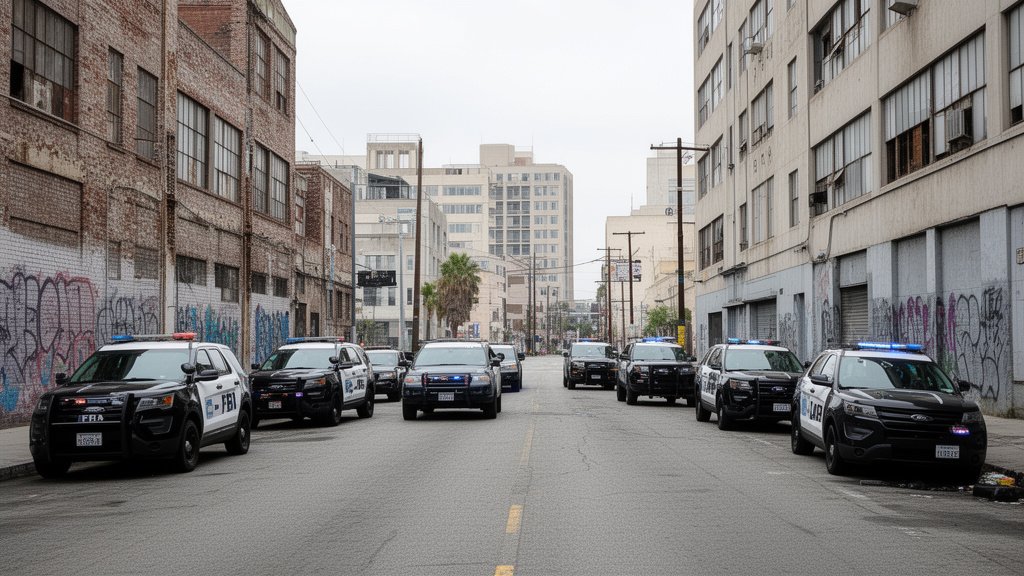
Federal authorities joined forces with the Los Angeles Police Department (LAPD) this week to execute a high-stakes enforcement action in Skid Row, marking the conclusion of an intensive six-month investigation into organized drug trafficking. The operation, which leveraged the combined resources of the Federal Bureau of Investigation (FBI), the Drug Enforcement Administration (DEA), and local LAPD units, represents a significant escalation in efforts to dismantle the narcotics supply chains that have historically plagued the area. This coordinated enforcement action was not a random sweep but the calculated climax of a multi-agency intelligence-gathering project aimed at identifying and neutralizing key players in the illicit drug trade.
Key Highlights:
- Six-month joint investigation culminated in a major enforcement operation.
- Federal-local task force included the FBI, DEA, and LAPD.
- Focus on dismantling organized drug trafficking networks, not just street-level arrests.
- Targeted enforcement aims to curb the influx of synthetic narcotics into the downtown core.
Operational Precision: Behind the Federal-Local Task Force
The involvement of federal agencies like the FBI and DEA indicates that this operation went far beyond standard policing. When federal entities join forces with the LAPD, the objective typically shifts from managing public disorder to dismantling the logistical infrastructure of criminal organizations. This six-month investigation utilized sophisticated surveillance, undercover acquisitions, and financial tracking to map out the hierarchy of those supplying illicit goods to the Skid Row area.
Intelligence Gathering and Surveillance
Throughout the half-year investigation, agents focused on establishing a clear picture of the distribution networks operating within the downtown Los Angeles radius. Unlike localized police efforts that often focus on visible street activity, federal task forces are equipped to trace supply chains back to their sources. By employing wiretaps, analyzing communication networks, and conducting controlled buys, investigators were able to build cases that reach higher up the criminal chain of command than standard arrests would allow. This methodology is critical for long-term disruption rather than merely clearing a street corner for a few days.
Tactical Execution of the Enforcement Action
When the teams moved in to execute the enforcement action, the coordination was precise. The operation was designed to minimize collateral disruption while maximizing the impact on the trafficking cells. By synchronizing the movements of federal agents with LAPD support units, authorities were able to secure multiple locations simultaneously, preventing the destruction of evidence and the escape of key suspects. This level of tactical synchronization is a hallmark of Organized Crime Drug Enforcement Task Force (OCDETF) initiatives, which are designed to combat complex, multi-jurisdictional criminal enterprises.
The Evolving Landscape of Trafficking
The narcotics market in Los Angeles has shifted dramatically in recent years, and the enforcement strategies are being forced to adapt. The prevalence of highly potent, cheap, and easily manufactured synthetic drugs has fundamentally altered the risk-to-reward ratio for criminal organizations operating in urban centers like Skid Row.
The Shift to Synthetic Narcotics
Law enforcement officials are increasingly concerned with the influx of fentanyl and methamphetamine variants. These substances are more dangerous to the end-user and more lucrative for the organizations selling them. Because they are often produced with precursors that are easily shipped and refined, traditional interdiction methods used for cocaine or heroin are becoming less effective. The FBI and DEA’s involvement underscores the recognition that the supply chain is no longer just local or regional; it is now global and highly agile. The focus of this operation was to cut off the ‘last mile’ of delivery, which serves as a vital economic lifeline for these criminal groups.
Organizational Disruption vs. Symptom Management
One of the most persistent criticisms of past operations has been the ‘whack-a-mole’ effect, where removing one dealer simply creates a vacancy for another. However, by targeting the leadership and the supply network, agencies aim for systemic disruption. The goal is to make the cost of doing business in Skid Row too high for these criminal organizations to sustain. While street-level arrests are necessary, the intelligence gathered during this six-month operation is intended to facilitate long-term prosecution of the individuals orchestrating these networks from the shadows.
Balancing Law Enforcement and Humanitarian Support
The Skid Row area remains a uniquely challenging environment, serving as the epicenter for both severe addiction crises and homelessness in Los Angeles. The intersection of law enforcement and social support is a point of constant friction, and operations of this magnitude necessitate a delicate balance between public safety and community health.
The Skid Row Reality
Critics of heavy enforcement often point to the risk of displacing individuals who are already vulnerable. However, proponents argue that without curbing the trafficking networks, the environment for recovery services is effectively impossible to maintain. When open-air drug markets dominate the streetscape, the ability for outreach workers and medical professionals to operate safely and effectively is severely compromised. Law enforcement officials maintain that targeted disruption of trafficking is a prerequisite for creating the stability needed for social services to take root.
Long-Term Strategic Outlook
Looking ahead, the success of this six-month operation will be measured not just by the number of arrests made today, but by the sustained impact on crime rates and illicit activity in the months to come. If this model proves effective, it is likely to be replicated as a blueprint for other urban areas struggling with organized drug trade. The key will be ensuring that as these trafficking networks are dismantled, they are not simply pushed into adjacent neighborhoods. This requires a robust, proactive communication strategy between federal agencies, the LAPD, and the City of Los Angeles’s various social outreach departments to ensure that the recovery of the area is comprehensive.
FAQ: People Also Ask
1. What is the role of federal agencies in local police operations?
Federal agencies like the FBI and DEA provide resources, funding, and legal authority that local police departments often lack, particularly in tracking interstate or international trafficking routes and prosecuting complex criminal conspiracies.
2. Why was this specific six-month investigation necessary?
Complex trafficking networks often operate through layers of intermediaries. A six-month investigation allows federal agencies to build a comprehensive case that targets the organizers and suppliers, rather than just the street-level distributors, ensuring a more lasting impact.
3. What happens to the illicit materials seized during this operation?
Once secured, evidence is processed by the DEA and FBI forensics teams. It is used to strengthen the criminal cases against the arrested individuals before being scheduled for destruction, adhering to strict chain-of-custody protocols.
4. How does this operation affect the residents of Skid Row?
Authorities aim to reduce the visibility and availability of illegal narcotics in the area. While enforcement actions can be disruptive, the strategic goal is to reclaim public spaces, which officials argue is a necessary step for residents and outreach workers to function safely.