In a rapid international mobilization, the Los Angeles County Fire Department’s specialized Urban Search and Rescue (USAR) task force, known as USA-2, has officially deployed to Panama. The mission comes in the wake of two devastating earthquakes that struck the region this past Friday, with seismic monitors recording magnitudes of 7.7 and 6.6. This deployment underscores the critical role played by California-based emergency assets in global disaster response, as the task force brings advanced detection equipment, medical support, and heavy rescue expertise to a nation grappling with significant infrastructure damage and an unknown number of trapped survivors.
Key Highlights
- Elite Task Force Activation: The Los Angeles County Fire Department’s USA-2 unit, one of the most highly trained USAR teams globally, was mobilized within hours of the seismic events.
- Seismic Intensity: The region was rocked by two major earthquakes on Friday, measuring 7.7 and 6.6 in magnitude, causing widespread structural integrity failures.
- Interagency Coordination: The mission is operating in conjunction with the United States Agency for International Development (USAID) and their Disaster Assistance Response Team (DART).
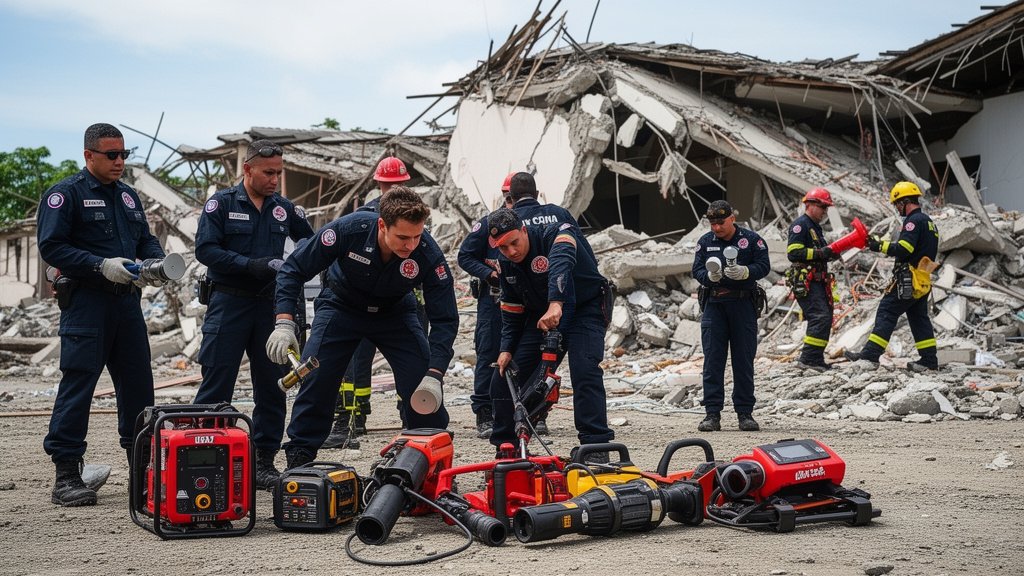
- Expertise in the Field: The USA-2 team specializes in collapsed structure extraction, utilizing advanced listening devices, thermal imaging, and highly trained search-and-rescue canines.
Tactical Response to Seismic Crisis in Central America
The arrival of the Los Angeles County Fire Department’s USA-2 task force marks a significant escalation in the international response to the Panamanian earthquake crisis. Following the twin earthquakes on Friday, the immediate challenge facing local authorities was the rapid assessment of pancaked structures and buried infrastructure. USA-2, a FEMA-certified Type 1 task force, represents the pinnacle of urban search and rescue capability, capable of self-sustaining operations in austere environments for up to 10 days.
The Anatomy of the Deployment
Deployment of a task force of this magnitude is a logistical feat. The team consists of engineers, hazardous materials technicians, heavy rescue specialists, and medical professionals. Upon arrival, the primary directive for USA-2 is to integrate with local emergency management to provide “force multiplication.” They do not merely add personnel; they introduce specialized technical skills that are often absent in the immediate aftermath of a high-magnitude seismic event.
The 7.7 and 6.6 magnitude quakes have created a volatile landscape. Large earthquakes of this scale frequently cause aftershocks, putting both survivors and rescuers at risk. The structural engineers embedded within USA-2 will spend their first hours on the ground performing “triage” of standing buildings—identifying which structures are safe enough to enter for search operations and which pose an imminent risk of further collapse.
Advanced USAR Methodology
Modern urban search and rescue has evolved far beyond manual debris removal. USA-2 utilizes a “Search, Rescue, and Medical” protocol that relies on the ‘Golden Hour’ principle—maximizing the probability of survival by utilizing non-invasive detection methods. This includes acoustic listening devices capable of detecting the heartbeat of a person trapped under tons of concrete, as well as fiber-optic search cameras that can be snaked through small apertures to locate survivors in deep voids.
The inclusion of search-and-rescue canines is another critical layer of the USA-2 toolkit. These dogs are trained to identify human scent amidst the complex olfactory landscape of a disaster zone, where fuel leaks, dust, and decay typically mask the presence of victims. By working in tandem with the canine teams, the technical specialists can triangulate the location of trapped individuals, allowing for precision extraction efforts that minimize the risk of secondary collapses.
International Cooperation and USAID
This deployment is facilitated through the United States Agency for International Development (USAID), which acts as the lead federal agency for international disaster assistance. The DART (Disaster Assistance Response Team) provides the diplomatic and logistical framework required to move heavy rescue equipment—including hydraulic saws, concrete breakers, and shoring materials—across international borders.
This specific partnership between the LACoFD and USAID ensures that the USA-2 team is fully supported by global supply chains, allowing them to remain focused on the life-saving mission rather than procurement or transport issues. The coordination is vital, as Panama’s own emergency services are currently stretched thin, dealing with local infrastructure gridlock and power outages resulting from the 7.7 magnitude shock.
Secondary Angles: Analyzing Global Resilience
1. The Logistical Chain of Survival:
The rapid movement of the USA-2 task force highlights the fragility of international logistical chains during disasters. Airports, roads, and telecommunications are often the first victims of a 7.7 magnitude quake. The ability for a specialized team to land, establish a base of operations, and begin work within 24 to 48 hours is a testament to the rigorous, pre-planned preparedness models of modern USAR teams. This deployment serves as a real-world test for the interoperability between local California expertise and international disaster relief frameworks.
2. Evolution of Earthquake Engineering:
This event offers a grim but necessary case study for urban planners and seismologists. The damage resulting from the 7.7 and 6.6 quakes will be meticulously analyzed to update global building codes. The data gathered by the embedded engineers in the USA-2 team regarding how specific building types (e.g., reinforced concrete vs. unreinforced masonry) performed during the event will eventually inform future seismic resilience strategies globally, creating a ripple effect of knowledge that extends well beyond the rescue efforts.
3. Psychological Toll on First Responders:
While the focus is correctly placed on the victims, the psychological impact on members of the USA-2 team is a secondary, yet critical, element. International disaster response involves exposure to extreme trauma and long-term isolation from family. The mental health support infrastructure within these specialized units has become as sophisticated as their technical gear, with peer-support programs and mandatory decompression protocols now standard practice to ensure the long-term viability of these elite responders. As these men and women navigate the chaotic reality of the Panama disaster, the lessons learned from their resilience and team dynamics will continue to refine the training pipelines for future disaster workers.
FAQ: People Also Ask
Q: What does “USA-2” stand for in the context of this deployment?
A: USA-2 is the official designation for the Los Angeles County Fire Department’s Urban Search and Rescue Task Force. It is one of the elite FEMA-certified teams capable of deploying internationally for disaster relief.
Q: How do rescuers find people after such powerful earthquakes?
A: They use a combination of acoustic listening devices, thermal imaging cameras, canine teams, and structural analysis. The dogs identify human scent, while the technical gear allows rescuers to pinpoint exact locations through rubble.
Q: Why was the LA County team chosen over others?
A: The LACoFD USA-2 team is globally recognized for its deep experience in complex structural rescues. They maintain a high state of readiness, allowing them to mobilize personnel and massive amounts of specialized gear rapidly under the USAID framework.
Q: What is the significance of the 7.7 and 6.6 magnitude ratings?
A: These figures represent the total energy released by the earthquakes. A 7.7 magnitude quake is classified as ‘major’ and is capable of causing significant damage over large areas, while the 6.6 aftershock or secondary quake significantly compromises buildings that were already weakened, increasing the risk for rescue teams.