Federal agents and local law enforcement have dismantled a sophisticated drug-smuggling pipeline tied to the Sinaloa Cartel, marking a significant victory in the ongoing struggle to secure the nation’s critical maritime infrastructure. Following a rigorous six-month investigation led by the Drug Enforcement Administration (DEA) and the Los Angeles Port Police, authorities successfully intercepted a massive narcotics shipment and arrested three key individuals involved in the distribution network. This operation highlights the increasing complexity of transnational criminal organizations (TCOs) and the critical, evolving role that municipal port authorities play in national drug interdiction efforts.
Key Highlights
- Massive Seizure: 1,300 pounds of methamphetamine were recovered, preventing a substantial volume of illicit synthetic drugs from reaching regional and national markets.
- Coordinated Interdiction: The operation was the culmination of a six-month, multi-agency investigation involving federal DEA resources and the Los Angeles Port Police, demonstrating the effectiveness of inter-agency intelligence sharing.
- Criminal Disruptions: Three individuals were taken into custody, with investigators targeting their connections to the Sinaloa Cartel’s logistics framework.
Unmasking the Maritime Pipeline: Inside the Sinaloa Cartel Investigation
The Port of Los Angeles, a vital artery of global trade, handles millions of shipping containers annually. For criminal organizations like the Sinaloa Cartel, this sheer volume represents both a challenge and an opportunity. The recent investigation, which spanned half a year, pulled back the curtain on how these cartels exploit complex global supply chains to move illicit substances disguised as legitimate cargo. By integrating maritime data with ground-level intelligence, the DEA and Los Angeles Port Police were able to isolate specific anomalies within shipping manifests, eventually identifying the precise container carrying the 1,300-pound methamphetamine payload.
The Shift Toward Synthetic Drug Trafficking
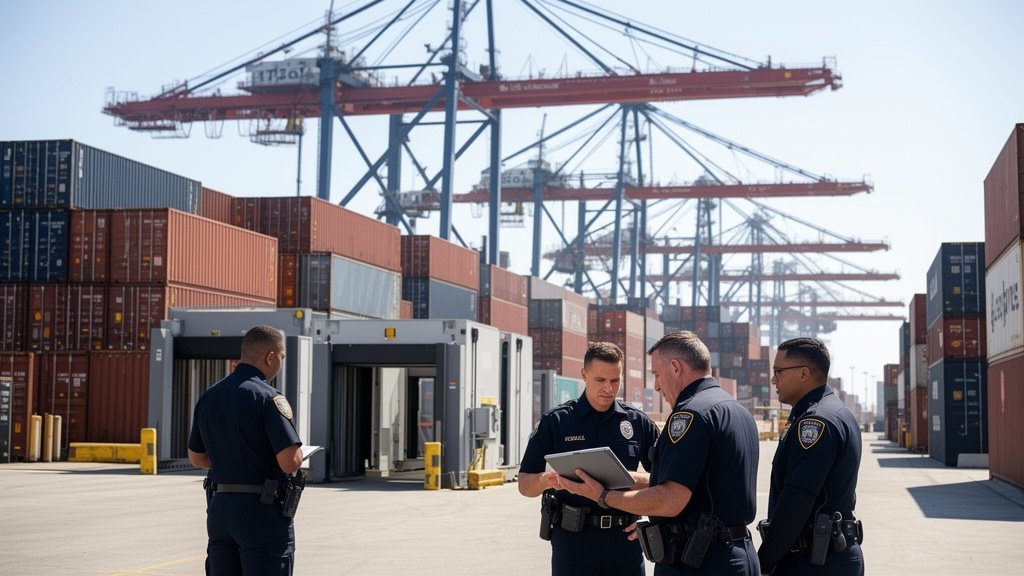
Historically, cartels focused heavily on plant-based narcotics like cocaine and heroin. However, the modern drug trade has shifted drastically toward synthetic substances. Methamphetamine, which can be produced in large, industrial-scale labs often located south of the border, offers higher profit margins and lower logistical overhead for cartels. This shift has necessitated a new approach for law enforcement. Traditional perimeter security and border wall strategies are insufficient against shipments that arrive via sea, hidden within legitimate consumer goods. This investigation underscores the urgent requirement for high-tech scanning capabilities at ports of entry, where speed and efficiency are required to avoid crippling the global supply chain while maintaining security.
Inter-Agency Collaboration as a Force Multiplier
One of the most notable aspects of this case is the seamless collaboration between the DEA and the Los Angeles Port Police. In the past, port-specific law enforcement often operated in silos, focusing on theft and port security rather than international narcotics smuggling. Today, the lines are blurred. As TCOs expand their reach into maritime logistics, the Port Police have evolved into a sophisticated investigative force. By utilizing the DEA’s national intelligence databases alongside the Port Police’s granular knowledge of terminal operations, the task force was able to map out the logistical chain of the Sinaloa Cartel’s operation. This synergy proved essential in tracking the movement of the shipment from arrival at the port to the intended regional distribution center.
Economic Impact and Cartel Resilience
The financial impact of seizing 1,300 pounds of methamphetamine is significant. Beyond the immediate street value, which can reach millions of dollars, the seizure represents a deeper blow to the cartel’s operational credibility and logistical infrastructure. Every successful interdiction forces these organizations to re-evaluate their transit routes and pay out massive losses to their own suppliers. However, authorities remain cautious. The resilience of the Sinaloa Cartel is well-documented; they are known to adopt new methods almost as quickly as law enforcement can identify them. This case serves as a template for future interdictions, proving that targeting the logistical node—rather than just the street-level dealers—is the most effective way to disrupt the flow of poison into our communities.
Technological Frontiers in Port Security
As this investigation concludes, the conversation among policymakers has shifted toward the technological needs of the future. Detecting 1,300 pounds of methamphetamine hidden within legitimate cargo is like finding a needle in a haystack. The success of this bust points to the effectiveness of advanced analytical software that flags suspicious shipping patterns before a ship even docks. Moving forward, the focus will likely be on increasing funding for artificial intelligence-driven cargo screening, which can analyze thousands of manifests in real-time, allowing Port Police to allocate their human resources to the highest-risk containers. This, coupled with the DEA’s intelligence, will be the next frontier in fighting TCOs.
FAQ: People Also Ask
Q: How did authorities detect the drugs among millions of shipments?
A: The investigation utilized a combination of intelligence gathering, behavioral analysis, and anomaly detection. By reviewing shipping manifests and cross-referencing logistical data, investigators identified patterns consistent with known cartel smuggling tactics.
Q: Is the Port of Los Angeles a primary target for drug trafficking?
A: As the busiest port in the Western Hemisphere, the Port of Los Angeles is a natural target for transnational criminal organizations attempting to move large quantities of illicit goods through high-traffic trade corridors.
Q: What happens to the seized methamphetamine now?
A: The seized narcotics serve as key evidence in the ongoing criminal prosecutions of the arrested individuals. Following the conclusion of the legal proceedings, the substances will be destroyed under controlled conditions by federal authorities.
Q: Will this arrest significantly weaken the Sinaloa Cartel?
A: While this is a major tactical victory, it is part of an ongoing multi-national effort. Law enforcement aims to disrupt their operational capability and logistical routes, though the cartel remains a highly adaptive adversary.