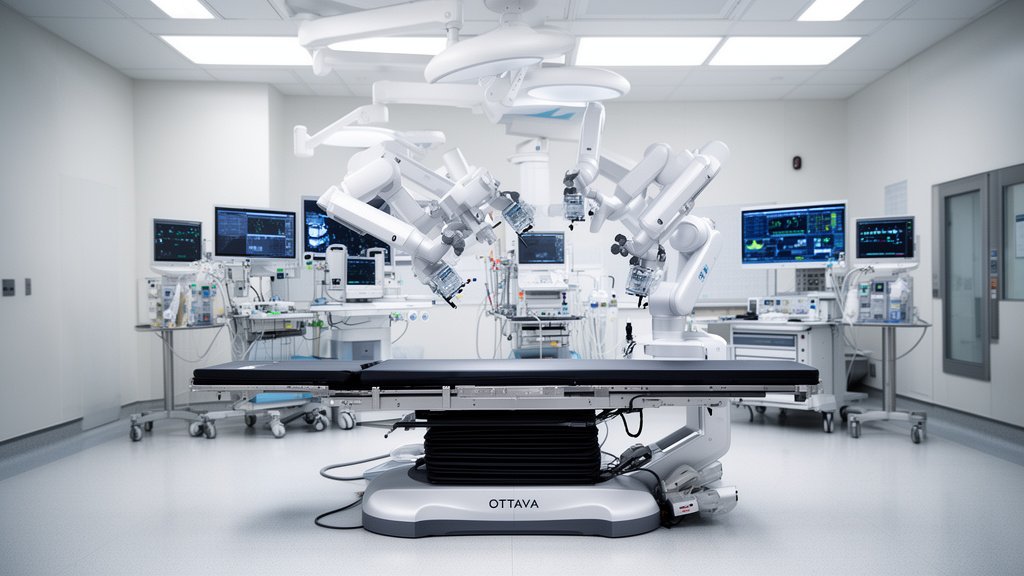
Johnson & Johnson has successfully completed the first commercial U.S. installation of its revolutionary OTTAVA™ Robotic Surgical System at the Memorial Hermann-Texas Medical Center, signaling a new era in robotic-assisted procedures. This deployment, following the system’s formal FDA authorization in July 2026, represents a significant leap forward for general surgery. By transitioning to a table-integrated design, the OTTAVA™ platform is engineered to eliminate the traditional limitations of bulky, standalone robotic arms, aiming to streamline operating room (OR) efficiency and provide surgeons with unprecedented levels of control and anatomical access.
Key Highlights:
- First commercial U.S. deployment of the OTTAVA™ Robotic Surgical System at Memorial Hermann-Texas Medical Center.
- The system features a unique table-integrated design, a first for soft-tissue robotic platforms.
- FDA authorization for the platform was granted in July 2026.
- Focus on enhancing general surgery procedural efficiencies and OR throughput.
The New Standard: Why Table-Integration Matters in Modern Surgery
Overcoming the Traditional Robotic Footprint
For decades, robotic surgery has been synonymous with large, standalone systems—cart-based units that must be wheeled to the bedside and docked to the patient. These systems, while transformative, often occupy valuable floor space, complicate OR logistics, and create challenging workflow interruptions. The introduction of the OTTAVA™ system by Johnson & Johnson directly addresses these persistent hurdles. Unlike its predecessors, OTTAVA™ is fully integrated into the surgical table itself. This design philosophy is not merely an aesthetic choice; it is a fundamental shift in surgical engineering.
By unifying the robotic architecture with the patient support surface, J&J has effectively removed the physical impediments associated with large carts. This integration allows for a seamless transition between open and robotic-assisted techniques, enabling the robotic arms to be tucked away when not in use. For hospital systems like Memorial Hermann, this translates to improved OR turnover times and increased procedural capacity. The ability to stow the robotic arms under the table also provides surgeons and nursing staff with unobstructed access to the patient, a critical factor during complex procedures where emergency access or rapid team intervention might be required.
Precision and Anatomical Access
The engineering behind OTTAVA™ focuses on “invisibility”—the concept that the technology should be unobtrusive until needed. The system’s design allows for patient repositioning without undocking the robot, a common pain point in previous robotic platforms that often necessitated breaking the sterile field or pausing surgery. This fluid adaptability ensures that the surgical team can maintain focus on the patient’s anatomy rather than managing the machinery. This technological edge is expected to reduce operative time and improve outcomes in common general surgery procedures, such as hernia repairs and cholecystectomies, by providing more intuitive control and superior visualization.
Memorial Hermann-Texas Medical Center: A Hub for Innovation
Why Houston Was Selected
The choice of Memorial Hermann-Texas Medical Center for the first commercial installation is highly strategic. Located within the world’s largest medical complex, Memorial Hermann has a long-standing reputation for integrating cutting-edge technology into clinical practice. For Johnson & Johnson, partnering with a high-volume, prestigious health system allows for real-world validation of the platform’s efficacy.
This installation serves as a lighthouse project for the medical community. As the first site to utilize OTTAVA™ commercially, Memorial Hermann will act as a blueprint for other healthcare systems evaluating their capital investment strategies in robotics. The data generated from these early cases will be instrumental in demonstrating the platform’s return on investment—not just in terms of clinical outcomes, but in operational efficiency, bed utilization, and staff satisfaction.
Training and Surgeon Adoption
Implementing a novel robotic platform requires a rigorous training curriculum. The transition from legacy robotic systems to a table-integrated platform involves a shift in how surgeons think about surgical workspace and team dynamics. Memorial Hermann has invested heavily in training its surgical teams to leverage the unique capabilities of the OTTAVA™ system. This early adoption puts the institution at the forefront of the next wave of surgical innovation, potentially attracting top-tier surgical talent and patients seeking advanced, minimally invasive care options.
Navigating the Competitive Landscape: J&J’s Strategic Play
Shifting Market Dynamics
The robotic surgery market has been historically dominated by incumbent players. Johnson & Johnson’s entry with OTTAVA™ signals an aggressive bid to capture market share by offering a distinct value proposition: “invisible” robotics. As hospitals continue to look for ways to optimize their capital expenditures, the modular and space-saving nature of the OTTAVA™ system may prove to be a compelling differentiator against established, bulky systems.
The Future of the Operating Room
Looking ahead, the successful rollout at Memorial Hermann provides a glimpse into the future of the “smart OR.” As digitalization and connectivity become more prevalent in surgery, platforms like OTTAVA™ are expected to integrate more deeply with hospital data systems. Future updates could include enhanced AI-driven guidance, improved haptic feedback, and tighter integration with preoperative imaging data, all of which aim to minimize variability in surgical outcomes. The July 2026 FDA authorization was only the first step; the commercial deployment at this scale is where the real-world utility will be measured. For Johnson & Johnson, the success of the OTTAVA™ at Memorial Hermann is critical to proving that the future of surgery is not just about the robot—it is about the seamless integration of technology into the existing clinical environment.
FAQ: People Also Ask
Q: What makes the OTTAVA™ system different from the Da Vinci system?
A: The primary difference is the table-integrated design. Unlike existing robotic platforms that rely on separate, bulky bedside carts, OTTAVA™ is built directly into the operating table, allowing for a more streamlined, space-efficient OR setup and improved patient access.
Q: When did the OTTAVA™ system receive its FDA authorization?
A: The OTTAVA™ Robotic Surgical System received formal FDA authorization in July 2026.
Q: Why is the installation at Memorial Hermann significant?
A: This is the first commercial installation of the platform in the United States, marking a critical milestone in the product’s commercial rollout and providing a high-profile, real-world setting to demonstrate its efficacy in general surgery.
Q: How does the table-integrated design benefit surgeons?
A: The design allows for greater fluidity during surgery, enabling easier patient repositioning without needing to undock the robotic system, which saves time and improves access to the patient during procedures.