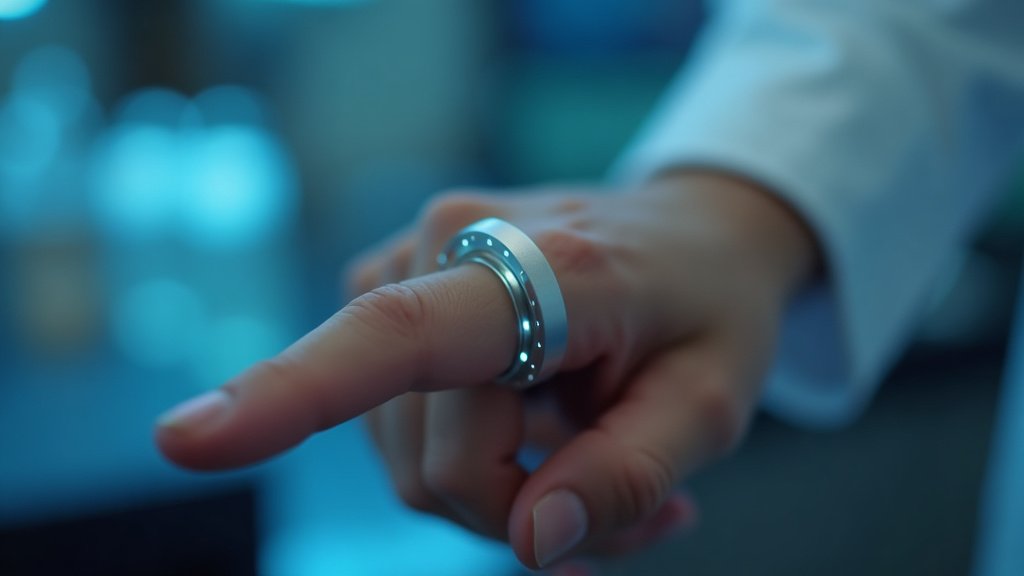
Researchers at the USC Institute for Creative Technologies (ICT) have officially unveiled a groundbreaking wearable device—a compact, AI-powered ring designed to monitor and detect human stress through non-invasive light-based sensors. This technological leap addresses a significant gap in current wearable health monitoring, moving beyond simple step counting and heart-rate tracking to address the complex, invisible, and persistent challenge of psychosocial stress.
The Science of Light-Based Stress Detection
At the core of the USC-developed device is the application of advanced photoplethysmography (PPG) technology, refined for the unique physical constraints of a ring form factor. Unlike traditional pulse oximeters found in smartwatches, which often rely on a single, larger sensor area on the wrist, the USC team has optimized the optical hardware to capture high-fidelity biometric data directly from the digit. The device employs light-emitting diodes (LEDs) to illuminate the skin’s capillaries. By measuring the minute variations in light absorption and reflection, the ring detects subtle fluctuations in blood volume and flow.
These optical signals are not merely raw data; they represent the physiological echoes of the autonomic nervous system. When a subject experiences psychosocial stress, the body triggers a cascade of responses, including changes in heart rate variability (HRV) and vascular resistance. The device’s proprietary AI architecture processes these fluctuations, filtering out physiological noise such as physical movement or ambient temperature changes, to isolate the specific indicators of psychological tension. This level of signal processing is what allows the device to claim non-invasive monitoring of psychosocial stressors with high precision.
Bridging the Gap in Psychosocial Health
Psychosocial stress is frequently cited as a leading contributor to chronic health conditions, ranging from hypertension and cardiovascular disease to sleep disorders and impaired immune function. Despite its prevalence, objective measurement has historically been limited to clinical environments, utilizing tools like cortisol sampling or bulky ECG monitors. The USC ICT approach democratizes this data. By putting clinical-grade sensing technology on the finger, users gain a longitudinal view of their stress triggers, providing a foundation for behavioral intervention.
The integration of AI is critical here. While raw biometric data is useful, it is often difficult to interpret without expert context. The system developed by USC researchers is designed to learn from the user’s specific baseline. Over time, the device establishes a personalized ‘stress profile,’ allowing it to differentiate between a healthy, natural response to a challenging day and the onset of potentially harmful, chronic stress. This adaptive learning capability ensures that the data is not only accurate but actionable.
The Future of Non-Invasive Diagnostics
This development from USC represents a broader trend in the Internet of Medical Things (IoMT). As hardware becomes more miniaturized and processing power increases, the transition from reactive to proactive healthcare is accelerating. The ability to monitor stress in real-time allows for the potential of ‘just-in-time’ interventions—notifying the user to practice breathing exercises, take a break, or adjust their environment before the physiological impact of stress becomes cumulative.
Beyond individual health, the implications for workplace wellness and long-term research are profound. In controlled environments, such a device could help researchers understand the micro-triggers of stress in professional settings, leading to better workspace design and corporate wellness initiatives that are backed by empirical data rather than speculation. The USC ICT team’s work is a testament to the power of combining material science—creating efficient, low-power light sensors—with robust machine learning, signaling a future where health monitoring is passive, continuous, and highly insightful.
Technical Challenges and Considerations
While the technology is innovative, the transition from lab-based prototype to consumer-ready device involves several hurdles. Power efficiency remains a primary constraint. Generating enough light to penetrate the skin while maintaining a battery life that supports continuous, multi-day monitoring requires significant advancements in low-power circuitry. Furthermore, the variability in skin tone, finger size, and peripheral circulation poses challenges for sensor calibration. The USC team has focused extensively on these factors, developing algorithms that account for biological diversity to ensure the device remains effective across a wide demographic range.
As the researchers continue to refine the hardware, the focus is likely to shift toward data privacy and security. Handling sensitive biometric data requires robust encryption and user-controlled data management. If this device is to achieve mass adoption, the technical success must be matched by a commitment to data sovereignty, ensuring that the insights gained remain under the control of the user.
FAQ: People Also Ask
How does the ring differentiate between physical and psychosocial stress?
The device uses advanced AI algorithms to filter out ‘noise’ generated by physical activity. By comparing biometric data against movement sensors (like accelerometers), the system isolates the specific physiological signatures of emotional or psychosocial stress from the increased heart rate associated with physical exercise.
Is this device currently available for purchase?
No. This technology was developed by researchers at the USC Institute for Creative Technologies and remains a research-led development project. It has not yet been commercialized or released for public consumer purchase.
What makes this different from a standard smartwatch?
The primary difference lies in the sensor optimization and the specific focus on psychosocial stress analysis. Smartwatches are often generalist tools; the USC ring is specialized for continuous, high-fidelity optical monitoring of specific physiological markers associated with stress, designed to be less intrusive and more comfortable for 24/7 wear.
Is the data recorded by the ring medically accurate?
The current prototype is focused on monitoring and detection as a research tool. While it uses high-precision sensors, it is not currently FDA-cleared as a medical device for diagnosing specific psychiatric or clinical conditions.