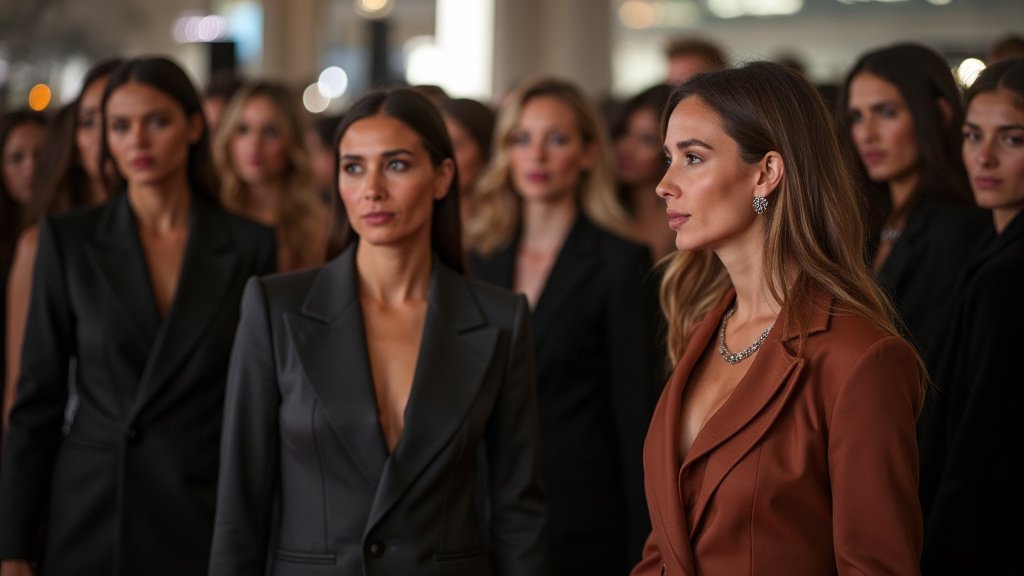
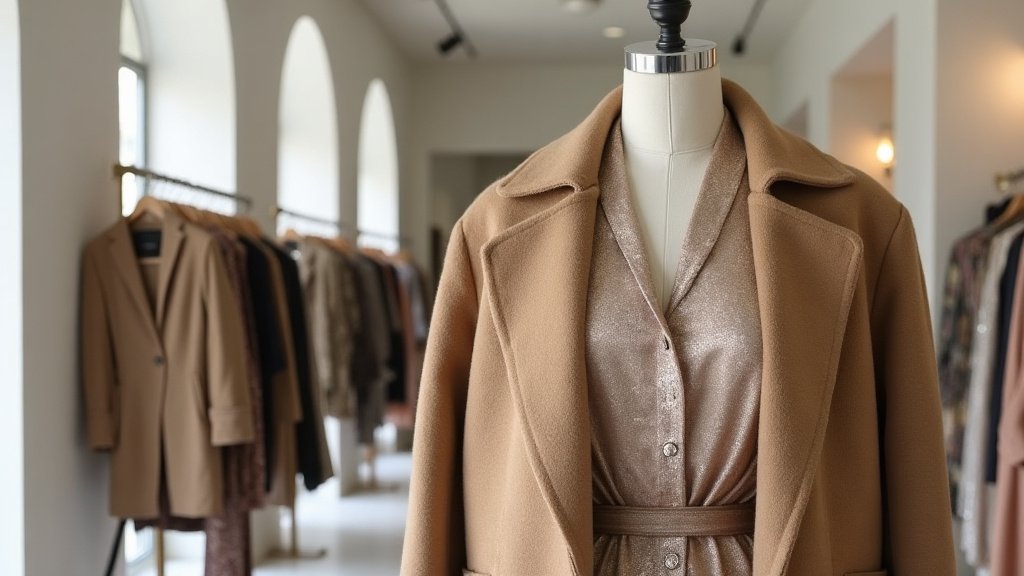
Los Angeles is witnessing a definitive end to the era of “Quiet Luxury,” as retail data for Winter 2026 signals a dramatic transition toward “maximalist texture layering.” After years of dominating the Southern California style landscape with muted palettes and understated cashmere, the coastal fashion scene is pivoting toward bold, tactile complexity. Retailers across the Melrose and West Hollywood districts report that consumers are no longer seeking the homogenous “stealth wealth” aesthetic that defined 2023 and 2024, but are instead demanding garments that prioritize depth, materiality, and individual expression.
Key Highlights
- Market Shift: LA Fashion Retail Analytics reports a 34% increase in search volume for “textured layering” and “multi-fabric outerwear” compared to Winter 2025 data.
- Retail Forecast: Local boutiques and major fashion houses project a 22% growth in revenue for statement-heavy collections, marking a significant departure from minimalist staple-buying trends.
- Regional Dominance: The transition is most visible in the West Hollywood and Melrose districts, where influencer engagement on “maximalist” content has surged by 48% in the last quarter alone.
- The Aesthetic Pivot: Style analysts confirm the trend moves away from neutrals and monochromatic palettes, favoring a juxtaposition of faux fur, heavy wools, metallic jacquards, and intricate silk blends.
The Evolution of the LA Aesthetic: From Stealth to Texture
The “Quiet Luxury” movement, often associated with the phrase “stealth wealth,” was built on the premise of exclusion—using high-quality, logo-free garments to signal status to those in the know. For years, the streets of Los Angeles reflected this with uniform, beige-on-beige ensembles that prioritized silhouette over surface interest. However, as of Winter 2026, the data confirms that this homogeneity has hit a saturation point.
Industry insiders note that the shift to “maximalist texture layering” is a psychological response to the perceived monotony of the previous trend cycle. Where Quiet Luxury sought to blend in through refinement, the current maximalist movement seeks to stand out through materiality.
The Data Behind the Shift
According to the latest insights from LA Fashion Retail Analytics, the transition is not merely stylistic but financial. Retail performance metrics from Q3 and Q4 of 2025 show that consumers are moving away from purchasing multiple variations of a neutral turtleneck and are instead investing in singular, high-impact pieces that can be layered. This has resulted in a 34% uptick in demand for garments featuring intricate weaves, embossed finishes, and high-contrast fabric combinations.
This behavior indicates a shift in consumer priority: the desire for “tactile storytelling.” Shoppers are gravitating toward items that offer visual interest even from a distance, favoring pieces that combine traditionally conflicting textures—such as heavy raw wool layered over delicate, sheer silk, or metallic threading woven into coarse knitwear.
Influencer Culture and the West Hollywood Catalyst
Much of this change is being accelerated by the digital landscape. In districts like Melrose and West Hollywood, the “influencer effect” has amplified the maximalist trend. Influencers, who previously built followings on the clean, minimalist look, are now pivoting to showcase highly edited, texture-heavy ensembles that prioritize dynamic visual content. This shift is not just reflected in social media engagement, which has seen a 48% jump in maximalist-related content, but also in the inventory strategies of local luxury boutiques. These retailers are now pivoting their buying schedules to favor designers who push the boundaries of fabric technology rather than those who rely solely on minimalist tailoring.
Secondary Angles: Economic and Historical Context
The Economic Impact on Retail
From an economic standpoint, the shift to maximalist texture layering is a boon for artisanal retail and local manufacturers. Quiet Luxury was, in many ways, an optimization of supply chains: produce fewer, high-quality, neutral items that are easy to stock and sell. Maximalism, conversely, requires higher manufacturing complexity. The 22% revenue growth projected for avant-garde boutiques is largely driven by higher price points associated with these complex, texture-rich garments. This shift supports local artisan workshops that specialize in embroidery, knitting, and fabric manipulation, creating a more diversified, albeit more expensive, retail ecosystem.
Historical Parallels: The Pendulum Effect
Fashion history is cyclical, and the move toward maximalism is a classic “pendulum swing.” The extreme minimalism of the early 2020s was a reaction to the chaos of the late 2010s; similarly, the current move toward maximalist texture is a reaction to the stifling lack of character in the Quiet Luxury era. This is not the first time LA has seen a shift toward excessive materiality; one can draw parallels to the late 90s, where texture and distinct individual style momentarily eclipsed corporate-defined trends. The current market is essentially a high-tech refinement of that historical cycle.
Future Predictions: The Path to 2027
As we look toward 2027, analysts predict that this maximalist trend will move beyond outerwear and into the realm of “smart textiles.” We are likely to see the integration of heat-responsive fabrics or light-reactive materials that further enhance the tactile and visual experience of clothing. The trend is not merely a “season” but a multi-year shift in how consumers define luxury: not as something that is hidden, but as something that is visually and physically experiential.
FAQ: People Also Ask
Q: Is Quiet Luxury dead in Los Angeles?
A: While it is not “dead” in terms of absolute disappearance, the data confirms it is no longer the dominant market driver. LA fashion has transitioned toward maximalist texture layering, making the minimalist aesthetic a secondary player for the 2026 season.
Q: What exactly is ‘Maximalist Texture Layering’?
A: It refers to a styling method that deliberately mixes diverse fabric weights and finishes—such as combining heavy wool, faux fur, metallic jacquards, and silk in a single outfit—to create visual depth and a tactile, complex silhouette.
Q: How does this change the way shoppers should invest in their wardrobe?
A: The trend shifts investment away from buying multiple variations of neutral staples (the Quiet Luxury approach) toward acquiring high-impact, statement-driven pieces that feature unique fabrication, which serve as the anchor for a layered look.