The aviation community and emergency responders are reeling following the confirmed crash of a REACH Air Ambulance helicopter off the coast of Catalina Island. The incident, which resulted in the loss of three lives, has triggered a massive inter-agency response aimed at recovering the wreckage and uncovering the sequence of events that led to the tragedy. As the U.S. Coast Guard concludes its initial search and recovery phase, the focus of the operation has shifted entirely toward the forensic investigation led by federal safety authorities.
The Recovery and Initial Investigative Findings
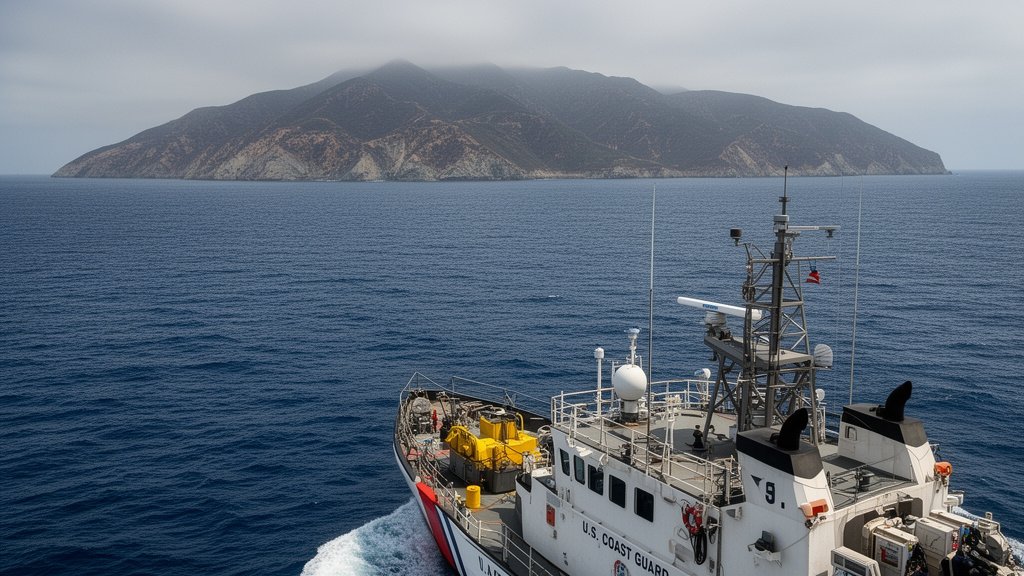
The incident, which occurred near the scenic but rugged terrain of Catalina Island, has presented significant logistical challenges for emergency teams. The U.S. Coast Guard played a pivotal role in the immediate aftermath, deploying surface assets and aerial reconnaissance to locate the downed aircraft. After an exhaustive search operation that utilized advanced sonar mapping technology, teams successfully identified the wreckage at a depth of 218 feet. This depth is significant, as it necessitates specialized recovery equipment and dive teams capable of operating under high-pressure conditions, adding a layer of complexity to the retrieval process.
The Federal Response: NTSB and FAA Roles
Following the location of the aircraft, the National Transportation Safety Board (NTSB) and the Federal Aviation Administration (FAA) took control of the scene. The NTSB, serving as the lead investigative body, has deployed a team of aviation experts to the island. Their mandate is to conduct a “go-team” investigation, which involves the meticulous documentation of the debris field, the analysis of aircraft systems, and the review of pilot logs and weather conditions present at the time of the flight. The FAA is providing support by analyzing air traffic control communications and radar data to reconstruct the flight path leading up to the final moments of the aircraft.
Understanding the Operational Landscape of Air Ambulances
REACH Air Ambulance is a critical component of regional emergency medical services (EMS), often operating in high-pressure environments where time is of the essence. The nature of medical transport, which frequently involves flights into challenging geographic areas or in adverse weather conditions to reach patients in rural or remote locations, inherently carries elevated risk profiles.
The Safety Paradigm in Emergency Aviation
Safety management systems (SMS) are the cornerstone of modern air ambulance operations. In the aftermath of this crash, aviation experts are expected to scrutinize the maintenance logs of the specific airframe involved. The investigation will explore whether the crash was a result of mechanical failure, human error, or an uncontrollable environmental factor. For the industry, such incidents serve as a sobering reminder of the hazards faced by flight crews who are dedicated to saving lives in the most precarious of circumstances.
Maritime Aviation Challenges
Operating aircraft over water, such as the waters surrounding Catalina Island, introduces unique stressors that do not exist in inland aviation. Maritime environments are characterized by “black hole” effects at night, where the horizon becomes indistinguishable from the water’s surface, and rapidly shifting weather patterns that can create sudden downdrafts or visibility issues. The investigation will likely pay close attention to whether the specific conditions near Catalina Island at the time of the crash played a contributory role.
The Procedural Rigor of NTSB Investigations
Unlike standard accident reports, an NTSB investigation is a longitudinal process. Investigators will examine the “human factors” involved, including the flight crew’s duty hours, experience, and the training provided by REACH Air Ambulance. Furthermore, the metallurgical analysis of the recovered wreckage will be crucial. By examining components like the rotor system, engine turbines, and flight control linkages, investigators can often determine if a component failed during flight or if the structural damage occurred upon impact with the water.
Future Implications for Regional EMS
The loss of this aircraft is not merely a local tragedy but one that affects the broader EMS ecosystem in Southern California. Hospitals and clinics that rely on REACH for critical patient transfers will now be forced to reroute their logistics, potentially impacting the speed and quality of care for patients in the region.
Looking forward, the aviation industry will watch closely for the NTSB’s preliminary report. If the investigation reveals systemic flaws in operational safety or maintenance protocols, it could lead to new FAA directives governing how air ambulance services are conducted over coastal waterways. This incident underscores the ongoing necessity for continuous investment in pilot training and onboard safety technology, such as Terrain Awareness and Warning Systems (TAWS) and enhanced Flight Data Monitoring (FDM), which are essential for mitigating the risks inherent in medical aviation.
FAQ: People Also Ask
What is the current status of the investigation?
As of the latest reports, the wreckage has been located at a depth of 218 feet. The NTSB and FAA have arrived at the scene to begin their investigation, which involves site documentation and evidence recovery. The timeline for a full report could take months.
Why are the NTSB and FAA both involved?
Both agencies have distinct roles. The NTSB investigates the cause of the crash to prevent future incidents, while the FAA focuses on regulatory compliance, air traffic control procedures, and aircraft certification standards.
What are the main challenges of recovering the wreckage?
Recovering a helicopter from 218 feet of water requires specialized dive equipment or remote-operated vehicles (ROVs). The depth prevents standard scuba diving, and the pressure/currents around Catalina Island can complicate the stabilization and lifting of the airframe.
Is REACH Air Ambulance still operational?
Yes, REACH continues to provide medical transport services across its network. The company is cooperating fully with federal authorities to determine the cause of this accident.
How common are air ambulance crashes over water?
While rare, aviation accidents over water are statistically more complex to investigate due to the difficulty of wreckage recovery and the potential loss of data from the aircraft’s recorders, which may be subjected to saltwater immersion.