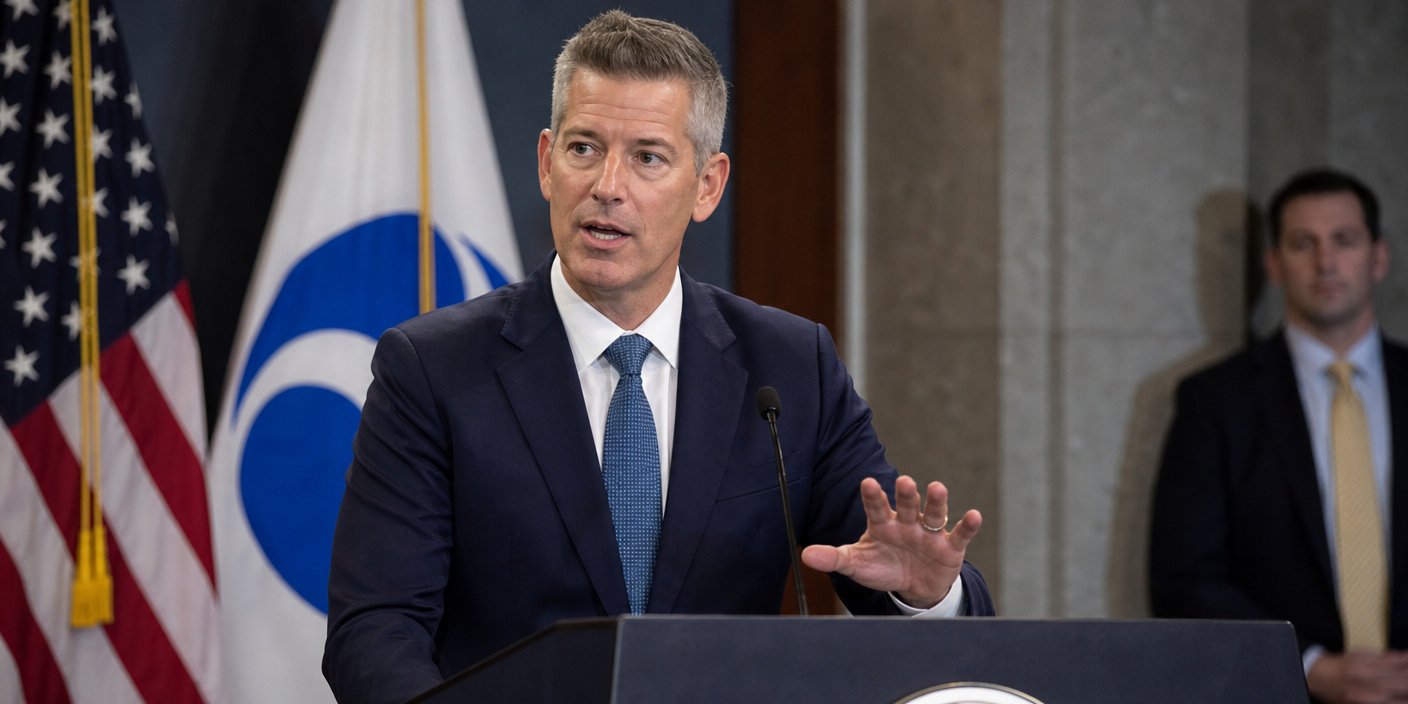
On November 13, 2026, the United States aviation network experienced a sweeping operational paralysis. A nationwide FAA ground stop was issued, forcing a complete halt to air traffic that rippled through the sector, with Southern California airports—including LAX, Ontario, John Wayne, and San Diego International—bearing the brunt of the immediate congestion. Transportation Secretary Sean Duffy addressed the crisis shortly after the order was issued, identifying the root cause as a critical failure in the agency’s aging telecommunications equipment. While flights have since resumed, the incident has reignited a fierce debate regarding the modernization of critical national infrastructure.
Key Highlights
- Nationwide Ground Stop: The FAA halted all domestic flight departures across the U.S. on November 13, 2026, due to a severe telecommunications system malfunction.
- Root Cause: Transportation Secretary Sean Duffy confirmed the outage originated from outdated telecommunications hardware, raising concerns about systemic technical debt in federal air traffic management.
- SoCal Impact: Southern California hubs experienced heavy delays and cancellations, with airports advising travelers to prepare for lingering schedule volatility through the weekend.
- Traveler Advisory: Airlines have waived change fees for affected passengers, though rebooking backlogs are expected to persist for 48 to 72 hours.
The Crisis in the Skies: Why Systems Failed
The events of November 13 underscore a vulnerabilities in the backbone of American air travel. When the FAA issued the ground stop, it wasn’t due to a weather event or a security threat, but rather a profound technical collapse. Transportation Secretary Sean Duffy’s briefing highlighted that the core issue was ‘outdated telecommunications equipment’—a phrase that in the aviation industry is often shorthand for legacy systems that have been patched and repatched far beyond their intended service life.
Technical Debt and the Aviation Network
Historically, the Federal Aviation Administration (FAA) has faced intense scrutiny over its reliance on archaic communication frameworks. Experts suggest that the incident on the 13th was likely tied to the communication lines that transmit Notices to Air Missions (NOTAMs) or similar real-time flight safety protocols. When these digital channels experience latency or failure, the FAA mandates a ground stop as a precautionary safety measure to ensure no aircraft takes off without updated, verified navigational and safety data.
For the average traveler, this manifests as a red ‘ground stop’ notification, but for the agency, it is a desperate attempt to prevent a ‘blind’ airspace scenario. The fact that the failure was systemic—rather than localized—speaks to the centralized nature of these specific telecommunications nodes.
The Southern California Bottleneck
Southern California represents one of the most complex airspaces in the world. With multiple large airports operating in close geographic proximity (LAX, ONT, SNA, SAN, and BUR), the region lacks the luxury of ‘spillover’ space. When a ground stop hits, the impact is compounded. Airplanes that were in the air were allowed to land, but those ready for departure were trapped at gates or taxiways.
At LAX alone, thousands of passengers found themselves stranded as the delay bled into the late afternoon hours. Unlike a weather delay, which can be predicted and managed to some extent, the digital nature of this outage meant that airport authorities had no estimated time of arrival for a fix, leading to a state of total operational limbo. Travelers reported a lack of real-time communication from airlines, who were themselves waiting for guidance from federal regulators.
Looking Toward Infrastructure Modernization
This outage serves as a wake-up call for the current administration. Secretary Duffy has faced mounting pressure to accelerate the timeline for the ‘NextGen’ airspace modernization program. The argument is no longer about efficiency or speed, but about fundamental reliability. If the U.S. aviation system cannot reliably transmit data between its ground control and flight decks, the entire economic engine of the nation suffers. Critics in Congress are already demanding a full audit of all FAA telecommunications hardware, with some calling for a ‘rip and replace’ approach to legacy systems that date back decades.
FAQ: People Also Ask
Q: Why was the nationwide ground stop issued on November 13, 2026?
A: The FAA issued the stop because critical telecommunications equipment responsible for distributing essential flight data experienced a systemic failure. The stop was a safety precaution to ensure all flights were operating with accurate, real-time information.
Q: What specifically did Transportation Secretary Sean Duffy say about the outage?
A: Secretary Duffy cited the failure of outdated telecommunications hardware as the primary driver of the outage, signaling an urgent need for infrastructure upgrades within the FAA’s technical networks.
Q: Will the travel disruptions continue through the weekend?
A: While flights have resumed, the FAA and airport authorities are advising travelers to expect lingering delays. The backlog of aircraft and crew displacements will likely cause schedule instability for several days following the initial event.
Q: What should passengers in Southern California do if their flight was cancelled?
A: Affected passengers should contact their airline immediately to utilize rebooking options. Most carriers have implemented ‘travel waivers’ for this specific event, allowing for penalty-free changes to itineraries impacted by the outage.