The era of automated traffic enforcement in Los Angeles officially begins on October 26, 2026, as the city activates its new speed safety system. This rollout represents a monumental shift in how the Los Angeles Department of Transportation (LADOT) enforces traffic laws, moving away from reliance on manual traffic stops toward a data-driven, automated surveillance model. For residents and commuters, the launch date is the culmination of years of legislative debate, engineering studies, and infrastructure upgrades aimed at curbing the rising tide of traffic-related fatalities in the region.
Key Highlights
- Launch Date: The Automated Speed Safety System officially goes live citywide on October 26, 2026.
- Strategic Placement: Cameras are prioritized on the city’s High Injury Network—the streets where the majority of severe and fatal collisions occur.
- Tiered Fines: Violators will face a structured penalty system, starting at $50 for minor infractions and scaling up to $500 for excessive speeds.
- Objective: The initiative is a core component of the Vision Zero strategy, aiming to reduce traffic fatalities to zero by mitigating reckless driving behaviors.
The Implementation of Automated Speed Enforcement in LA
The activation of speed cameras in Los Angeles is not merely a change in technology; it is a fundamental shift in the city’s approach to road safety. Rooted in the mandate provided by California Assembly Bill 645 (AB 645), this program is designed to provide consistent, 24/7 enforcement in areas where traditional police presence is either dangerous or impractical to maintain. The Los Angeles Department of Transportation (LADOT) has spent the last year conducting traffic studies to identify the specific intersections and road segments that present the greatest risk to pedestrians, cyclists, and other drivers. By utilizing automated license plate recognition (ALPR) technology combined with Lidar speed detection, the city intends to remove the subjectivity from enforcement, creating a predictable system that discourages speeding regardless of the time of day or the presence of a human officer.
The Engineering Behind the Surveillance
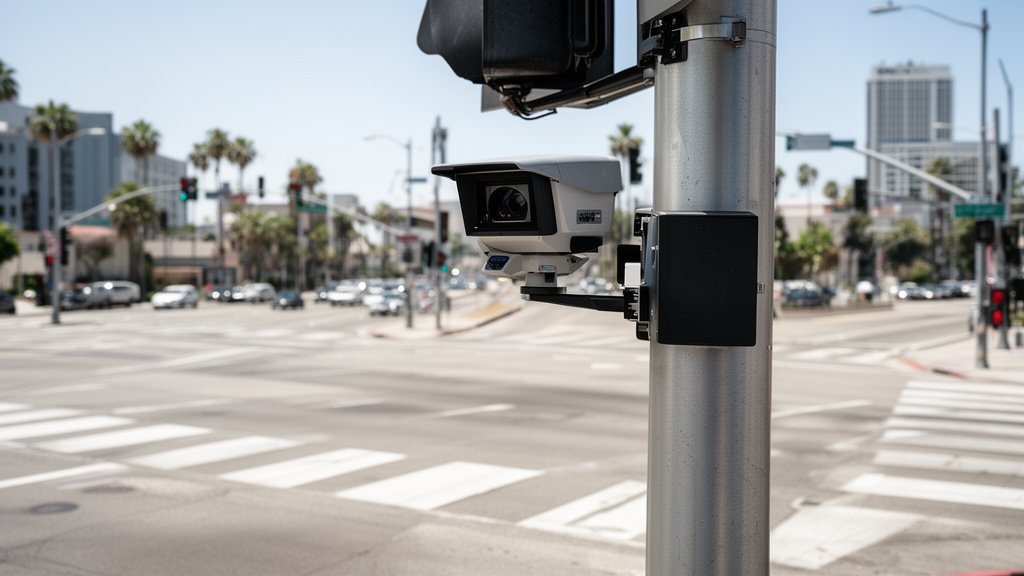
Unlike traditional surveillance, the speed safety system utilizes high-resolution Lidar sensors capable of tracking vehicle velocity with millimeter-level precision. When a vehicle crosses a defined speed threshold, the system triggers a camera to capture the license plate and, in some jurisdictions, the vehicle’s make and model. The data is then processed through an encrypted system to verify the violation. City officials have emphasized that the primary goal is not revenue generation but behavior modification. The cameras serve as a constant, passive presence, intended to slow the overall flow of traffic on high-risk corridors. By creating a ‘continuous enforcement’ environment, the city hopes to break the pattern of drivers accelerating between traditional patrol zones.
Geographic Deployment and the High Injury Network
The selection of camera locations is not arbitrary. LADOT has specifically targeted the ‘High Injury Network,’ a mapped dataset identifying the 6% of Los Angeles streets that account for roughly 70% of all severe and fatal traffic injuries. Residents can expect to see these units clustered near schools, senior centers, and major intersections known for high pedestrian foot traffic. This targeted deployment is designed to maximize the safety impact per unit installed. By concentrating resources where the statistical risk is highest, the city aims to create ‘safety corridors’ that allow for safer passage for the most vulnerable road users. This methodology aligns with global best practices in urban planning, moving away from widespread, low-visibility enforcement toward high-visibility, location-specific interventions.
Understanding the Financial Structure
The fine structure for the new system is designed to be graduated, acknowledging that while speeding is a public safety hazard, the severity of the danger increases exponentially with speed. Fines begin at $50 for infractions just above the speed limit and scale significantly for repeat offenders or those captured traveling at excessive velocities. This tiered approach is intended to punish reckless behavior more heavily than minor lapses in speed control. Revenue generated from these fines is earmarked specifically for traffic safety infrastructure—meaning that every dollar collected is legally mandated to be reinvested back into road improvements, protected bike lanes, and better pedestrian signaling, creating a cyclical reinvestment in the city’s infrastructure.
Addressing the Societal and Privacy Debate
The implementation of an automated camera network has sparked considerable debate regarding privacy and the potential for surveillance overreach. Critics argue that the widespread use of ALPR technology creates a surveillance grid that tracks civilian movement, raising concerns about data retention and the potential for misuse. In response, city officials have confirmed that the data captured by the speed cameras is restricted solely to traffic enforcement. The systems are designed to delete non-violation data immediately, and the records of violations are subject to strict privacy protections under California law. Furthermore, the reliance on automated systems aims to eliminate the potential for bias often associated with human-led traffic stops, as the camera is technically incapable of profiling drivers based on race, age, or vehicle type.
FAQ: People Also Ask
1. How do I know if I was caught by a speed camera?
If a violation is recorded, the registered owner of the vehicle will receive a notice of violation in the mail at the address registered with the DMV. The notice will include instructions on how to view the evidence, pay the fine, or contest the violation.
2. Can I contest an automated speed camera ticket?
Yes. The notice of violation will provide a specific process for contesting the ticket. You can request a hearing to challenge the evidence if you believe the camera malfunctioned or if you were not the driver at the time of the violation, though the registered owner is typically held responsible unless the vehicle was reported stolen.
3. Do these cameras use facial recognition?
No. The California speed safety program is strictly limited to license plate recognition and velocity tracking. The cameras are angled to capture the vehicle’s rear license plate; they do not capture clear, identifying images of the driver’s face.
4. Where can I find a map of all camera locations?
LADOT maintains a public-facing dashboard on their website that lists all active and proposed speed safety camera locations. The city is required to provide public notice before any new cameras are installed or activated.