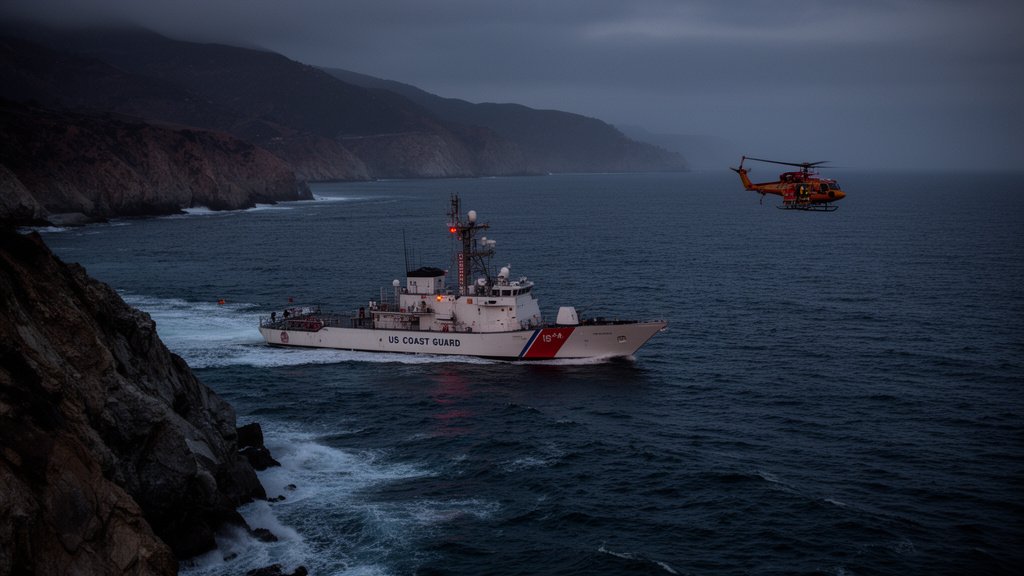
A medical helicopter crashed into the Pacific Ocean near Catalina Island late Wednesday night, triggering a massive, multi-agency search and rescue operation that has resulted in two confirmed fatalities and two individuals transported to area hospitals. As of Thursday morning, authorities confirmed that one passenger remains missing, with the search continuing under challenging maritime conditions. The incident, involving a medically equipped transport aircraft, has prompted an immediate investigation by federal aviation authorities as local, state, and federal teams coordinate to locate the remaining missing individual.
Key Highlights
- Two fatalities confirmed following a helicopter crash off the coast of Catalina Island.
- Two survivors have been recovered and transported to nearby hospitals for medical treatment.
- Search operations are currently active for one missing passenger, involving the US Coast Guard and local emergency services.
- Federal agencies, including the National Transportation Safety Board (NTSB), are launching an investigation into the crash causes.
Crisis on the Coast: The Investigation and Recovery Effort
The catastrophic incident occurred late Wednesday evening, turning a routine medical transport operation into a life-saving rescue mission in the dark waters of the Pacific. According to preliminary reports from the US Coast Guard and local law enforcement, the helicopter went down in the waters surrounding Catalina Island, a popular destination off the Southern California coast. The exact cause of the crash remains unknown, and the recovery of the aircraft will be the primary focus of the upcoming National Transportation Safety Board (NTSB) investigation.
The Immediate Emergency Response
Upon receiving the distress call, the US Coast Guard deployed assets, including helicopters and boat crews, to the last known coordinates of the aircraft. They were joined by the Los Angeles County Fire Department and Sheriff’s Department, both of which possess specialized maritime rescue capabilities. The coordination between these agencies is critical, as the crash site presents significant technical challenges. Operating in darkness, with potential debris fields spreading across the water due to tidal currents, search teams are utilizing advanced sonar and night-vision technology to locate the missing passenger. The proximity to the island’s rocky shoreline complicates the rescue, as surge conditions can make the water treacherous for small rescue boats.
Technical Challenges in Maritime Aviation
Medical helicopter operations, particularly in maritime environments, carry inherent risks that standard inland flights do not. The combination of variable weather patterns, salt air corrosion, and the absence of visual ground references at night can challenge even the most experienced flight crews. Aviation safety experts note that “controlled flight into water” (CFIT) scenarios are distinct from other accidents, requiring specific recovery techniques. The NTSB investigators are expected to look into several factors: mechanical failure, pilot disorientation, and environmental conditions at the time of the flight. Recovering the wreckage—specifically the flight data recorder, or “black box”—will be paramount to determining whether the helicopter suffered a catastrophic technical malfunction or encountered unforeseen weather conditions that rendered the flight unsustainable.
The Broader Impact on Medevac Services
This incident casts a spotlight on the critical role that air medical transport plays in the healthcare infrastructure of remote or geographically isolated locations like Catalina Island. Residents and tourists alike rely on these services for time-sensitive medical emergencies. The loss of a medical helicopter is not only a tragedy for the families involved but also a significant blow to the operational capabilities of regional health networks. As the industry faces scrutiny regarding safety protocols over water, stakeholders will likely call for enhanced training in over-water navigation and emergency ditching procedures for all medical aviation personnel working in coastal regions.
Understanding NTSB Procedures
In the aftermath of such a high-profile accident, the NTSB typically initiates a “Go-Team” response. This team, comprised of specialists in aviation engineering, weather patterns, and human factors, will conduct a comprehensive forensic analysis of the wreckage once it is salvaged. The investigation process is methodical and can take months, sometimes years, to reach a final determination. The primary goal is to identify safety gaps that could prevent future occurrences, potentially leading to new FAA regulations for medical helicopters operating along coastlines.
FAQ: People Also Ask
1. What is the current status of the search for the missing passenger?
As of Thursday morning, the search is ongoing. US Coast Guard and local agencies are actively patrolling the crash site using air and sea assets, though officials have noted that search conditions remain difficult due to the environment.
2. What agencies are involved in the investigation?
The National Transportation Safety Board (NTSB) is leading the federal investigation, supported by the Federal Aviation Administration (FAA). The US Coast Guard and local Los Angeles law enforcement are handling the immediate search and recovery of the wreckage.
3. Why are medical helicopters at higher risk in maritime areas?
Maritime operations lack visual horizon references at night and are subject to rapid weather shifts and “white-out” conditions. These factors require specialized pilot training and advanced avionics that are critical for safety.
4. How long will the NTSB investigation take?
While the NTSB will release preliminary findings in the coming weeks, a full investigation, including the final report and probable cause determination, typically takes 12 to 24 months depending on the complexity of the data recovered from the aircraft.