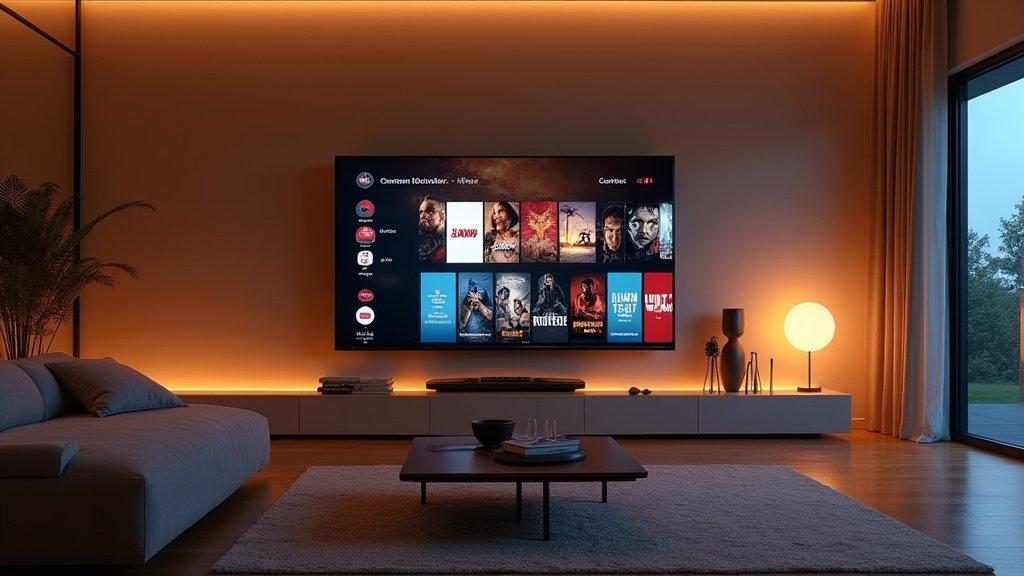
In a strategic expansion of its free, ad-supported streaming television (FAST) portfolio, LG Electronics has announced a high-profile partnership with studio giant Lionsgate. This collaboration brings three dedicated pop-up channels to LG Channels, the company’s integrated streaming service, featuring a rotating selection of content from the critically acclaimed and commercially massive film franchises: ‘The Hunger Games,’ ‘Saw,’ and ‘John Wick.’
These channels represent a significant shift in how studios monetize their back-catalogs and how hardware manufacturers like LG position their operating systems, such as webOS, as primary media hubs. By providing direct, free access to premium intellectual property, LG is positioning itself as a destination for high-end cinematic experiences without the requirement of a traditional subscription service.
The Strategic Pivot to FAST Channels
The rise of Free Ad-supported Streaming Television (FAST) has been one of the most transformative trends in the digital entertainment landscape over the last 24 months. While subscription video-on-demand (SVOD) services have seen market saturation and increasing price sensitivity among consumers, FAST channels offer a “lean-back” experience that mirrors traditional cable television while leveraging the internet’s infrastructure.
For LG Channels, the inclusion of Lionsgate’s heavy-hitting franchises is a tactical maneuver designed to boost platform engagement. By “branding” these channels specifically around cultural phenomena—such as the dystopian thrills of ‘The Hunger Games,’ the visceral horror of ‘Saw,’ and the high-octane action of ‘John Wick’—LG creates an environment where viewers are not just browsing a generic library but are being served curated, appointment-style television. This approach effectively bridges the gap between the chaotic discovery process of streaming and the curated simplicity of linear broadcast.
Lionsgate’s IP Monetization Model
For Lionsgate, this partnership is a masterclass in maximizing the lifecycle of intellectual property. Rather than letting blockbuster films languish behind subscription paywalls or seasonal licensing deals, the studio is utilizing the pop-up channel format to reinvigorate interest. Each of these franchises holds substantial cultural weight, and by placing them in a dedicated channel environment, Lionsgate can drive viewership metrics and ad revenue simultaneously.
Furthermore, the “pop-up” nature of these channels—available through the end of the year—creates a sense of urgency. This scarcity marketing technique is essential in the digital age. When content is “always available,” it often becomes invisible; when it is presented as a special, limited-time event, it incentivizes viewers to tune in immediately, thereby increasing the platform’s daily active user (DAU) count during the promotional window.
The Role of Hardware in Content Discovery
This initiative underscores a larger trend: hardware manufacturers are no longer just building TVs; they are building media ecosystems. LG’s webOS is central to this experience. By integrating these Lionsgate channels directly into the UI, LG removes the friction of downloading separate apps or navigating third-party interfaces.
This integration allows for sophisticated data collection and targeted advertising capabilities. Because LG owns the hardware and the software, it can offer advertisers granular insights into viewing habits, hardware usage, and cross-channel engagement—metrics that are increasingly valuable as traditional Nielsen ratings become less representative of modern viewing behaviors. For the viewer, the result is a seamless interface where high-quality cinema is merely a click away, integrated into the very fabric of the television’s operating system.
Future Outlook: The Hybridization of Streaming
As the streaming market continues to fragment, the “hybrid” model—combining premium, franchise-level content with ad-supported distribution—is likely to become the industry standard. Consumers are increasingly fatigued by “subscription stacking,” where the monthly cost of multiple services creates a financial burden similar to, or worse than, traditional cable.
By leveraging the FAST model for blockbuster content, studios like Lionsgate and platforms like LG are responding to consumer demand for cost-effective, high-quality entertainment. If this pilot program proves successful in terms of viewership retention and ad-inventory sell-through, we can expect to see an expansion of this model, potentially moving from temporary “pop-up” channels to more permanent, franchise-branded digital destinations within the LG ecosystem.
FAQ: People Also Ask
Q: Are these LG Channels free to watch?
A: Yes, LG Channels is a free, ad-supported streaming service available on LG Smart TVs. There is no subscription fee required, though the service is supported by advertisements.
Q: How long will these Lionsgate pop-up channels be available?
A: These specific pop-up channels are scheduled to be available to LG Channels viewers through the end of the year.
Q: Do I need a special app to access these channels?
A: No additional apps are required. These channels are integrated directly into the LG Channels service on LG Smart TVs running webOS.
Q: Will the content on these channels be interrupted by ads?
A: Yes. As the service is a FAST (Free Ad-supported Streaming TV) platform, viewers should expect to see commercial breaks during their viewing experience, similar to traditional broadcast television.