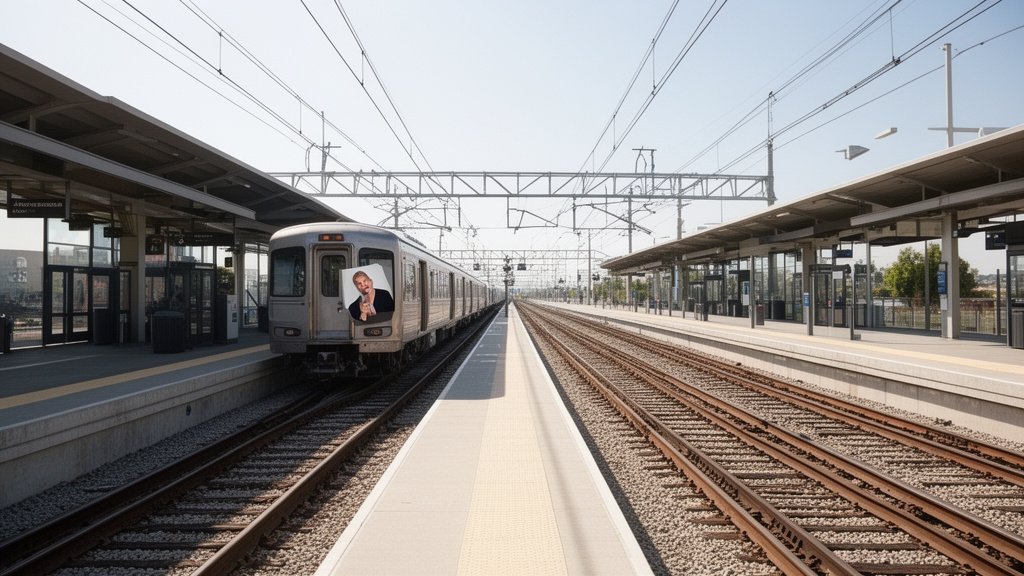
On May 17, 2024, the Sylmar/San Fernando Metrolink station became the scene of a violent incident that resulted in the death of a passenger. Law enforcement officials, including personnel from the Los Angeles County Sheriff’s Department (LASD), confirmed that a stabbing occurred aboard a train on the Antelope Valley Line. The suspect involved in the attack was taken into custody shortly after the incident, bringing a temporary close to a volatile situation that disrupted the commute for hundreds of regional passengers.
The Incident at Sylmar/San Fernando Station
The event unfolded during the morning commute, a time typically defined by routine and predictability for thousands of Southern California residents who rely on the Antelope Valley Line to travel between Palmdale/Lancaster and downtown Los Angeles. According to official reports, Metrolink train #263 was the vessel for this violent encounter. As the train approached the Sylmar/San Fernando station, a confrontation escalated into a physical altercation. Law enforcement agencies were dispatched to the scene immediately upon receiving distress calls regarding the stabbing. Upon arrival, officers secured the area, confirmed the fatality, and initiated the process of detaining the individual identified as the suspect. The swift response by local authorities prevented the potential for further violence and allowed for the preservation of the scene, which is critical for the ongoing homicide investigation.
Operational Response and Forensic Investigation
Following the arrest, the immediate priority for the Los Angeles County Sheriff’s Department was the forensic processing of the train car and the station platform. The presence of forensic units at the Sylmar/San Fernando station necessitated a temporary shutdown of transit operations along this segment of the line. For Metrolink, an agency that prides itself on reliability and regional connectivity, such an event poses significant operational challenges. The coordination between Metrolink management and the Sheriff’s Department was vital in managing the flow of information to passengers and ensuring the safety of those present. Investigators spent hours gathering evidence, interviewing witnesses, and reviewing on-board surveillance footage—a standard procedure in modern transit-based crimes to establish a clear timeline of the events leading up to the stabbing. The recovery of the weapon and the processing of biological evidence are central pillars of the developing legal case against the suspect.
Transit Security: A Growing Regional Concern
This incident has reignited a broader conversation regarding safety and security measures across Los Angeles County’s various transit systems. While Metrolink, as a commuter rail service, generally maintains different security profiles than the Los Angeles Metro bus and rail lines, the incident in Sylmar serves as a stark reminder of the vulnerabilities inherent in public transport. Security analysts often point to the difficulty of screening passengers in open-access transit systems, where the sheer volume of daily riders complicates the implementation of high-security checkpoints similar to those found in aviation. The challenge for agencies like Metrolink is balancing the accessibility and affordability of regional rail with the increasing necessity for visible law enforcement presence and advanced surveillance technology. Community advocates and frequent riders have expressed renewed anxiety, pushing for a reevaluation of transit safety protocols, including increased deputy patrols on trains and enhanced emergency communication systems for passengers.
Economic and Psychological Impact on Commuters
Beyond the tragedy of the loss of life, the incident has had tangible economic and psychological repercussions for the region. The disruption of the Antelope Valley Line forced hundreds of commuters to seek alternative transportation, impacting productivity and causing significant personal stress. For many, the train is more than just a commute; it is a vital link to employment and education. The psychological “chill” that follows a violent incident on public transit cannot be understated. Commuters, who spend hours weekly in these shared spaces, often report a heightened sense of vigilance following such news. This can lead to a dip in ridership as individuals opt for private vehicles, thereby exacerbating traffic congestion on major freeways like the 5 or the 14—arteries that are already strained. The long-term impact on ridership depends heavily on how effectively the transit authority communicates its security upgrades and restores public confidence in the safety of the rail system.
Future Implications for LA Transit Policy
Looking ahead, local government officials and transit board members are likely to face pressure to increase funding for safety initiatives. This may involve the deployment of more dedicated transit police, the integration of real-time AI-based surveillance to detect erratic behavior, and deeper collaboration between regional transit agencies and law enforcement. The investigation into the Sylmar stabbing is a critical data point for these discussions. Whether this leads to permanent, structural changes in security policy remains to be seen, but it is clear that the status quo of transit security is currently under intense scrutiny. As the investigation progresses through the judicial system, the transparency of the legal proceedings will be paramount in providing closure to the victim’s family and reassurance to the riding public.
FAQ: People Also Ask
What happened at the Sylmar Metrolink station?
A stabbing occurred on a Metrolink train on the Antelope Valley Line, resulting in one fatality. The suspect was taken into custody by law enforcement at the scene.
Is the Antelope Valley Line currently operational?
While the specific train involved in the incident was delayed and taken out of service for the investigation, Metrolink operations generally resume once law enforcement clears the scene. Passengers are encouraged to check the Metrolink website for the latest service alerts.
What security measures are in place on Metrolink trains?
Metrolink employs a combination of Transit Security Officers, local law enforcement partnerships, and on-board surveillance systems to monitor and respond to incidents. Security is a continuous operational priority for the agency.
How can passengers report suspicious activity?
Passengers are urged to report suspicious behavior immediately by alerting on-board personnel or using the emergency communication buttons on train cars. Additionally, the Metrolink website provides information on how to contact transit security.