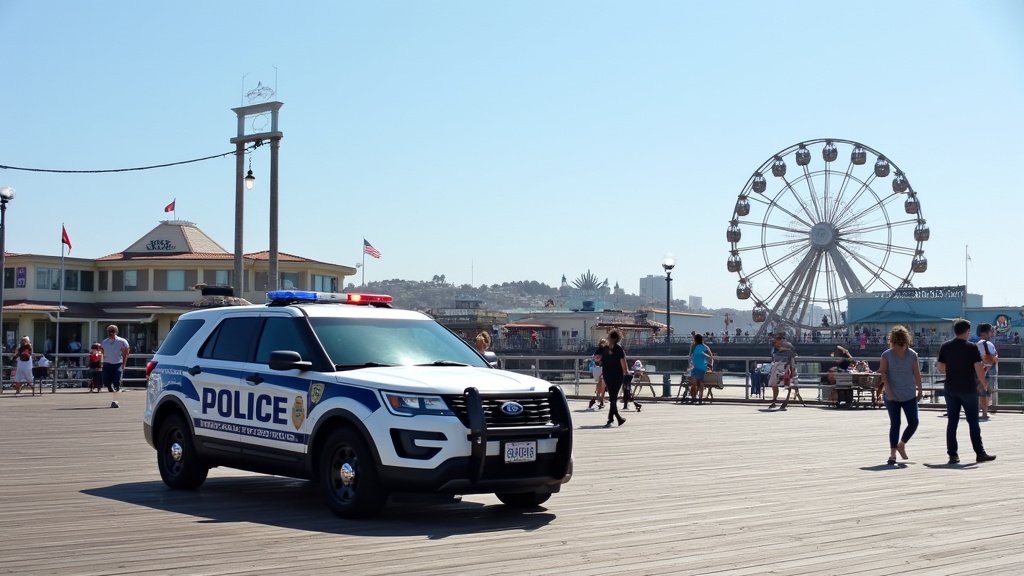
Santa Monica police officials have confirmed that a teenage suspect from Las Vegas has turned himself in to authorities, bringing a pivotal conclusion to the initial phase of the investigation into the violent shooting that disrupted the Santa Monica Pier earlier this week. The incident, which sent shockwaves through the local tourist community and reignited debates regarding security at Southern California’s busiest coastal attractions, resulted in a multi-state manhunt that ultimately culminated in the suspect’s voluntary surrender.
Key Highlights
• Suspect Identification: The suspect is a male teenager residing in Las Vegas, Nevada, whose identity remains protected due to his status as a juvenile in the judicial system.
• The Surrender: The suspect coordinated with legal counsel to surrender to the Santa Monica Police Department (SMPD) without further incident.
• Ongoing Investigation: The SMPD is actively processing forensic evidence collected from the pier to corroborate the suspect’s involvement and determine the motive.
• Public Safety: Santa Monica officials have announced plans to review and potentially enhance security protocols at the pier, one of the most visited landmarks in Los Angeles County.
The Anatomy of the Investigation and Turn-In
The shooting at the Santa Monica Pier was a targeted incident that occurred during peak tourist hours, creating immediate panic among visitors. According to reports from the Santa Monica Police Department, the perpetrator fled the scene immediately after the discharge of the weapon, leading to a frantic evacuation of the pier and an extensive lockdown of the surrounding coastal area. Law enforcement agencies, leveraging surveillance footage from multiple high-definition cameras installed along the pier’s boardwalk, quickly identified the suspect.
The Logistics of the Manhunt
The investigation quickly spanned state lines. Because the suspect was identified as a resident of Las Vegas, the Santa Monica Police Department collaborated closely with law enforcement agencies in Nevada. This interstate cooperation was instrumental in tracking the suspect’s movements following the incident. The suspect, realizing that apprehension was imminent as the surveillance network tightened, sought legal representation. This legal counsel facilitated a negotiated surrender, ensuring that the suspect arrived at the Santa Monica Police station to face questioning under the guidance of an attorney. This surrender was described by police as a non-violent, procedural handover, though the investigation into potential accomplices or external influences remains active.
Challenges in Juvenile Legal Proceedings
Because the suspect is a minor, the legal proceedings will diverge significantly from those of an adult defendant. Under California law, the prosecution of juvenile offenders focuses on rehabilitation and placement rather than traditional incarceration, though the nature of the crime—a violent felony involving a firearm—allows for the possibility of a transfer to adult court depending on the severity of the charges filed by the District Attorney. Legal analysts indicate that the prosecutor’s office will likely review the suspect’s criminal history, if any, and the premeditation involved in the incident. The fact that the suspect traveled from Nevada to California to commit the act may be a complicating factor in establishing intent, potentially leading to additional charges beyond assault with a deadly weapon.
Societal and Economic Impact on Local Tourism
The Santa Monica Pier is more than just a landmark; it is a critical economic engine for the city. With millions of visitors annually, the perception of safety is paramount to the local economy. Business owners on the pier have expressed concern that isolated violent incidents could deter future tourism, which is currently recovering from broader economic fluctuations.
Re-evaluating Pier Security Protocols
The immediate response to the shooting included a temporary closure of the pier, which resulted in significant revenue loss for local vendors. Moving forward, the city council is expected to debate the integration of more advanced security measures. Proposals currently on the table include the installation of additional metal detection points at primary access ramps, increased foot patrols by the Santa Monica Police Department’s Beach Unit, and the potential implementation of facial recognition technology integrated into the existing camera network. Critics of these measures argue that such invasive security could dampen the relaxed atmosphere of the beach, while proponents suggest that in an era of heightened public danger, such precautions are the standard cost of keeping iconic public spaces open.
The Jurisdictional Intersection: California and Nevada
The suspect’s residency in Las Vegas highlights a broader concern regarding the mobility of offenders in a post-pandemic society. The ability for a juvenile to travel interstate to commit a violent crime poses a unique challenge to inter-agency cooperation. The success of the Santa Monica Police Department in coordinating with Nevada counterparts has been lauded as a model for effective communication, but it also raises questions about whether federal oversight is required for managing interstate crimes involving minors. This case serves as a test case for future legislative proposals that might aim to bridge the gap between regional policing databases to prevent suspects from fleeing across state lines following violent incidents.
The Path Forward: What Happens Next
As the suspect enters the juvenile detention system, the focus shifts from apprehension to the judicial process. There will be a detention hearing where the court will determine whether the suspect remains in custody during the proceedings. Simultaneously, the Santa Monica Police Department continues to analyze physical evidence. Ballistics reports are currently being finalized to match the weapon—or the projectile—to the suspect, should the weapon be recovered. The victim(s) in this case, who are currently recovering, will be central to the trial, providing testimony that will be vital in ensuring a conviction.
FAQ: People Also Ask
1. What are the specific charges against the suspect?
While the official filing by the District Attorney is pending, legal experts anticipate charges ranging from assault with a deadly weapon to attempted homicide, with potential enhancements for the use of a firearm and the location of the incident.
2. How will the suspect’s age affect the trial?
As a juvenile, the suspect will primarily go through the juvenile court system, which emphasizes rehabilitation. However, given the violent nature of the shooting, there is a possibility that prosecutors could file a motion to transfer the case to adult court, depending on the severity of the incident and the suspect’s background.
3. Was the shooting related to gang activity or a random act?
Police have not publicly confirmed a motive. However, investigators are looking into whether the shooting was a targeted dispute or an unprovoked act, as early evidence does not suggest a random mass casualty attempt.
4. Is the Santa Monica Pier currently safe for visitors?
Yes. The Santa Monica Police Department has increased its visibility in the area following the incident, and city officials have emphasized that the pier remains under high-level security surveillance to ensure the safety of all patrons.