The Los Angeles County Metropolitan Transportation Authority (Metro) Board solidified its long-term operational strategy during its pivotal July 2026 meeting, setting the stage for a transformative period leading up to the 2028 Summer Olympics. The meeting yielded a series of high-stakes decisions that directly impact how Los Angelenos will move, live, and interact with urban infrastructure over the coming decade. As the agency grapples with the dual pressures of infrastructure expansion and operational efficiency, the board’s latest legislative packet signals a clear intent to prioritize community engagement through open street events while simultaneously confronting the systemic challenges of housing and freeway congestion.
Advancing Community Mobility: The CicLAvia Investment
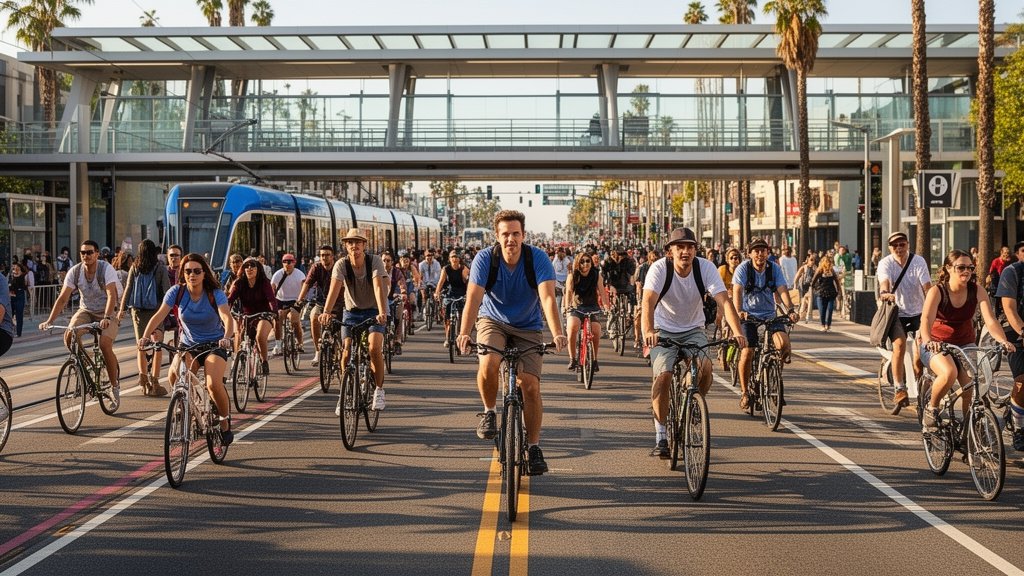
The most tangible outcome of the July 2026 session was the approval of an additional $1 million allocated specifically for CicLAvia-type open street events. For years, these events have been heralded as the ‘lungs of Los Angeles,’ temporarily transforming major thoroughfares into car-free playgrounds for cyclists, pedestrians, and local business vendors. By securing this supplemental funding, the Metro Board is signaling a strategic pivot toward ‘active transportation’ as a core component of the regional mobility plan rather than an occasional perk.
This investment is not merely about recreation. Metro’s data indicates that open street events correlate with increased ridership on nearby transit lines, as thousands of participants use the E, A, or B lines to access the car-free routes. The $1 million injection will specifically target under-served neighborhoods, expanding the geographical footprint of these events to ensure that the health and economic benefits of pedestrianization are not limited to the traditional hubs of Downtown LA or the Westside. Furthermore, this move is widely seen as an ‘Olympics readiness’ initiative, testing the agency’s ability to manage large-scale, non-vehicular traffic patterns ahead of the global influx of visitors expected in 2028.
Addressing the Infrastructure Paradox: Freeways and Governance
While the open streets funding was a point of celebration, the board spent significant time in a more contentious arena: freeway expansion. The paradox facing the Metro Board is stark: the region is desperate for traffic relief, yet expanding freeway capacity often induces demand, contradicting the agency’s stated goals of reaching net-zero emissions. During the July 2026 session, directors debated the technical feasibility of proposed expansions along key corridors, weighing community opposition against the necessity of reducing long-term gridlock.
Governance reform emerged as a parallel theme, with board members initiating a structural review of the agency’s decision-making process. The discussion focused on streamlining the approval pipeline for transit projects, which has historically been bogged down by bureaucratic layers and conflicting mandates between the county and the municipal governments. The call for improved governance is a direct response to public frustration over project delays, particularly regarding the light rail extensions and the bus rapid transit (BRT) initiatives that have seen cost overruns in the last two fiscal quarters.
Housing the Workforce: Transit-Oriented Development Strategies
Perhaps the most forward-looking action taken by the board was the emphasis on workforce housing. Metro has long been a major landowner in the county, possessing significant acreage adjacent to transit hubs. The July meeting saw the board formally advance a policy to accelerate the conversion of these land assets into affordable housing developments. By focusing specifically on ‘workforce housing’—units designated for teachers, first responders, and service workers—the agency is attempting to solve two problems at once: reducing regional commute times by housing people near transit, and addressing the severe affordability crisis that has gripped the county.
This initiative marks a shift in how Metro views its role as a transit agency. No longer just a mover of people, the board is positioning Metro as a key driver of urban design and land-use policy. By integrating housing into the fabric of the transit system, the board aims to create high-density, walkable ‘nodes’ that reduce reliance on single-occupancy vehicles. This strategy, while ambitious, is essential to meeting the long-term sustainability mandates set by the state of California, and it places Metro at the center of the regional housing debate.
Navigating the Road to 2028
The overarching theme of the July 2026 meeting was preparation. With the 2028 Summer Olympics now firmly in the agency’s sights, the window for implementing major structural and policy changes is rapidly closing. The board’s decisions regarding freeway expansion, active transportation, and land use are not isolated policy updates; they are the gears of a much larger machine designed to ensure that Los Angeles is not only capable of hosting the world but is also capable of functioning better for its own residents once the games conclude. As the dust settles on this July session, the path forward appears increasingly defined by a mix of technological investment, community-centric design, and a harder, more disciplined approach to agency governance.
FAQ: People Also Ask
1. How will the additional $1 million for open street events be allocated?
The funding is slated for logistical support, street closures, and safety staffing for an expanded schedule of CicLAvia events, with a specific mandate to focus on under-served corridors in South LA and the San Gabriel Valley, aiming to boost local transit usage.
2. What are the key governance changes being discussed by the Metro Board?
The board is focusing on streamlining the project approval process to cut down on bureaucratic delays. The goal is to move critical infrastructure projects from the planning phase to the construction phase faster, specifically targeting BRT and light rail extensions.
3. How does Metro plan to fund the new workforce housing initiatives?
Metro is utilizing its existing land holdings near major transit hubs. By partnering with private developers and utilizing tax credits and local affordability subsidies, the agency intends to build high-density units that prioritize workers who rely on public transit for their daily commute.
4. Is freeway expansion still a priority for Metro?
It remains a point of intense debate. While the board continues to evaluate infrastructure needs, the focus is shifting toward ‘smart’ freeway management—such as lane optimization and toll-based managed lanes—rather than traditional wide-scale highway widening, which faces significant political and environmental headwinds.