
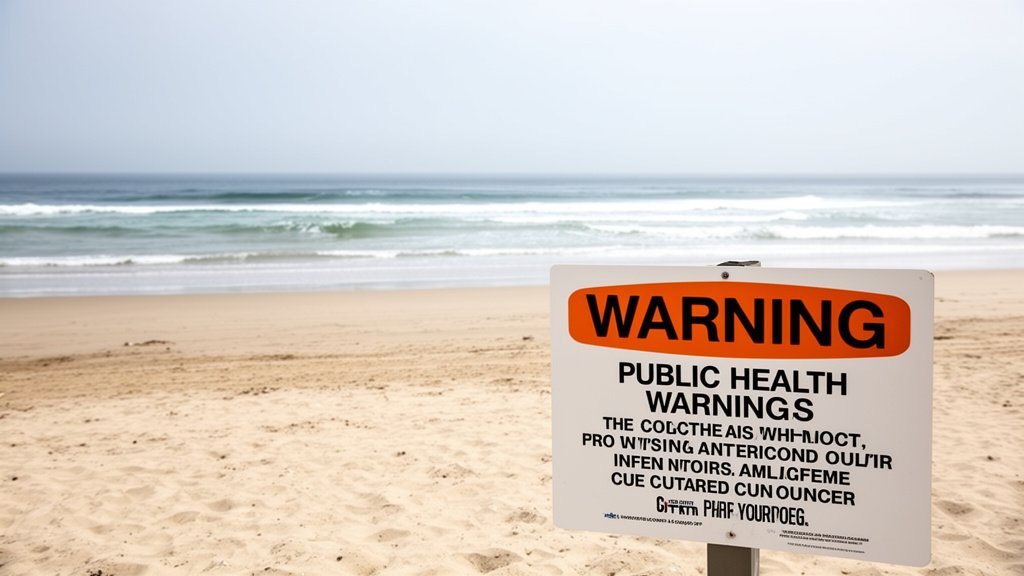
The Los Angeles County Department of Public Health (LADPH) has issued a stern advisory for six prominent beaches across the region, urging the public to avoid entering the ocean waters. Following routine monitoring of water quality, officials identified elevated bacteria levels that exceed state standards for health and safety. The warning, which impacts specific high-traffic areas, underscores the persistent challenge of coastal pollution and urban runoff in Southern California.
Key Highlights
- Immediate Caution: The LADPH advisory warns all beachgoers against swimming, surfing, and playing in the water at six specific beach locations.
Bacteria Thresholds: Water samples indicated levels of indicator bacteria—specifically Enterococcus*—that are significantly higher than the acceptable limits set by California state law.
- Primary Concern: Public health officials emphasize that the primary risk to beachgoers involves potential skin infections, respiratory distress, and gastrointestinal illness caused by contact with contaminated water.
- Duration: These warnings are typically issued for 24 to 72 hours, though they are subject to change based on ongoing water sampling results.
The Anatomy of the Coastal Warning
The Los Angeles County coastline, while iconic, is a complex drainage basin. The recent warnings serve as a stark reminder of how urban infrastructure interacts with our natural environment. When we discuss “elevated bacteria levels” in the context of LA County beach warnings, we are primarily referring to the presence of Enterococcus, an indicator bacteria used by the Environmental Protection Agency (EPA) to assess the risk of waterborne illnesses. While the bacteria itself is not always the direct cause of the illness, its presence is a reliable proxy for the existence of fecal matter and other pathogens in the water.
The Source: Understanding Urban Runoff
Why do specific beaches in Los Angeles repeatedly appear on these warning lists? The answer lies in the intersection of geography and urban planning. Southern California’s coastal water quality is inextricably linked to the massive network of storm drains and channels that feed into the Santa Monica Bay.
During periods of rain, these channels act as conveyor belts for urban debris, animal waste, and industrial residue collected from hundreds of miles of asphalt, parking lots, and residential streets. This “storm drain runoff” carries a heavy payload of contaminants directly into the surf zone. Even during dry weather, localized issues—such as leaking sewage lines, poor circulation in enclosed areas like Marina del Rey, or high bird populations near shoreline piers—can cause bacteria counts to spike. Understanding this dynamic is crucial for the public: the beach itself is not the source of the problem, but rather the “sink” where all upstream urban activity eventually converges.
Public Health Protocols and Compliance
The LADPH operates under strict protocols mandated by the California Department of Public Health and the state’s Water Resources Control Board. Beach water is collected weekly at various sampling stations. If a sample shows bacteria levels exceeding the “AB 411” standards (which set the legal limits for bacterial concentration), the county is obligated to issue an immediate public health warning.
This is not a suggestion; it is a clinical intervention. Exposure to these waters can lead to a range of symptoms, including ear, nose, and throat infections, skin rashes, and severe stomach issues. For vulnerable populations, such as children, the elderly, and those with compromised immune systems, the risks are significantly higher.
Future Implications for Coastal Management
The recurring nature of these warnings has sparked a broader conversation about the economic and environmental future of the LA coastline. Tourism is a multibillion-dollar industry in Los Angeles County, and “closed beach” signs are bad for business. However, the solution is not as simple as banning swimmers. It requires a multi-faceted approach to infrastructure.
Green Infrastructure and Mitigation
City planners and environmental groups are pushing for “green infrastructure” projects designed to capture and filter runoff before it reaches the ocean. These include permeable pavements, rain gardens, and large-scale cisterns that intercept water, allowing it to soak into the ground or be treated rather than flowing directly into the sea. These projects are expensive and logistically complex to install in a dense metropolis, but they represent the only long-term viable strategy for consistent water quality improvement.
The Role of Technology in Public Safety
In the digital age, the gap between water testing and public notification is closing. The county is increasingly relying on real-time data portals to keep the public informed. Residents are encouraged to utilize official department websites rather than relying on outdated signage, as bacteria levels can shift rapidly due to ocean currents and tide changes. This digital transparency is becoming as important as the physical maintenance of our drainage systems.
Economic and Ecological Balance
Ultimately, the health of LA’s beaches is a mirror reflecting the health of the county at large. The bacteria warnings are an early warning system. By investing in cleaner runoff management, the region can not only protect the health of its citizens but also preserve the ecological integrity of the Santa Monica Bay, which serves as a critical marine habitat. Balancing the needs of a sprawling urban population with the fragile nature of the Pacific ecosystem remains the defining challenge for LA’s coastal managers.
FAQ: People Also Ask
1. How long do these warnings usually last?
Typically, warnings remain in effect until subsequent water samples indicate that bacteria levels have returned to safe, acceptable limits. This can take anywhere from 24 hours to several days depending on the intensity of the runoff and ocean conditions.
2. Can I still walk on the sand if the water is flagged?
Yes, the warning pertains specifically to contact with the ocean water. You are generally permitted to walk on the beach, sit on the sand, and use the amenities, provided you avoid entering the water itself.
3. How can I check if a beach near me is safe?
Residents should consult the official Los Angeles County Department of Public Health “Beach Water Quality” portal. This is the only authoritative source for real-time, accurate, and confirmed data regarding beach closures and warnings.
4. What should I do if I accidentally swim in flagged water?
If you have been exposed to potentially contaminated water, immediately rinse off with fresh water. Monitor yourself for symptoms over the next few days. If you experience fever, severe gastrointestinal distress, or signs of skin infection, consult a healthcare professional immediately.