The concept of dressing for ‘self-preservation’ has moved from the fringes of avant-garde design to the center of luxury retail in Los Angeles. As we move into November 2026, the local fashion landscape is undergoing a profound transformation, moving away from the ephemeral trends of the early 2020s toward silhouettes that offer literal and psychological protection. This isn’t merely about weather-proofing against the occasional coastal chill; it is about the architecture of the garment serving as a curated barrier against an unpredictable world. Leading this charge, houses such as Ferragamo, Acne Studios, and Prada are providing the blueprints for a wardrobe designed to shield the wearer, prioritizing structural integrity, heavyweight materials, and intellectualized design over fast-fashion volatility.
Key Highlights
- The Armor Aesthetic: Luxury design in late 2026 is pivoting toward protective silhouettes, with heavy wools, stiff leathers, and sharp tailoring acting as a metaphorical shield.
- Los Angeles Influence: Despite the city’s traditionally laid-back style, LA retailers are seeing a 22% spike in demand for structural investment pieces, moving away from casual loungewear.
- Brand Synergy: Ferragamo’s archival precision, Acne Studios’ deconstructed resilience, and Prada’s intellectual utility define the current ‘self-preservation’ movement.
- Economic Strategy: Consumers are increasingly viewing high-end fashion as a long-term economic hedge, favoring pieces with resale value and durable construction over seasonal trend-chasing.
The Psychology of Architectural Style
Fashion has long been viewed as a form of communication—a way to signal status, identity, or group affiliation. However, as we approach the final quarter of 2026, the narrative has shifted toward internal preservation. The psychological weight of global instability has catalyzed a desire for garments that feel substantial. When a consumer wears a coat from Ferragamo or an oversized knit from Acne Studios, they are not just wearing clothing; they are occupying a space of their own making.
This trend is particularly pronounced in Los Angeles. Traditionally, the city’s fashion ethos was dominated by light fabrics and fluid silhouettes. Yet, November 2026 data shows a significant pivot. The ‘soft’ LA aesthetic is being tempered by a ‘hard’ structural trend. Retailers in high-end corridors like Rodeo Drive and Melrose Place are pivoting their inventory to favor structured blazers, heavy-gauge denims, and trench coats that offer a sense of gravity. The clothing has become a sanctuary, a physical manifestation of the need for stability.
The Ferragamo Approach: Structural Elegance
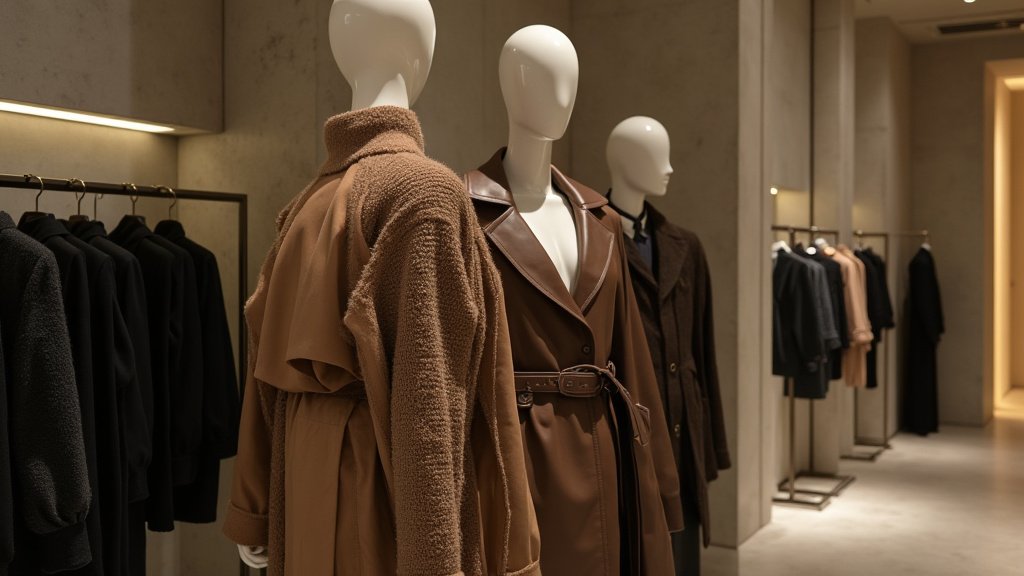
Under the direction of creative lead Maximilian Davis, Ferragamo has mastered the art of the ‘controlled silhouette.’ The brand’s current collection focuses on sharp, vertical lines that elongate the frame and provide a sense of command. In Los Angeles, where the landscape is dominated by expansive, horizontal vistas, these vertical garments act as a grounding force. The use of high-density leathers and calfskin in their seasonal outerwear is not just aesthetic; it is tactile protection. For the shopper looking to embody self-preservation, the Ferragamo trench serves as the quintessential ‘urban armor,’ blending classic Italian tailoring with a futuristic, impenetrable aesthetic.
Acne Studios: The Deconstructed Shield
While Ferragamo leans into elegance, Acne Studios approaches self-preservation through the lens of deconstruction. Jonny Johansson’s recent work focuses on layering and raw, durable textures. In November 2026, Acne’s contribution to the trend involves ‘protective knits’—oversized, densely woven garments that physically obscure the body. This is a deliberate aesthetic choice, creating a barrier between the individual and the environment. For the Los Angeles creative set, this provides a necessary visual distance—a way to step back from the performative nature of local media culture and into a garment that emphasizes introspection over exhibitionism.
Prada’s Intellectual Utility
Prada remains the master of the conceptual, and their approach to self-preservation is rooted in intellectual utility. Miuccia Prada’s designs have always questioned the nature of necessity, and the current 2026 collection is no exception. By integrating deep, functional pockets, hidden fasteners, and weather-resistant nylon hybrids, Prada elevates the ‘utilitarian’ trend to high art. It is the perfect marriage of form and function for the modern Angeleno: a garment that anticipates the needs of the day—whether it be a sudden shift in climate or the need for a seamless transition from a high-stakes board meeting to a casual evening social event.
The Future of Investment Luxury
The shift toward ‘self-preservation’ is also an economic reaction to the fluctuations of the last few years. Consumers are becoming increasingly discerning, rejecting the ‘disposable’ culture of micro-trends. Instead, they are gravitating toward investment-grade items. This is a trend that transcends geography but finds a unique home in Los Angeles, where the integration of ‘Old Hollywood’ prestige with ‘New Tech’ innovation creates a market that values longevity.
Looking ahead to 2027, we can anticipate this ‘armor’ trend to deepen. We will likely see more integration of biometric fabrics and sustainable, high-durability composites. The consumer of the future is not buying clothes to match a season; they are buying clothes to survive the era. As brands like Ferragamo, Acne Studios, and Prada continue to refine these concepts, the ‘self-preservation’ wardrobe will likely become the standard for the modern, professional individual, cementing the idea that good style is not just an adornment—it is a necessity.
FAQ: People Also Ask
Q: Why is ‘self-preservation’ becoming a key fashion trend in Los Angeles?
A: The trend reflects a broader psychological shift where consumers seek stability and security. In a volatile global environment, high-quality, structured clothing acts as a physical ‘shell’ or armor, providing a sense of comfort and control.
Q: How do brands like Ferragamo and Prada differentiate their approach to this trend?
A: Ferragamo focuses on structural elegance, using high-density leathers and sharp tailoring to provide a ‘commanding’ presence. Prada, conversely, emphasizes ‘intellectual utility,’ prioritizing functional design elements like hidden pockets and weather-resistant materials to meet the practical needs of the wearer.
Q: Is this trend purely aesthetic, or is there an economic component?
A: It is both. While the aesthetic is clearly defined by structural silhouettes, there is a strong economic driver: consumers are moving toward high-investment, durable pieces that hold value, moving away from ‘fast fashion’ toward longevity and sustainability.
Q: Where can I find these brands in Los Angeles as of November 2026?
A: Flagship boutiques in areas like Beverly Hills (Rodeo Drive) and specific luxury retail hubs in West Hollywood are the primary locations for the current seasonal collections from these houses.