The New Frontier of Cyber-Physical Resilience
The landscape of critical infrastructure protection has undergone a seismic shift, and at the heart of this transformation lies the fundamental challenge of securing machine-to-machine (M2M) communications. Today, the industrial sector faces a complex dilemma: as factories, power plants, and utility grids become increasingly digitized, the traditional “perimeter-based” security model is no longer sufficient. It is within this high-stakes environment that Corsha has been named a 2026 Gartner Cool Vendor in Cyber-Physical Systems (CPS) Security, a recognition that underscores the critical importance of identity-centric security for the modern industrial age.
Bridging the OT-IT Divide: Why Identity Matters
For decades, Operational Technology (OT) and Information Technology (IT) operated in silos. OT environments, characterized by legacy controllers, programmable logic controllers (PLCs), and proprietary sensors, were often “air-gapped” from the internet. However, the convergence of these worlds—driven by the necessity for real-time data analytics and remote management—has exposed these systems to unprecedented risk. Conventional firewalls and virtual private networks (VPNs) are proving incapable of shielding these interconnected systems from sophisticated threat actors who target the “plumbing” of the infrastructure—the machines talking to other machines.
Corsha’s recognition by Gartner highlights a market-wide pivot toward identity. In the past, industrial security relied on static credentials, such as long-lived API keys or hardcoded passwords, which are easily compromised. Corsha’s platform shifts the paradigm by introducing dynamic, ephemeral identity management. By ensuring that every machine interaction is authenticated, authorized, and ephemeral, the company effectively neutralizes the risks associated with static credential leakage. This is not merely a technical upgrade; it is a foundational change in how industrial operators manage the trust relationship between their physical assets.
The Architecture of Trust: How Corsha Disrupts Traditional Methods
At the core of the problem lies the “hard-shell, soft-center” security failure. Once a malicious actor breaches the network perimeter, they often move laterally, masquerading as authorized machinery to exfiltrate data or disrupt processes. Traditional solutions often struggle to distinguish between a legitimate maintenance request from a factory sensor and a malicious command injection.
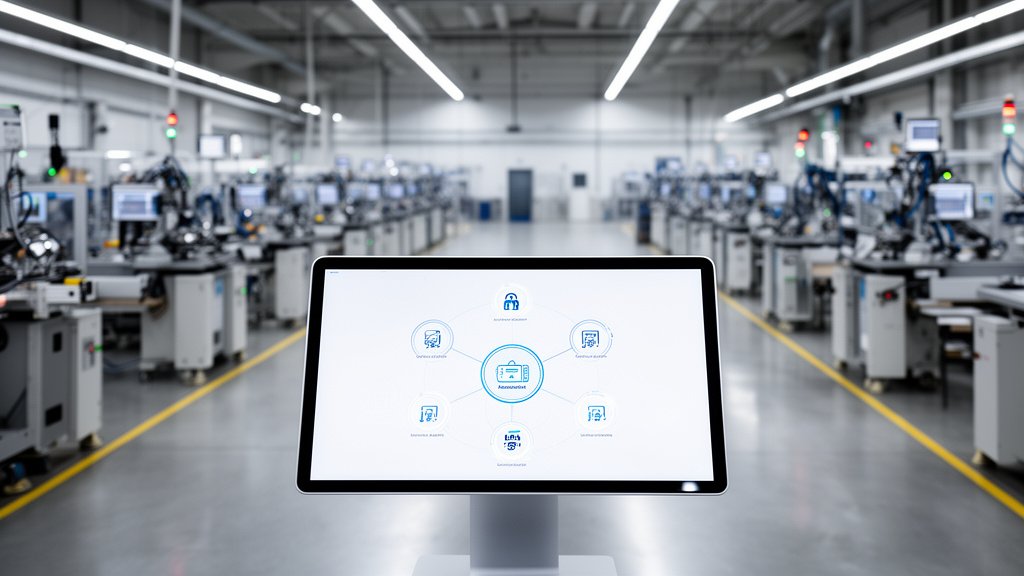
Corsha addresses this by providing a Zero Trust architecture specifically tuned for M2M communication. Unlike traditional network security tools that manage access at the network layer, Corsha focuses on the identity layer. By automatically rotating and managing credentials for API-based services and industrial devices, Corsha ensures that communication channels are only opened when explicitly authorized and for a limited duration. This granular control allows critical infrastructure providers to maintain visibility and security, even in environments where legacy hardware cannot support modern, sophisticated security agents.
This approach aligns with the “Gartner Cool Vendor” criteria, which prioritize companies that are “innovative, impactful, and intriguing.” By solving the specific friction between security and operational uptime—a common pain point in sectors like power generation and water treatment—Corsha provides a path forward that does not necessitate the wholesale replacement of costly, long-term industrial equipment.
Securing the Machine-to-Machine Frontier
As we look toward 2026, the reliance on automated systems is only set to increase. With the integration of AI-driven predictive maintenance and autonomous industrial robots, the number of machine identities is exploding. Managing these identities manually is an impossible task, yet failing to do so creates massive gaps in an organization’s attack surface.
Corsha’s platform functions as an automated “gatekeeper” that lives between the machine and the network. It validates the identity of the device requesting data and the service receiving it, ensuring that only trusted entities are communicating. This is the bedrock of the modern industrial IoT (IIoT) strategy. By embedding security directly into the communication flow, Corsha eliminates the need for complex, manual firewall rules that are frequently misconfigured.
Critical Infrastructure: The Economic Imperative for 2026
Beyond the technical benefits, the economic implications for critical infrastructure providers are significant. A breach in a power plant or a manufacturing facility is measured not just in data loss, but in downtime, regulatory fines, and public safety risks. The cost of a successful attack on critical infrastructure can reach hundreds of millions of dollars, not accounting for the long-term reputational damage.
By adopting a solution that offers real-time visibility into M2M traffic and automates identity lifecycle management, organizations are essentially purchasing “insurance” against the most common and damaging types of cyberattacks: credential-based lateral movement. As insurance premiums for cyber-risk continue to climb, companies that implement robust, identity-focused security measures like those offered by Corsha will likely see favorable impacts on their risk assessment profiles.
The Gartner Cool Vendor designation is more than an award; it is a signal to CISOs and plant managers that the industry is ready to move beyond the “fix-it-later” mentality of traditional industrial security. It validates that the future of CPS security is not just about building higher walls, but about better defining the rules of engagement for every machine within those walls. As Corsha continues to scale its platform, its impact on the resilience of global critical infrastructure will be a trend worth monitoring closely over the coming years.
FAQ: People Also Ask
1. What is the significance of the Gartner Cool Vendor designation?
The Gartner Cool Vendor program identifies emerging technology vendors that offer innovative, impactful, and intriguing solutions. Being named a Cool Vendor serves as a high-level industry validation, signaling that a company’s technology is effectively addressing a significant, underserved market need—in this case, securing cyber-physical systems.
2. Why is machine-to-machine (M2M) security so difficult in critical infrastructure?
Critical infrastructure often relies on legacy devices that were designed decades ago, long before modern cybersecurity threats existed. These devices often lack the computing power to run advanced encryption or security software. Additionally, these systems must maintain 99.999% uptime, making traditional security tools that disrupt traffic or require frequent updates highly undesirable.
3. How does Corsha differ from a standard firewall or VPN?
While firewalls and VPNs control network access at the perimeter, they do not inherently understand the identity of the machines communicating. If an attacker breaches the perimeter, they can often move freely. Corsha focuses on identity, ensuring that even if the network is breached, the attacker cannot impersonate machines because they lack the dynamically rotated, authenticated credentials that Corsha manages.