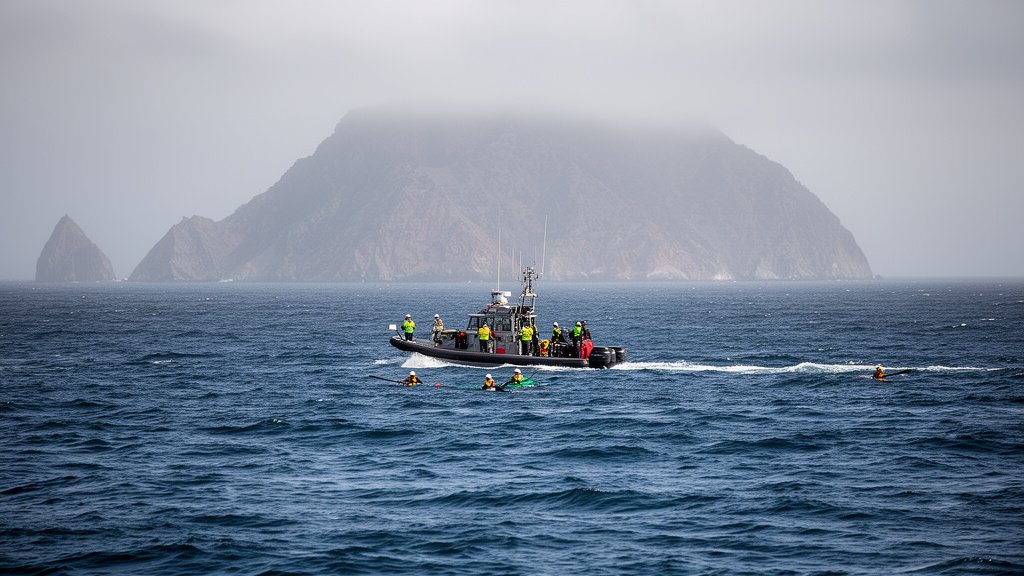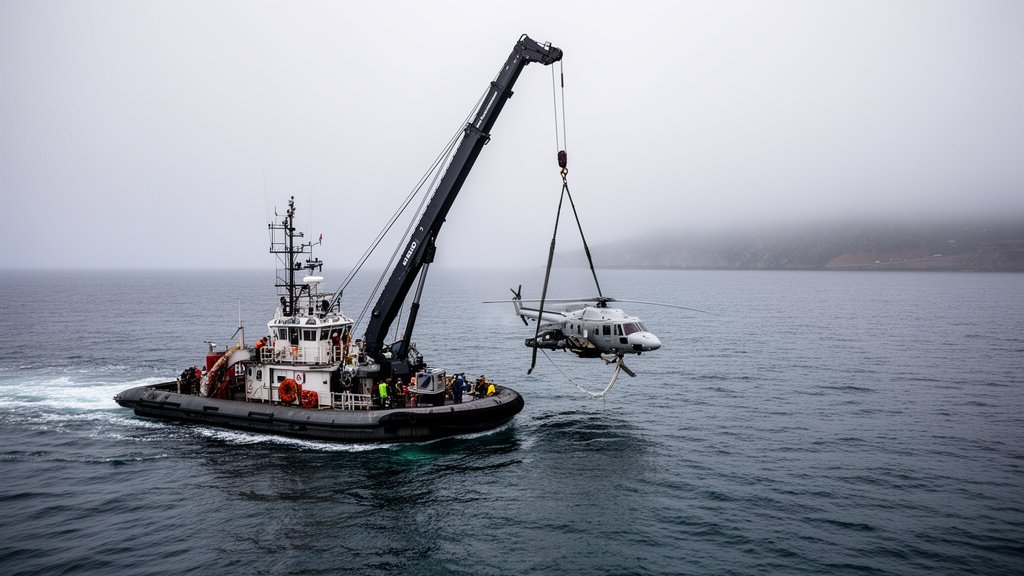
Los Angeles County Sheriff’s Department (LASD) dive teams have successfully recovered the body of the third and final victim from the wreckage of a medical helicopter that crashed off the coast of Catalina Island on Wednesday. This somber discovery concludes the primary search and rescue operation, confirming that all three individuals aboard the aircraft perished in the accident. The incident has sent shockwaves through the emergency medical services (EMS) community and triggered a multi-agency investigation led by the National Transportation Safety Board (NTSB) and the Federal Aviation Administration (FAA).
Key Highlights
- Fatalities Confirmed: Recovery efforts by LASD Emergency Services Detail (ESD) divers have confirmed a death toll of three.
- Aircraft Identification: The downed vessel is confirmed as a Eurocopter EC-135-P2, a common model in the air ambulance industry.
- Ongoing Federal Probe: The NTSB has assumed control of the scene, with investigators arriving to recover the wreckage from the ocean floor.
- Mission Context: The flight was an active medical transport operation, highlighting the inherent risks faced by aerial EMS crews.
The Catalina Tragedy: Investigating the Final Descent
The recovery operation, spanning a tense 24-hour period, was hampered by the challenging environmental conditions of the Pacific Ocean. LASD personnel worked in coordination with maritime authorities to locate the fuselage and the remains of the missing passenger. While the primary recovery phase has concluded, the focus now shifts entirely toward the forensic investigation of the crash site and the aircraft’s mechanical remnants.
The Aircraft: Eurocopter EC-135-P2 Technical Overview
The Eurocopter EC-135-P2, currently produced under the Airbus Helicopters banner, is a twin-engine civil light utility helicopter. Renowned for its versatility and safety record in the medical transport sector, the EC-135-P2 features a Fenestron shrouded tail rotor, which significantly reduces noise and enhances safety for ground personnel.
Industry experts note that while the EC-135-P2 is equipped with advanced avionics and redundant flight systems, mechanical failure or external factors in maritime environments can present critical challenges. The investigation will meticulously examine the aircraft’s flight data recorder (FDR) and cockpit voice recorder (CVR) to determine if the crash was a result of technical failure, pilot error, or sudden environmental conditions that rendered the flight uncontrollable. The debris field, currently located on the seafloor, must be mapped and raised to provide the NTSB with the necessary evidence for their ‘probable cause’ report.
The NTSB Investigation: Protocol and Process
The NTSB’s mandate is to determine the ‘probable cause’ of the accident to prevent future occurrences. In the case of this Catalina Island crash, the investigation will follow a rigorous, multi-staged process.
First, the recovery of the wreckage is paramount. The NTSB relies on specialized equipment to safely extract the frame from the ocean depths without compromising potential forensic evidence. Once the aircraft is ashore, the ‘wrecks’ (the twisted metal and components) will be laid out—a process known as a teardown—to analyze structural failure points.
Second, investigators will analyze the ‘Human, Machine, and Environment’ trifecta. They will investigate the pilot’s logbooks, maintenance records for the EC-135-P2, and weather data for the area during the time of the crash. Given the location—off the coast of Catalina Island—weather patterns, including low-level marine layer fog and wind shears, will be high-priority variables. The flight path leading up to the incident will be reconstructed using radar data to determine if the helicopter deviated from its flight plan before losing contact.
Secondary Angles: Exploring Aviation Risks and Infrastructure
To understand the broader implications of this tragedy, we must examine the intersection of specialized aviation and emergency response.
1. The Perils of Coastal EMS Aviation:
Flying medical missions over open water significantly increases the risk profile compared to inland operations. The lack of visual references (the ‘horizon’) during night or low-visibility conditions can lead to spatial disorientation, a leading cause of helicopter accidents. This crash reopens the debate on whether air ambulance fleets should universally adopt flight systems like Synthetic Vision (SVS) or enhanced Night Vision Goggles (NVG) as a mandatory standard for coastal operations.
2. Maritime Search and Rescue Limitations:
This incident highlights the immense difficulty inherent in maritime recovery. Even with the advanced capabilities of the LASD Emergency Services Detail, the time taken to locate the aircraft in deep water illustrates that survival windows in aviation crashes at sea are razor-thin. This creates a reliance on the aircraft’s ability to remain buoyant or for emergency beacons (ELTs) to function immediately upon impact, which may not always be feasible.
3. Impact on Local Medical Infrastructure:
Catalina Island is a remote destination that relies heavily on air transport for critical patient transfers to the mainland. The loss of a medical helicopter is not just an aviation tragedy; it is a degradation of the regional medical safety net. Hospitals and air ambulance providers will now face logistical strain as they redistribute their existing fleet to cover the service gap created by this loss, potentially increasing response times for other emergencies in the region.
As the NTSB works to piece together the events of Wednesday, the families of the victims and the broader aviation community await answers. For now, the crash serves as a stark reminder of the complexities and risks that define the essential, yet perilous, work of emergency medical aviation.
FAQ: People Also Ask
What is the NTSB’s role in this helicopter crash?
The National Transportation Safety Board (NTSB) is an independent U.S. government investigative agency responsible for civil transportation accident investigation. In this instance, they are responsible for gathering evidence, analyzing the wreckage, reviewing maintenance logs, and ultimately issuing a report determining the ‘probable cause’ of the crash.
Why is the Eurocopter EC-135-P2 widely used in EMS?
The EC-135 is favored for medical transport due to its compact size, which allows for landings in constrained urban areas, and its rear-loading clamshell doors, which facilitate easy patient loading. It is designed to carry a pilot, a medical crew, and a patient, with sufficient power reserves to operate safely in various conditions.
What happens to the wreckage after it is recovered?
After being recovered from the ocean floor, the wreckage is moved to a secure facility. The NTSB organizes a ‘party’ of stakeholders—including representatives from the helicopter manufacturer (Airbus), the engine manufacturer, and local aviation authorities—to inspect the components, check for mechanical integrity, and document any anomalies that could explain the crash.