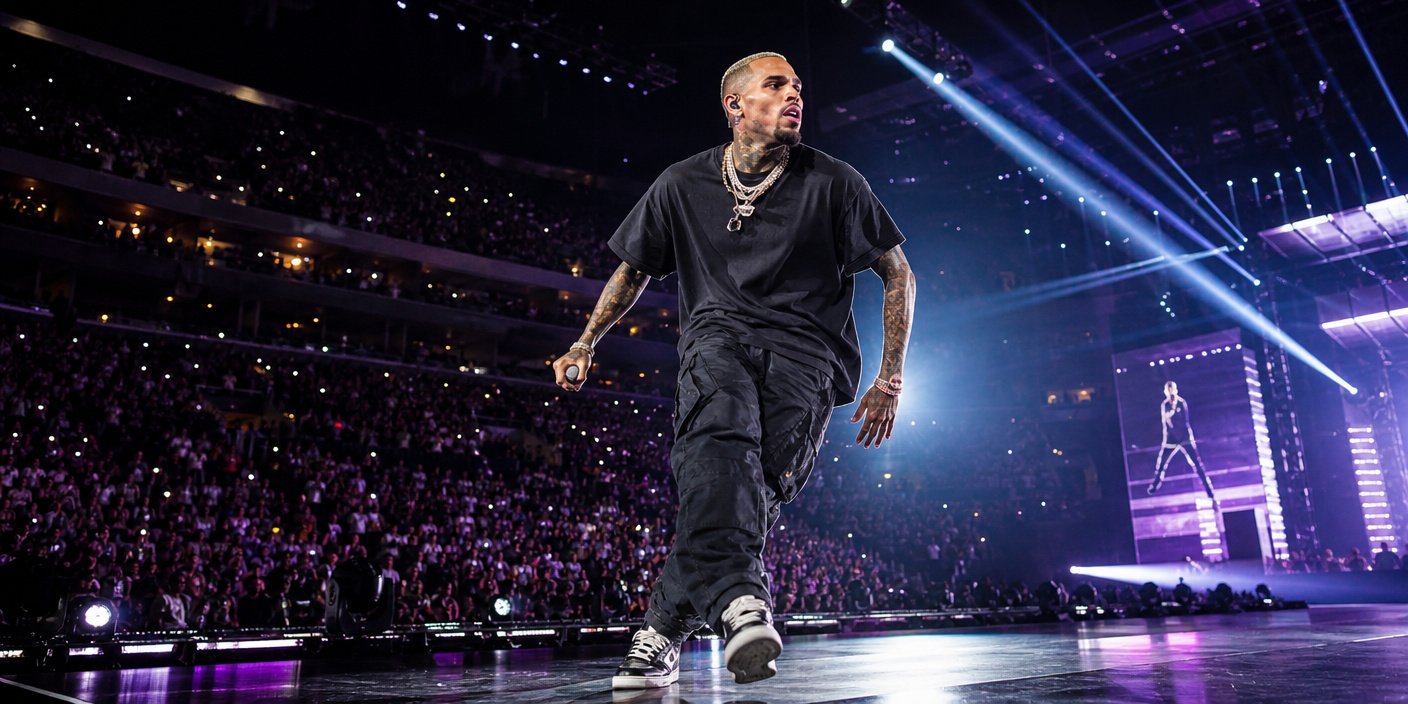
The intersection of celebrity culture and real-time social media reaction has once again placed R&B artist Chris Brown at the center of a viral controversy. During a recent tour stop in Los Angeles, part of his ongoing ’11:11′ tour, a specific segment of the show involving the artist and an elderly fan has triggered widespread discussion across digital platforms. While stage interactions between performers and audience members are a staple of live entertainment, the specific nature of this encounter has polarized viewers, raising questions about concert etiquette, the evolution of fan service, and the scrutiny that follows high-profile entertainers in the digital age.
The Anatomy of the ’11:11′ Tour Experience
To understand the context of the Los Angeles incident, one must look at the structural design of Chris Brown’s current concert residency. The ’11:11′ tour is heavily choreographed, featuring high-energy dance routines, elaborate stage lighting, and a distinct segment designed to mimic an intimate club atmosphere. For years, Brown has made fan interaction a central pillar of his live performances. These moments are curated to provide a ‘fantasy’ experience for attendees, often involving lap dances or close-contact choreography with selected fans pulled from the audience.
In the Los Angeles performance, the selected fan was an older woman, a demographic departure from the younger crowd typically selected for these segments. The ensuing performance, which involved the artist performing his signature ‘winding and grinding’ dance style, was immediately captured by multiple audience members on smartphones. Within hours, the footage migrated from TikTok and Instagram Stories to broader social media discourse, becoming a focal point of debate before the concert had even concluded.
The Digital Firestorm: Context vs. Perception
The reaction to the video was immediate and sharply divided. On one side, proponents of the artist’s performance style argue that the interaction was consensual, celebratory, and part of the show’s established routine. From this perspective, the fan—who appeared visibly enthusiastic—was participating in a once-in-a-lifetime experience. Supporters argue that ageism is at play in the backlash, suggesting that an older woman should not be infantilized or denied the agency to enjoy a provocative performance.
Conversely, critics of the interaction argue that the optics of the performance crossed a professional boundary. Detractors noted that regardless of consent, the power dynamic inherent in a global superstar performing such a dance with a member of the public creates an uncomfortable viewing experience. This discourse highlights a significant shift in audience expectations; what may have been considered standard ‘fan service’ in the R&B concert circuit a decade ago is now subjected to intense scrutiny through the lens of modern social norms. The incident serves as a case study in how viral media can decontextualize a three-minute segment of a three-hour show, stripping away the nuances of the live environment.
Historical Context: The Evolution of R&B Fan Service
It is essential to view this incident within the broader history of R&B and Hip-Hop performance. For decades, artists ranging from Usher to Trey Songz have utilized the ‘lap dance’ trope to maintain high engagement levels during concerts. It has long been a mechanism to build a brand of accessibility and intimacy with fans. However, the industry is currently undergoing a reckoning regarding how these performances are perceived. As audiences become more sensitive to the power dynamics between performers and fans, artists face the challenge of updating their stagecraft to align with contemporary values while maintaining the high-energy persona their fans expect. This incident underscores a difficult transition period for legacy acts who built their careers on specific, provocative performance styles.
The ‘TikTok Effect’ on Modern Concerts
Perhaps the most significant factor in this controversy is the role of digital documentation. In the past, such an event might have remained a local anecdote—a story told by those in attendance at the Crypto.com Arena. Today, however, every moment of a concert is recorded, uploaded, and algorithmically amplified. The ‘TikTok Effect’ ensures that any controversial moment is divorced from its concert-hall context and placed into a vacuum where it can be judged by millions. This creates a high-pressure environment for performers, where a single, potentially ill-judged moment can lead to a PR crisis. The Los Angeles stop of the ’11:11′ tour highlights that for modern stars, the stage is no longer a private space; it is a global, public, and permanent digital archive.
Future Implications for Live Performance
Moving forward, the industry may see a shift in how artists manage these ‘up-close’ segments. We may witness a trend toward more scripted, vetted interactions, or perhaps a pivot away from intimate dance segments entirely in favor of safer, audience-wide engagement. The fallout from the Los Angeles incident suggests that the era of ‘anything goes’ fan interaction on stage is facing significant friction. Artists and their management teams must now weigh the benefit of creating ‘viral moments’ against the potential for long-term reputational damage. As the ’11:11′ tour continues, all eyes will be on whether the choreography in the fan-interaction segment remains static or evolves to avoid further public debate.
FAQ: People Also Ask
Is the fan interaction segment scripted in Chris Brown’s shows?
While the specific fan chosen is often selected from the audience at random, the choreography and the nature of the interaction are part of a recurring, rehearsed segment within the ’11:11′ tour production.
What has been the response from Chris Brown’s team regarding this controversy?
As of this reporting, the artist and his management have maintained their standard approach, treating the moment as a standard part of the show’s fan-service routine rather than addressing the online criticism directly.
How does this compare to past controversies during the tour?
This incident is distinct because it involved an elderly fan, shifting the conversation from general ‘provocative performance’ critiques to a debate about age appropriateness and the optics of such interactions, which is a new angle for this specific tour’s reception.
Is this type of performance standard for current R&B tours?
While many R&B artists utilize intimacy as a performance theme, the specific level of physical interaction seen in the ’11:11′ tour is considered more intense than the industry average, which is precisely why it attracts both fan support and public criticism.