
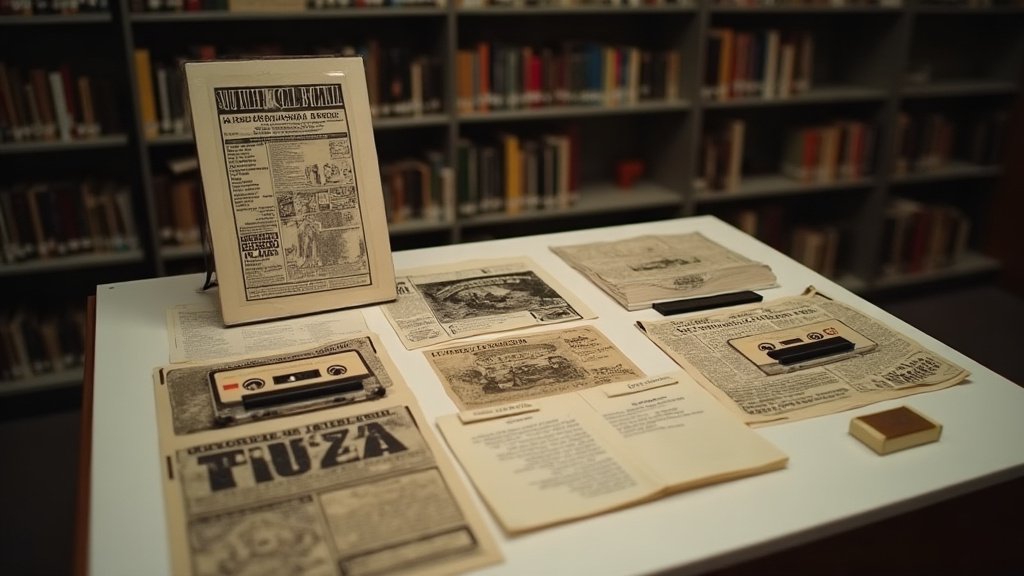
The fourth annual ‘Sounds of the Underground’ event at California State University, Los Angeles (Cal State LA), has officially concluded, reinforcing the university’s commitment to preserving the vibrant and often overlooked musical history of the region. Hosted by the University Library’s Special Collections, this three-day program served as a bridge between academic archival practices and the raw, grassroots energy of Southern California’s diverse musical communities. By spotlighting the artifacts of independence—from punk flyers and demo tapes to early chicano rock setlists—the event offered a critical look at how music history is documented, curated, and remembered.
Key Highlights
- Academic Preservation: The event showcased the importance of the Cal State LA Special Collections in safeguarding ephemeral materials that are often discarded or lost to time.
- Cultural Mapping: Speakers and attendees explored how Los Angeles neighborhoods historically fostered unique musical subcultures, influencing the broader American sonic landscape.
- Archival Accessibility: A significant portion of the three-day program focused on democratizing access to historical records, encouraging students and the public to engage with primary source materials.
- Diverse Lineage: The program explicitly celebrated the multi-ethnic roots of the LA underground, highlighting the contributions of various communities to the city’s alternative music scenes.
Unearthing the Pulse: The Evolution of LA’s Sonic Archive
The ‘Sounds of the Underground’ event is more than a mere lecture series; it acts as a cultural anchor. For four years, Cal State LA has utilized its library resources to legitimize the study of independent music. In the academic world, ‘underground’ music—often characterized by DIY ethics, low-budget production, and anti-establishment themes—has historically struggled to find a place within institutional archives. These materials, such as photocopied zines, hand-drawn concert posters, and cassette tapes with handwritten tracklists, are inherently fragile. They are the definition of ‘ephemera,’ materials created for the moment, not for the archives.
The Methodology of Modern Curation
The challenge faced by the Cal State LA Special Collections team is not just acquisition, but context. Archivists at the university have spent the better part of the last decade developing a methodology that prioritizes ‘community provenance.’ This means treating a flyer stapled to a telephone pole in East Los Angeles with the same historical gravity as a formal document. During this year’s fourth annual event, workshops highlighted the process of digital preservation, where students and curators worked together to digitize deteriorating audio cassettes and fragile printed matter. This ensures that the sonic textures of the 1980s and 90s are not lost to the ravages of time or decay. By digitizing these items, the library creates a searchable, accessible database that provides researchers with primary data, effectively shifting the narrative from a collection of ‘old things’ to a ‘living archive’ of social change.
Mapping the Cultural Geography
One of the most compelling aspects of the program was its focus on the geography of sound. Los Angeles is a city defined by its sprawl, and its musical movements are often tethered to specific neighborhoods—the punk squats of Hollywood, the rock en español venues of the Eastside, and the garage bands of the suburbs. The event emphasized how geography dictates artistic output. By cataloging where these bands played, who owned the venues, and how the music traveled from local radio to tape trading circles, the University is creating a spatial map of influence. This geographic approach allows for a deeper understanding of how systemic issues, such as venue closures, gentrification, and economic shifts in LA, directly impacted the artistic trajectory of its residents.
The Interplay of Academia and Activism
Finally, the ‘Sounds of the Underground’ program serves an essential pedagogical function. It teaches the next generation of historians that the ‘official’ story of music—the one told by major labels and mainstream press—is rarely the whole story. The unofficial, independent, and underground archives reveal the authentic, unfiltered experiences of the populace. This event encouraged students to become active participants in history-making. By inviting local musicians, former scene organizers, and independent archivists to speak, the University bridged the gap between ‘town and gown.’ It fostered an environment where the punk rocker of 1985 and the undergraduate of 2024 could engage in a dialogue about legacy. As Cal State LA moves toward the fifth anniversary of this program, the emphasis is expected to shift toward greater community outreach, seeking to incorporate more private collections into the public university archive, thereby ensuring that the ‘Sounds of the Underground’ continues to resonate far beyond the library walls.
FAQ: People Also Ask
Q: What is the primary goal of the ‘Sounds of the Underground’ event?
A: The primary goal is to preserve, study, and celebrate the diverse, independent, and underground musical history of Los Angeles. It aims to bridge the gap between academic archiving and community-based cultural history by collecting and showcasing ephemeral items like zines, flyers, and tapes.
Q: Why are ‘ephemeral’ materials important for university archives?
A: Ephemeral materials like concert flyers, setlists, and demo tapes capture the ‘real-time’ reality of a cultural scene. They provide primary evidence of trends, social movements, and community dynamics that mainstream historical sources often overlook or sanitize.
Q: Can the public access these archived collections at Cal State LA?
A: Yes. The Cal State LA University Library’s Special Collections are typically open to the public and researchers. Interested individuals are encouraged to contact the library to schedule appointments to view specific collections or to learn about digital access policies.
Q: How does this event impact future historical research?
A: By formalizing the collection of underground musical artifacts, Cal State LA provides future historians with the raw materials needed to construct more accurate, inclusive histories of Los Angeles culture, ensuring that subcultures are not erased from the collective memory.