On November 13, the United States aviation system ground to a sudden and paralyzing halt. A nationwide FAA ground stop, triggered by a cascading system failure, forced thousands of aircraft to remain at their gates, with the effects reverberating most visibly at major travel hubs like Los Angeles International Airport (LAX). While the order was eventually lifted, the administrative and logistical shockwaves have left the industry reeling, with authorities warning that the ripple effects of this disruption will continue to impact passenger schedules and airport operations well through the weekend.
- Systemic Failure: The FAA implemented a nationwide ground stop on November 13 due to critical communication failures within the air traffic network.
- LAX Under Pressure: Los Angeles International Airport, a primary nexus for trans-Pacific and domestic travel, experienced severe congestion, leading to long lines and widespread flight cancellations.
- Infrastructure Accountability: Transportation Secretary Sean Duffy has publicly identified outdated technology and legacy equipment as the catalyst for the system-wide breakdown.
- Lingering Impacts: Despite the resumption of normal operations, passengers are cautioned to expect cascading delays as airlines struggle to re-sync their fleets and crew schedules.
The Infrastructure Crisis: Why America’s Skies Went Dark
The events of November 13 have reignited a fierce national debate regarding the resiliency of American aviation infrastructure. For many, the sudden cessation of flight operations felt like an echo of previous technical failures, underscoring a persistent vulnerability in the systems that manage the movement of thousands of aircraft across the National Airspace System (NAS) every hour.
Anatomy of the Ground Stop
When the FAA issues a nationwide ground stop, it is an action of last resort. It implies that the essential automated systems responsible for relaying safety information, flight plans, and air traffic control directives have encountered a fault so severe that the risk of operation outweighs the cost of the pause. On November 13, these systems became unstable, forcing officials to freeze all departures to prevent any potential mid-air or taxiway conflicts.
This specific incident was not merely a localized technical bug but a fundamental breakdown in the digital architecture that keeps the sky organized. When these systems falter, the cascading effect is immediate. A plane held in New York prevents a crew from starting their duty day in Chicago, which in turn prevents a flight from departing LAX for Tokyo. The sheer complexity of the modern aviation schedule means that even a two-hour halt can result in a 48-hour recovery window.
The LAX Ripple Effect
For travelers moving through Los Angeles International Airport, the impact was visceral. LAX functions as one of the world’s busiest origin-and-destination points, and when the ground stop was initiated, thousands of passengers found themselves stranded in terminals. The immediate consequence was a total gridlock of airport operations.
Security checkpoints saw wait times soar as travelers were forced to remain in the terminal area, while baggage claim and ticketing counters were overwhelmed by the sudden influx of rebooking requests. Airport authorities and airline ground crews were forced into a reactive posture, managing not only the mechanical failures of the flight schedules but also the rising frustration of thousands of passengers. By the time the ground stop was lifted, the backlog of aircraft at the gates and on the tarmac created a bottleneck that persisted long after the FAA green-lit departures.
The Secretary’s Stance on Legacy Tech
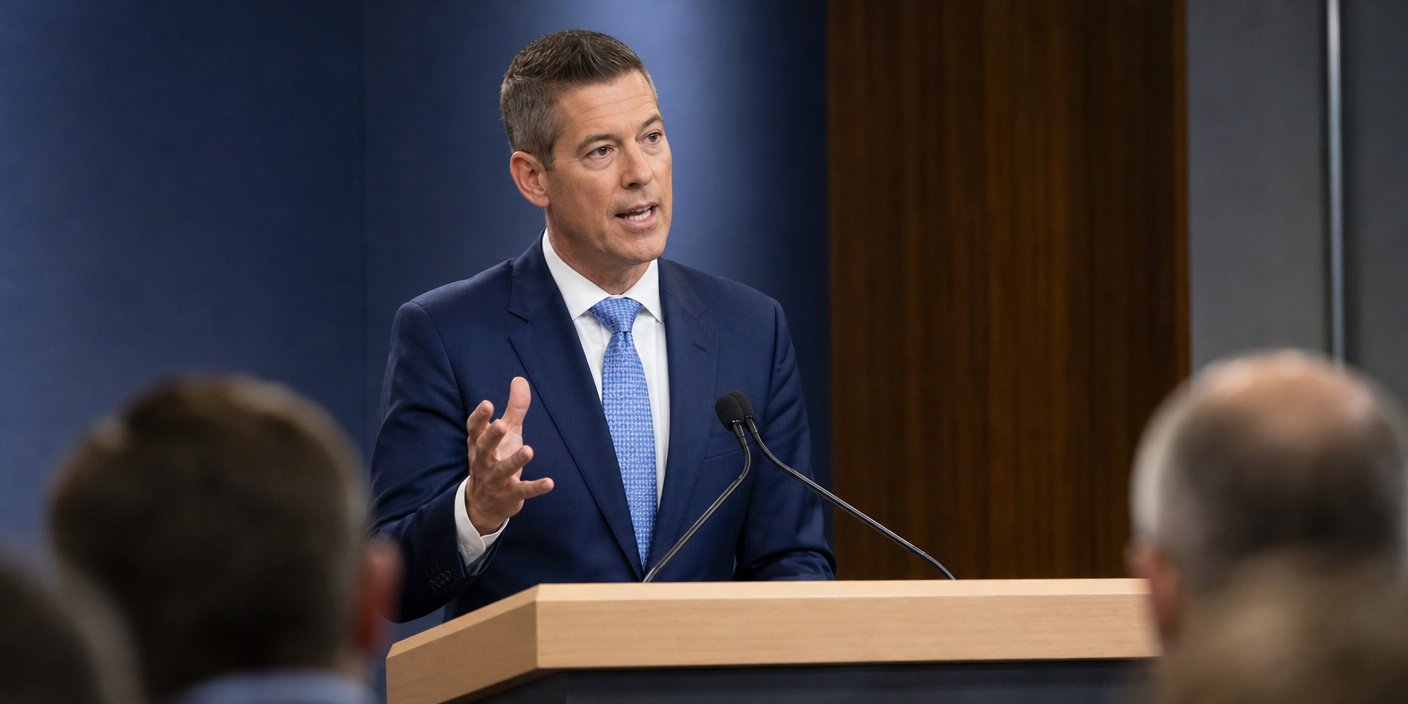
In the immediate aftermath of the disruption, Transportation Secretary Sean Duffy faced the media to explain the failure. His assessment was blunt: the incident was a direct result of relying on outdated equipment. Duffy’s statements suggest a significant shift in how the Department of Transportation is viewing the current state of aviation hardware.
For years, aviation experts have warned that the FAA’s reliance on aging, legacy computer systems—many of which were designed decades ago—creates a ‘single point of failure’ risk. Duffy’s acknowledgment of this issue signals that the government is under increasing pressure to accelerate the modernization of these critical assets. The core of the argument is that as air travel demand continues to rise, the digital infrastructure currently in place cannot maintain the safety standards and operational tempo required for a 21st-century economy.
Future-Proofing the Skies
Looking toward the future, the November 13 event serves as a stark reminder of the fragile balance between technological efficiency and infrastructure neglect. Modernizing the FAA’s systems is not merely a budgetary line item; it is a critical national security and economic imperative. The costs associated with such a ground stop—in terms of fuel waste, labor costs, lost productivity, and the erosion of passenger trust—far outweigh the investment required to update the core networking systems that manage flight safety.
Industry analysts are now questioning whether the current oversight mechanisms are sufficient to prevent a recurrence. As the aviation sector pivots toward increased automation and satellite-based navigation, the bottleneck remains the ‘last mile’ of ground-based communication systems. Without a radical overhaul, aviation experts argue, the system will remain susceptible to these high-impact, low-frequency events that threaten to paralyze national mobility.
As travel disruptions linger through the weekend, the message to passengers is clear: patience remains a necessity. Airlines are working through the backlog, but the recovery of a system as complex as the US aviation network is inherently slow. The November 13 stop will likely be studied for years to come, not just for the chaos it caused, but as the moment when the vulnerability of America’s aging aviation backbone could no longer be ignored.
FAQ: People Also Ask
Why did the FAA ground stop occur on November 13?
The FAA ground stop was initiated due to a critical malfunction in the agency’s primary communication and data relay systems. According to Transportation Secretary Sean Duffy, this failure highlighted the severe degradation of legacy equipment that can no longer reliably support modern air traffic volumes.
How does a ground stop affect airports like LAX?
LAX relies on a continuous, high-volume flow of air traffic. When a ground stop occurs, arriving aircraft are held in the air or at their origin, while departing aircraft are blocked from leaving. This causes a massive ‘logjam’ at the gates, where aircraft accumulate, crews time out of their legal flying hours, and passengers clog the terminals, making recovery significantly slower than at less busy airports.
When will flight schedules return to normal?
While the FAA lifted the ground stop shortly after the incident, officials have warned that the ripple effects will persist through the weekend. It takes significant time for airlines to reposition crews, re-crew aircraft, and clear the backlog of delayed flights, meaning passengers should check their flight status consistently for the next several days.
What are ‘legacy systems’ in the context of aviation?
‘Legacy systems’ refer to older computer software and hardware infrastructure that the FAA currently uses to manage air traffic control and flight safety protocols. These systems are often decades old, difficult to update, and lack the redundancy and processing speed of modern digital networks, making them prone to critical errors.