Southern California has re-emerged as the undisputed epicenter of global defense innovation, as a comprehensive analysis of defense contracts reveals that the value of agreements in Los Angeles County has more than doubled over the last decade. While the region was historically defined by the heavy manufacturing of the Cold War era, it is currently witnessing a rapid, technologically driven transformation. This financial surge is fundamentally shifting the economic landscape of the region, pivoting away from traditional heavy aerospace manufacturing toward a new, agile ecosystem of startups specializing in artificial intelligence, autonomous drone swarms, orbital satellite constellations, and advanced combat software.
Key Highlights
- Exponential Growth: Defense contract spending in LA County has surged by over 100% in the last ten years, signaling a renewed reliance on the region’s intellectual capital.
- The Tech Pivot: A significant share of new procurement funding is migrating from legacy aerospace giants to agile, software-first startups.
- New Battlefield Domains: Investment is heavily concentrated in AI-driven autonomous systems, low-earth orbit (LEO) satellite technology, and unmanned aerial vehicle (UAV) networks.
- Regional Hubs: The boom is centered in Silicon Beach and the South Bay, leveraging proximity to both tech talent and established military installations like Space Systems Command.
The Resurgence of the SoCal Defense Industrial Base
For decades, Southern California was the heart of the American defense industrial base, churning out everything from ICBMs to stealth bombers. However, following the post-Cold War consolidation of the 1990s and 2000s, many observers assumed the region’s dominance was waning. The latest contract data proves that narrative wrong. The region is undergoing a massive resurgence, but with a fundamentally different character. We are no longer just looking at the production of large-scale hardware; we are witnessing the integration of silicon-valley software methodology into the defense apparatus.
The Shift from Hardware to ‘DefenseTech’
Historically, procurement was dominated by massive, decades-long contracts for platforms like fighters or tankers. Today, the Pentagon is pivoting toward ‘DefenseTech’—a sector defined by rapid iteration, software-defined hardware, and commercial off-the-shelf technologies. Startups like Anduril Industries and Shield AI have leveraged the unique LA talent pool, which blends aerospace engineering prowess with top-tier computer science graduates from local institutions. This pivot is driving the doubling of contract values as the Department of Defense (DoD) seeks to modernize its arsenal to compete with near-peer adversaries, specifically in the Indo-Pacific theater.
Why Los Angeles is the Perfect Incubator
Los Angeles offers a unique synergy that no other region in the United States can replicate. It sits at the intersection of three critical pillars: massive venture capital availability, a pre-existing aerospace supply chain, and proximity to crucial military commands, specifically the Space Systems Command in El Segundo. When a startup develops a new satellite sensor or drone flight controller, they are geographically positioned to integrate directly into the military’s development cycle. This ‘cradle-to-deployment’ efficiency is why venture capital is flooding into SoCal, treating defense startups with the same intensity previously reserved for SaaS or social media companies.
The Role of AI and Autonomy
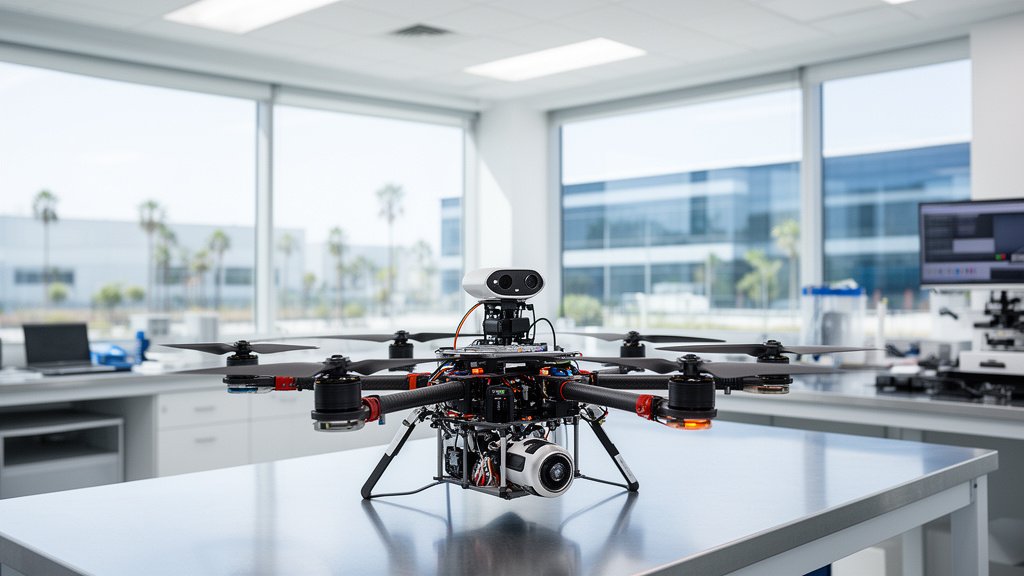
Central to this boom is the infusion of artificial intelligence into traditional munitions and platforms. The current contracts are increasingly focused on ‘mission autonomy.’ It is not just about a drone flying; it is about a swarm of drones capable of making decisions without GPS guidance or human teleoperation. This is the new frontier. Companies are winning contracts not to build the airframe, but to build the ‘brain’ that flies it. This shift has allowed smaller, leaner firms to compete for—and win—contracts that were previously exclusive to the Fortune 500 defense contractors.
Secondary Angles: Beyond the Dollars
1. The ‘Replicator’ Influence: Much of the regional growth is tied to the DoD’s ‘Replicator’ initiative, which aims to field thousands of autonomous systems at scale. This program acts as a massive tailwind for local drone and AI manufacturers, ensuring a steady stream of procurement dollars that incentivizes long-term facility investment in California.
2. Economic Transition: The region is experiencing a ‘Silicon Beach’ evolution. As traditional entertainment and media jobs face uncertainty, the high-wage, high-stability nature of the defense sector is providing a new economic floor for the Southern California labor market, effectively insulating it from some of the volatility seen in pure-play consumer tech.
3. Regulatory Challenges: Despite the funding influx, the ‘valley of death’—the chasm between prototyping and full-scale production—remains a hurdle. While contracts have doubled, many startups still struggle to navigate the Byzantine procurement processes of the federal government, leading to calls for further streamlining of the Defense Acquisition System.
FAQ: People Also Ask
Q: Why is defense spending increasing specifically in Southern California?
A: Southern California possesses a unique ‘triad’ of resources: a massive existing aerospace manufacturing base, a concentration of world-class AI/software talent, and close proximity to key military hubs like Space Systems Command in El Segundo.
Q: Are traditional ‘Big Defense’ companies losing relevance?
A: Not entirely. Traditional primes like Northrop Grumman or Boeing still secure massive platform contracts, but their share of total procurement growth is slowing relative to agile startups that specialize in software, AI, and autonomous components.
Q: What technologies are driving this growth?
A: The primary drivers are AI-enabled autonomous systems, drone swarm technology, software-defined radios, and low-earth orbit (LEO) satellite communications technology.
Q: Is this boom permanent or a passing trend?
A: Most analysts view this as a multi-decade shift. The current geopolitical climate, characterized by intense competition with peer adversaries, necessitates a persistent focus on rapid technological development, suggesting the ‘DefenseTech’ boom is a structural change, not a cyclical one.