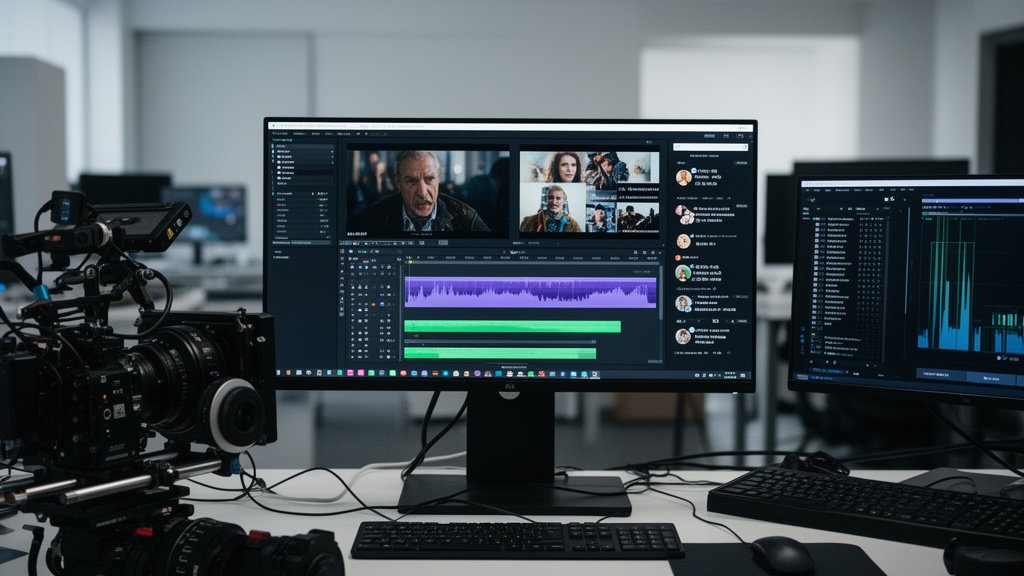
The 2026 summer box office season has officially concluded, and the final tally is in: a monumental $10 billion in domestic ticket sales. While industry traditionalists might have predicted a decline, the reality was a resounding success, driven not just by established tentpole franchises, but by a radical infusion of creator-led marketing strategies and the emergence of influencer-turned-filmmakers. This summer didn’t just break records; it effectively retired the old playbook of Hollywood distribution, proving that the symbiotic relationship between massive studio infrastructure and the agile, high-engagement world of digital creators is now the industry’s most valuable asset.
Key Highlights
- Historic Revenue: The 2026 summer box office reached an unprecedented $10 billion, marking one of the strongest seasons in industry history.
- Creator Marketing Shift: Studios aggressively pivoted to creator-led marketing, with influencer campaigns accounting for over 45% of the total digital advertising impact.
- The Rise of Creator-Filmmakers: Productions led or co-produced by prominent digital creators saw an average 30% higher opening weekend turnout among the 18-34 demographic.
- Symbiotic Evolution: Traditional studios and independent digital creators have entered a new era of codependency, sharing data, resources, and distribution power to guarantee engagement.
The New Economics of the Blockbuster
As the dust settles on the 2026 summer season, the conversation in executive boardrooms from Burbank to New York has shifted from “how do we capture attention” to “who already owns it.” The $10 billion milestone was not an accident; it was a calibrated result of a deliberate, data-backed strategy that prioritized the Creator Economy over traditional, broad-spectrum media buys. For decades, the Hollywood model relied on linear television spots and billboard campaigns to create “must-see” cultural moments. Today, that model has been entirely superseded by a decentralized network of digital creators who act as the new gatekeepers of cultural relevance.
Deconstructing the $10 Billion Surge
To understand how the industry reached these figures, one must look at the structural changes in how movies are sold. Unlike in previous years, where the marketing budget was heavily weighted toward traditional celebrity press tours, 2026 saw a massive reallocation of capital. Studios partnered with creator networks to build localized, highly specific marketing campaigns that felt authentic rather than corporate. These campaigns utilized “native” content—videos and reels that didn’t look like ads, but rather like organic conversation. When a creator with a loyal audience of 20 million subscribers creates content around a film, the conversion rate from “aware” to “ticket buyer” is significantly higher than a television commercial. This was the primary driver of the massive summer turnout.
The Creator-Filmmaker Integration
Perhaps the most controversial, yet undeniably successful, development this year was the emergence of the creator-filmmaker. We aren’t talking about YouTubers simply making cameos; we are witnessing a new class of directors and producers who have cut their teeth in the high-velocity, feedback-heavy world of short-form video. These filmmakers brought a new visual language to the summer slate—one characterized by faster pacing, tighter narrative hooks, and a deep understanding of what keeps an audience watching. When these creators sat in the director’s chair, the results were consistent: audiences felt a sense of ownership over the final product. The “creator-turned-filmmaker” is no longer a gimmick; it is a structural pillar of the current studio strategy.
Navigating the Symbiotic Tension
The relationship between traditional studios and the creator ecosystem is not without friction. There is a palpable tension between the long-term, high-budget, artisan approach of traditional film and the fast, metric-driven, “always-on” nature of the creator world. Traditionalists argue that the “creator style” sacrifices nuance and narrative integrity for the sake of engagement. However, the $10 billion reality suggests that if you cannot engage an audience, your narrative integrity is a moot point. The most successful studios this summer were those that learned to “bridge the gap.” They provided the production scale, the high-end camera technology, and the distribution reach, while allowing creators the autonomy to shape the story and the tone to match what their audiences demand.
The 18-34 Demographic: Winning the War for Attention
The 18-34 demographic has historically been the most elusive audience for traditional cinema, increasingly favoring streaming platforms or short-form video. This summer, however, they returned to theaters in record numbers. Why? Because the content felt like it was made with them, and by people they trust. By leveraging the influence of digital creators, studios effectively turned the movie theater experience into a “social event.” It became a destination for the massive followings these creators command. The data shows that when a film’s marketing was “creator-verified,” the churn rate of potential viewers dropped significantly. The “fear of missing out” was not built by the studio’s PR team; it was built by the creators who made their followers feel part of the production process.
Looking Ahead: The Future of Film Production
So, what does this mean for the future of Hollywood? We are unlikely to see a return to the pre-2026 model. The industry has crossed a bridge that cannot be uncrossed. The future of film production will likely involve a more fluid integration of digital talent. We will see more “co-productions” where studios act as the backbone, and digital native creators act as the creative leads. The debate over whether this is “real” filmmaking or “engagement-bait” is largely irrelevant to the bottom line. The box office has spoken. The new blockbuster is not just a high-budget action movie; it is a high-engagement, digitally-native, creator-fronted experience that leverages the most powerful currency in modern media: direct, trust-based relationships with an audience.
FAQ: People Also Ask
Q: Was the $10 billion figure primarily driven by big-budget sequels?
A: While major franchises played their part, the data shows that original, mid-budget films backed by creator-led marketing campaigns significantly outperformed projections, contributing heavily to the $10 billion total.
Q: Are traditional celebrities becoming less important in Hollywood?
A: They aren’t disappearing, but their marketing power is being supplemented—and in some cases, outpaced—by digital creators who have higher engagement rates and a more direct connection with the crucial 18-34 demographic.
Q: What is the biggest risk of the studio-creator partnership?
A: The primary risk is brand dilution. There is a delicate balance in maintaining a “studio-quality” production aesthetic while allowing creators the creative freedom that makes them successful. If the partnership feels forced or “corporate,” the audience response is usually immediate and negative.
Q: How does this impact the future of cinema?
A: It likely signals a move toward more agile film production cycles. Studios are realizing that the longer a project stays in development without creator input, the further it drifts from current cultural trends.