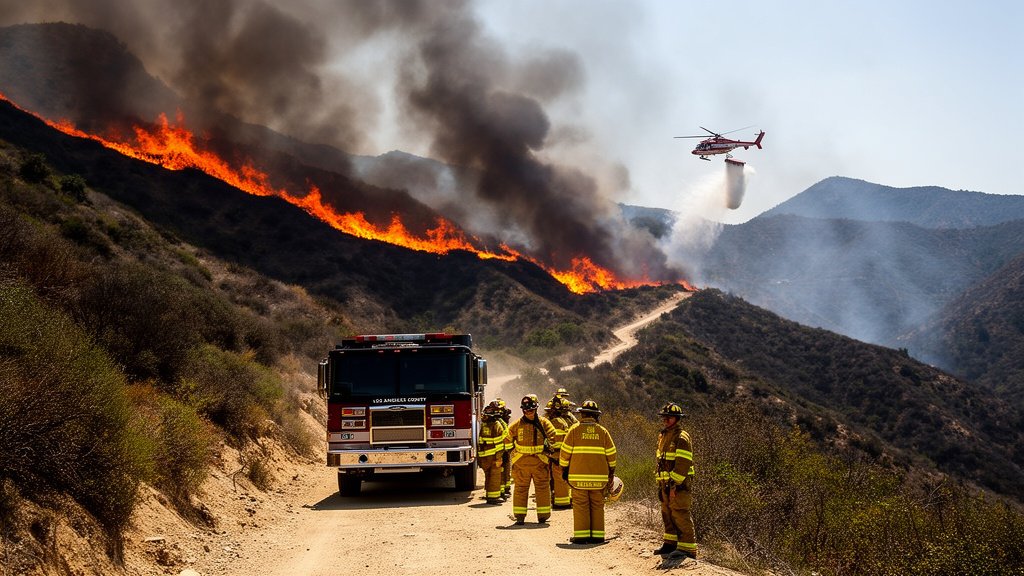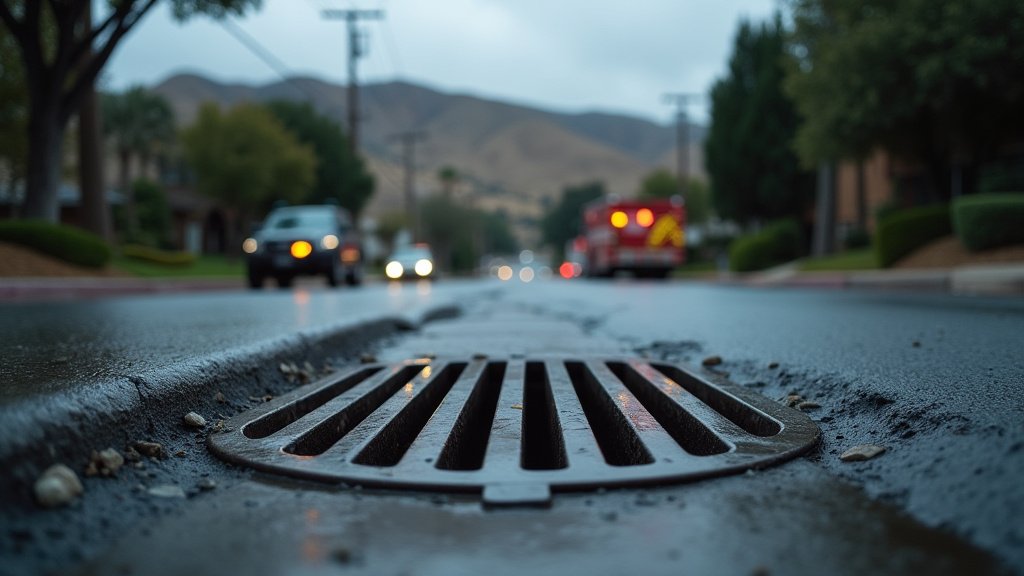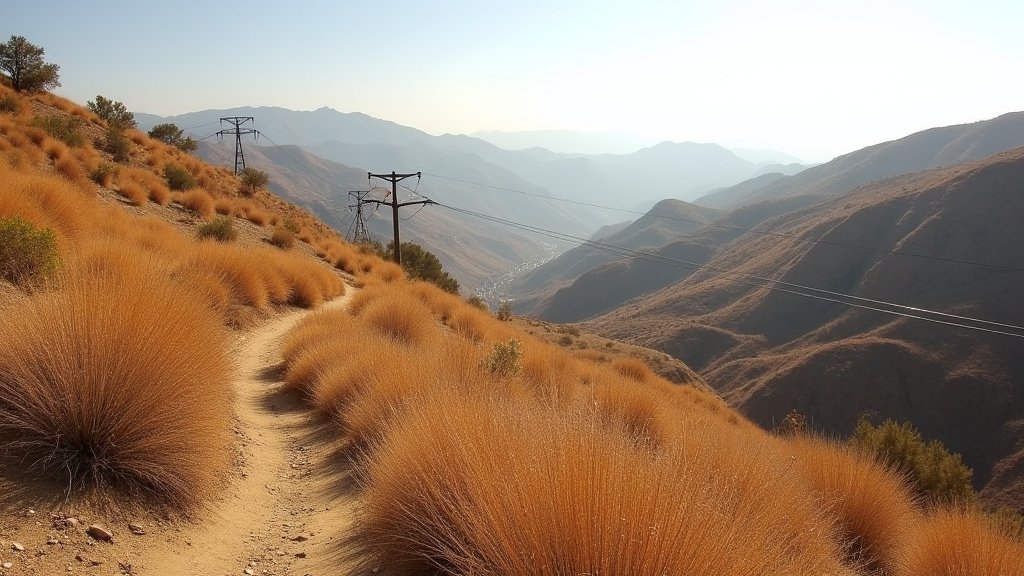
Los Angeles County is currently on high alert as dangerous, hot, and dry conditions align with powerful Santa Ana winds, creating a volatile environment for fire ignition and rapid spread. With the National Weather Service (NWS) issuing a Red Flag Warning effective from Thursday through Friday, local officials are mobilizing emergency resources and urging residents to finalize their preparedness plans immediately. This specific convergence of atmospheric variables—low humidity, high winds, and tinder-dry vegetation—represents the most critical fire weather scenario for Southern California.
Key Highlights
- Critical Weather Window: The Red Flag Warning is active from Thursday morning through Friday evening, with the highest risks concentrated in mountain and canyon corridors.
- Wind Velocity: Forecasters predict Santa Ana wind gusts ranging from 45 mph to 65 mph, which significantly increase the risk of power line damage and erratic fire behavior.
- Utility Intervention: Southern California Edison (SCE) has signaled that it may implement Public Safety Power Shutoffs (PSPS) for thousands of households to mitigate the risk of utility-sparked wildfires.
- Preparedness Mandate: The Los Angeles County Fire Department (LACoFD) advises all residents in high-risk zones to have a pre-packed emergency “Go-Bag” ready and to clear defensible space around their homes.
The Urgent Challenge: Navigating High-Wind Fire Danger
The current alert status highlights the delicate balance between environmental conditions and disaster prevention in Los Angeles County. As autumn progresses, the “fire season” in Southern California remains a persistent threat, compounded this year by specific meteorological patterns that have dried out the region’s vegetation to record lows. The combination of intense offshore winds and low relative humidity levels—often falling into the single digits—creates an environment where even the smallest spark can lead to a catastrophic wildfire event within minutes.
Understanding the Red Flag Warning
A Red Flag Warning is the highest level of alert issued by the National Weather Service, signaling that “critical fire weather conditions” are either occurring or imminent. During this window, any fire that ignites has a very high probability of exhibiting extreme growth and rapid spread. For residents, this is not a suggestion of concern, but an active command to maintain heightened vigilance. The NWS highlights that the current weather pattern is being driven by a strong high-pressure system over the Great Basin, which is effectively pushing cold, dry air through the mountain passes and down into the Los Angeles basin. This compression heating effect not only brings the wind but also drastically reduces moisture, leaving grass and brush brittle and highly flammable.
The Science Behind the Santa Ana Winds
Santa Ana winds are a uniquely Southern Californian phenomenon. As air cools over the high deserts of the Great Basin, it creates a region of high atmospheric pressure. Simultaneously, lower pressure systems near the coast draw this air westward. As the air is forced through the narrow mountain passes and canyons, it accelerates—much like air pushed through a nozzle—resulting in the destructive gusts currently anticipated. These winds are inherently unpredictable, capable of “downsloping” and “canyon-funneling,” where wind speeds can double in strength over a distance of just a few miles. This erratic behavior makes fire containment extremely difficult for crews on the ground and air support, as heavy winds can ground firefighting aircraft, leaving the defense of communities to ground-based personnel.
Utilities and the PSPS Dilemma
One of the most disruptive aspects of current fire mitigation strategy is the Public Safety Power Shutoff (PSPS). Southern California Edison and other regional utility providers use sophisticated predictive modeling to determine which circuits are most at risk of “contact” during wind events. A PSPS is implemented as a proactive measure: by de-energizing power lines during the peak of a wind event, utilities aim to prevent a scenario where a fallen tree limb or flying debris could contact a live line and ignite a blaze. While effective in reducing utility-caused fires, these shutdowns impact thousands of residents, necessitating a shift in home preparedness. Residents are reminded that a PSPS may be implemented with little notice, and backup power sources or alternative lighting should be secured well before the winds peak.
Essential Preparedness for LA Households
The Los Angeles County Fire Department emphasizes that individual preparation is the final, and perhaps most critical, line of defense. First, “hardening” the home is paramount; this includes removing dead vegetation, clearing gutters of dry leaves, and ensuring that no flammable material is stored against the exterior of the house. Second, residents must understand their evacuation routes. During a wind-driven wildfire, smoke can obscure visibility and traffic can become gridlocked. Having a pre-planned route and a pre-packed vehicle is essential. Finally, staying informed through official channels like the LACoFD website or local emergency alerts (e.g., AlertLA) provides the most accurate and up-to-the-minute information regarding local closures and evacuation orders. If ordered to leave, residents should do so immediately—waiting to “see” the fire is often the difference between a safe exit and a trapped situation.
FAQ: People Also Ask
What should I pack in my emergency ‘Go-Bag’?
Your bag should contain essential documents (IDs, insurance papers), at least three days of water and non-perishable food, prescription medications, a battery-powered radio, phone chargers/power banks, a flashlight with extra batteries, and basic first-aid supplies.
Why does Southern California have so many wildfire issues in the fall?
Autumn is historically the end of the dry season in Southern California. After months of little to no rainfall, vegetation is at its driest. When the Santa Ana winds begin blowing in late autumn, they provide the necessary oxygen and heat to turn this “fuel” into massive fire fronts.
What does a ‘Red Flag Warning’ mean for my daily routine?
It means you should avoid any outdoor activity that could create a spark, such as lawn mowing, using chainsaws, or operating welding equipment. You should also ensure that your vehicle’s catalytic converter is not touching dry grass, as heat from the exhaust system can ignite a fire instantly.
Are all power shutoffs pre-announced?
Utilities attempt to notify customers through text, email, or automated calls, but the fast-moving nature of these wind events means that power may be cut with very little warning. It is best to treat a Red Flag Warning as a sign to prepare for a potential outage.
How can I help my neighbors during a high-wind event?
Check on elderly neighbors or those with limited mobility. Ensure they are aware of the fire alerts, have their emergency bags packed, and know the evacuation protocols. Clear communication within a neighborhood significantly enhances community safety during disasters.