Los Angeles International Airport’s (LAX) long-awaited Automated People Mover (APM) project has hit another critical snag, further pushing back the completion timeline of the $5.5 billion Landside Access Modernization Program (LAMP). As construction crews and project managers grapple with a complex web of technical challenges and ongoing contractual disputes between Los Angeles World Airports (LAWA) and the LINXS Constructors consortium, travelers continue to navigate the notorious traffic congestion of the airport’s central terminal area. With the promise of a seamless, rail-based connection to the Los Angeles Metro system fading into the distance, stakeholders are left wondering when—or if—this centerpiece of L.A. transit will truly come to fruition.
Key Highlights
- Continued Delays: The Automated People Mover, a vital link to the airport, has faced yet another extension, with the project moving further away from its original 2023 completion target.
- Contractual Friction: The delay stems from escalating disputes between LAWA and LINXS Constructors, with both parties issuing claims regarding construction delays, safety certifications, and mounting financial liabilities.
- Olympic Pressure: With the 2028 Summer Olympics approaching, the pressure to complete the $5.5 billion LAMP infrastructure project is intensifying, as the system is essential to managing the projected influx of millions of visitors.
- Passenger Frustration: Ongoing construction continues to impact terminal access, shuttle bus operations, and overall traveler experience, with relief via the APM nowhere in sight for the upcoming holiday travel seasons.
Anatomy of a Stalled Infrastructure Project
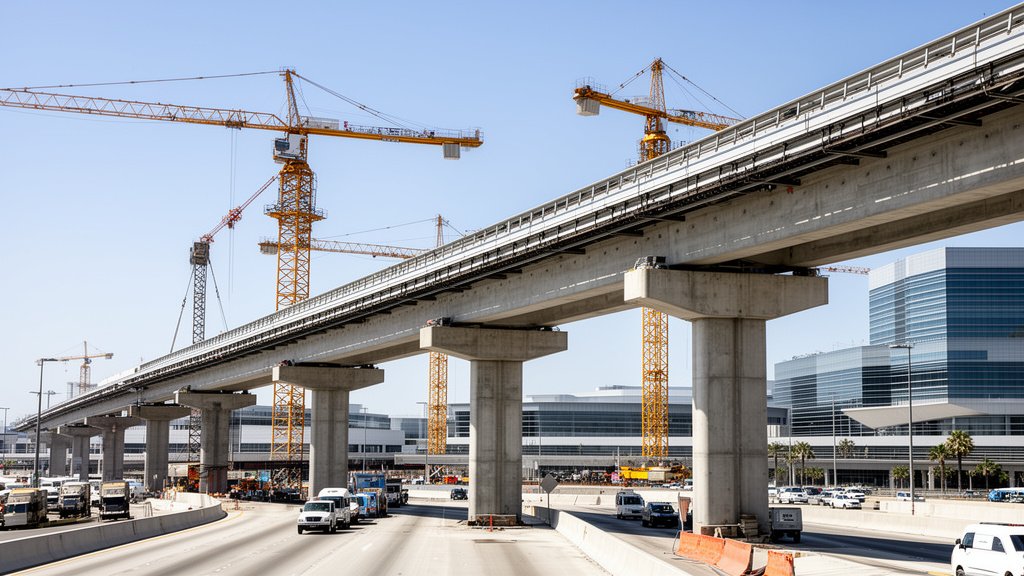
The Automated People Mover was touted as the “missing link” for the third-busiest airport in the world. Designed as a 2.25-mile elevated guideway with six stations, the system was intended to fundamentally change how passengers enter and exit the central terminal area. By decoupling the terminal arrivals from the street-level gridlock that has plagued LAX for decades, the APM was supposed to transform the airport from a traffic nightmare into a model of modern, efficient urban connectivity. However, the reality on the ground remains a construction zone plagued by stop-start progress.
The LINXS vs. LAWA Dispute
At the heart of the project’s stagnation is a complex disagreement between LAWA and LINXS Constructors. The dispute centers on a series of claims regarding who is responsible for the delays in testing, systems integration, and safety certification. From the perspective of LAWA, the consortium has failed to meet critical performance milestones, resulting in missed delivery dates. Conversely, LINXS has pointed toward unforeseen site conditions and changing requirements as the root cause of the slowdowns. These legal and logistical clashes have created a stalemate, effectively halting the momentum that was gathered during the bulk of the structural construction phase. Experts suggest that the complexity of integrating advanced driverless train technology into a highly active, high-security airport environment has proven far more difficult than initial site assessments indicated.
The Impact on the 2028 Olympic Timeline
The stakes for completing this project extend far beyond the immediate frustration of daily travelers. The City of Los Angeles is on a countdown toward hosting the 2028 Summer Olympics, a global event that will require LAX to operate with peak efficiency. The APM is the cornerstone of the city’s transportation strategy for the Games; without it, the airport relies on bus bridges and surface-level shuttles that are highly susceptible to the same traffic congestion the APM was designed to eliminate. If the system is not fully operational, tested, and stress-tested by 2027, the city risks a logistical embarrassment on the world stage. Local officials are under increasing pressure to mediate the dispute and force an accelerated completion schedule, but the technical reality of high-speed rail systems makes “rushing” the process a dangerous proposition.
The Cost of Congestion
While the financial cost of the delays—often measured in millions of dollars in liquidated damages and lost potential revenue—is concerning, the human cost is more visceral. For travelers, the LAX experience remains defined by the “horseshoe” traffic jam. The current reliance on shuttle buses to ferry passengers from remote lots and the Metro C Line station to the terminals is inefficient and creates a bottleneck. Every month of delay in the APM’s activation represents another month of unnecessary vehicular volume within the central terminal area. Business travelers, tourists, and airport employees are paying the price in time, stress, and missed connections, as the infrastructure intended to alleviate the problem remains a skeletal outline of steel and concrete above their heads.
What Comes Next?
As of the latest updates, the project remains in a state of flux. Stakeholders are calling for more transparency regarding the final delivery date. The path forward likely involves a negotiated settlement to resolve the current legal standoff, followed by an intensive push to complete systems testing. Until a definitive, reliable operational date is announced, passengers are advised to continue accounting for significant travel delays and to rely on existing shuttle services, while the industry watches to see if this massive transit investment can be rescued from its current state of limbo.
FAQ: People Also Ask
Q: When is the LAX Automated People Mover officially expected to open?
A: There is currently no definitive opening date. Following the latest series of delays, the timeline has shifted repeatedly, with estimates now pushing completion into 2025 or beyond. Officials are working to resolve contractual disputes to finalize a new, reliable schedule.
Q: What is the primary cause of the most recent delay?
A: The delays are largely attributed to a combination of system integration challenges, safety testing requirements, and an ongoing legal and contractual dispute between LAWA and the LINXS Constructors consortium regarding project milestones and financial responsibility.
Q: How will the APM change travel at LAX once completed?
A: Once operational, the APM will transport passengers from the Metro C Line station and off-site rental car/parking facilities directly into the terminal area, significantly reducing the need for shuttle buses and helping to clear traffic congestion in the central terminal area.
Q: Is the project still within its original budget?
A: The project, part of the $5.5 billion Landside Access Modernization Program, has faced immense budgetary pressure. While the total budget is fixed, the cost of delays—including legal fees and construction overhead—is mounting, which has been a primary driver of the tension between the airport authority and the construction consortium.