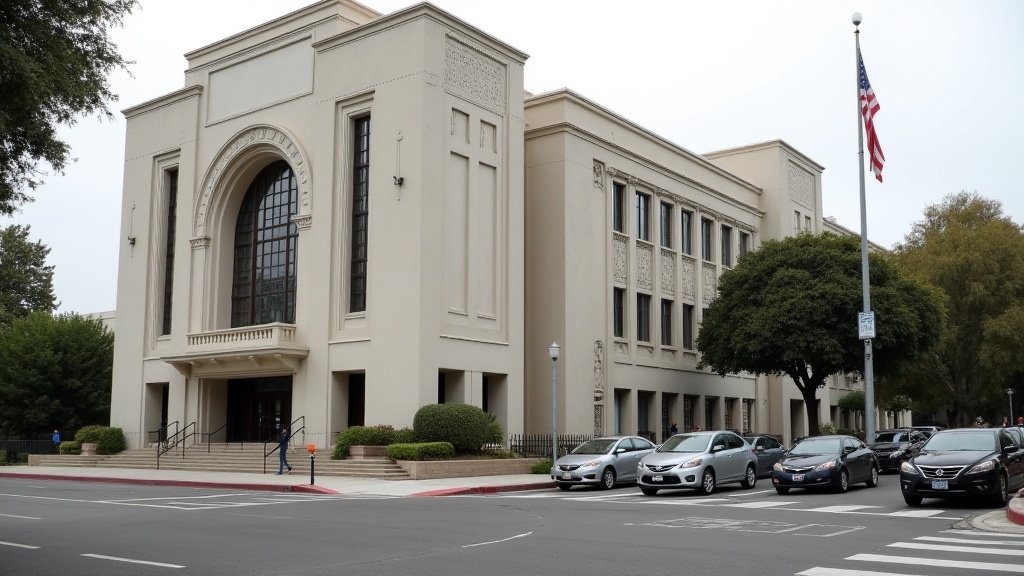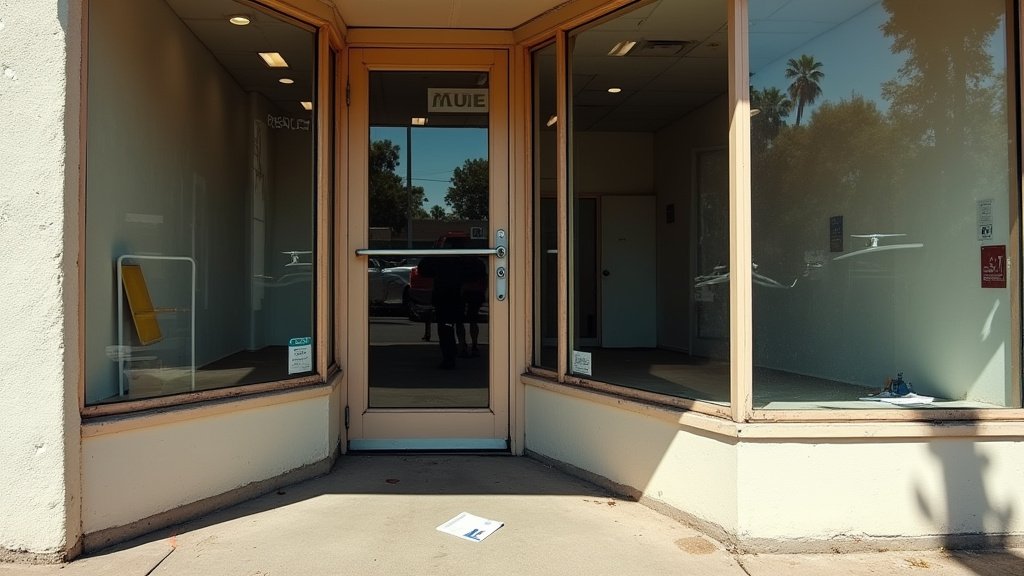
The illusion of security is often the most dangerous vulnerability in modern urban life. A storefront on a bustling California street, operating under the brand ‘Mailbox LA,’ recently came under intense scrutiny after investigative journalists from CBS California exposed it not as a legitimate postal business, but as an unregistered, abandoned front operating as an alleged nexus for identity theft. This incident serves as a chilling reminder that physical infrastructure, when left unchecked, can be weaponized by criminals to intercept personal correspondence, financial documents, and sensitive identity data, turning the daily convenience of private mailbox rentals into a localized engine for fraud.
Key Highlights
- The ‘Mailbox LA’ Discovery: Investigative teams uncovered an unregistered storefront on Burbank Boulevard that claimed to offer private mailbox services but was found to be abandoned, leaving a potential treasure trove of unsecured mail.
- The Fraud Nexus: Experts warn that such unauthorized storefronts facilitate ‘check washing’ and identity theft by providing a physical address for criminals to route stolen mail without proper oversight or USPS registration.
- Regulatory Blind Spots: The case highlights a critical gap in the regulation of Private Mailbox (PMB) providers, where oversight often lags behind the speed at which these storefronts can open, close, and vanish.
- Consumer Protection: Local residents are urged to verify the registration status of any third-party mail service provider with the United States Postal Service (USPS) before entrusting them with sensitive financial or personal information.
The Anatomy of an Identity Theft Hub
The Illusion of Legitimacy
For the average commuter on Burbank Boulevard, ‘Mailbox LA’ appeared to be just another small business—a minor convenience store or a specialized courier service. The storefront facade utilized the language of professionalism, offering the promise of privacy and security for those needing a dedicated mailing address. However, the CBS investigation revealed a starkly different reality: the location was completely unregistered with the United States Postal Service (USPS).
This is the hallmark of a ‘ghost’ business. By establishing a physical storefront, criminals gain the trust of local residents and small business owners who assume that a brick-and-mortar location equates to legitimate, regulated business practices. Once established, these sites can intercept mail, hold packages, and provide a legitimate-looking return address for fraudulent activities, including credit card applications, check washing schemes, and phishing operations.
The Mechanics of the Scam: From Mailbox to Fraud
The mechanics of this fraud are insidious. Identity theft often begins with the simple act of intercepting a piece of mail. In a functioning economy, physical mail contains a high density of sensitive data: bank statements, tax documents, pre-approved credit offers, and checkbooks. When these items are sent to a compromised mailbox, they never reach the intended recipient.
Instead, they are collected by the operators of these storefronts. The process often involves ‘check washing’—a technique where chemical solvents are used to erase the ink on a legitimate check, allowing the thief to rewrite the payee and the amount. By having a physical address that appears legitimate, the criminals can also open fraudulent lines of credit, all while the victims remain blissfully unaware that their mail has been intercepted. The ‘abandoned’ state of the Burbank Boulevard location suggests that once the operators gathered sufficient data or faced heat, they simply shuttered the doors, disappearing into the ether and leaving behind a trail of compromised personal information.
The Regulatory Vacuum
One of the most alarming aspects of this discovery is the relative ease with which such a business can operate. While the USPS manages a rigorous certification process for Commercial Mail Receiving Agencies (CMRAs), there is a significant ‘grey market’ of storefronts that do not register. These unregistered operators bypass the standard identity verification protocols required by the USPS, such as the mandatory Form 1583.
Because there is no national, real-time database that consumers can easily check to see if a storefront is a ‘certified’ mail receiver, the burden of due diligence falls entirely on the consumer. This creates a regulatory vacuum where opportunistic criminals can set up shop, collect fees and mail, and perpetrate fraud before local law enforcement or federal postal inspectors can catch up to them.
The Societal Impact of Mail Theft
Mail theft in California has evolved from a petty crime—snatching envelopes from residential mailboxes—into a sophisticated, organized enterprise. As digital security measures have improved (such as two-factor authentication and encrypted banking), criminals have pivoted back to the ‘analog’ vulnerability: the paper trail.
Every piece of mail intercepted at a ‘fraud factory’ represents a potential breach of a larger digital ecosystem. An intercepted credit card bill, for instance, provides a thief with a bank account number, a billing address, and a transaction history—the perfect ingredients to bypass customer service security questions. As this recent incident demonstrates, the danger is not just the loss of the physical mail, but the systemic destruction of the victim’s financial identity, which can take months, or even years, to restore.
Protecting Your Digital and Physical Life
To protect against these localized ‘fraud factories,’ residents must adopt a heightened state of vigilance. First, avoid using private mailbox services that cannot provide proof of USPS registration or do not require the standard Form 1583 documentation. Second, whenever possible, opt for paperless statements for all banking and tax-related documents. If you must receive physical mail, ensure it is delivered to a secure, verified location. If you suspect your mail has been compromised, it is critical to contact both the local police and the United States Postal Inspection Service immediately. The latter holds federal authority and is best equipped to track patterns of mail theft that transcend city boundaries.
FAQ: People Also Ask
How can I tell if a private mailbox service is legitimate?
A legitimate mailbox service must be registered with the USPS as a Commercial Mail Receiving Agency (CMRA). You should ask to see their USPS registration documentation and check if they require you to complete Form 1583. If a business refuses to provide this or doesn’t know what it is, avoid them.
What should I do if I suspect my mail is being intercepted?
Immediately report your concerns to the United States Postal Inspection Service. Additionally, alert your financial institutions, freeze your credit reports, and contact the local police department to file a report. Do not wait for proof of fraud; if your mail is missing or your mailbox provider seems suspicious, act immediately.
Are storefront mail services inherently dangerous?
Not necessarily. Many are legitimate, regulated businesses. The danger arises with unregistered, ‘ghost’ storefronts that operate outside the purview of the USPS. Always verify the business’s credentials and history before choosing a service provider for your personal or business mail.
Why are criminals targeting physical mail?
Even in a digital age, paper mail still contains high-value information like social security numbers, bank account details, and pre-approved offers of credit. By stealing physical mail, criminals can bypass many digital security protocols and perform identity theft without needing to hack a computer system.