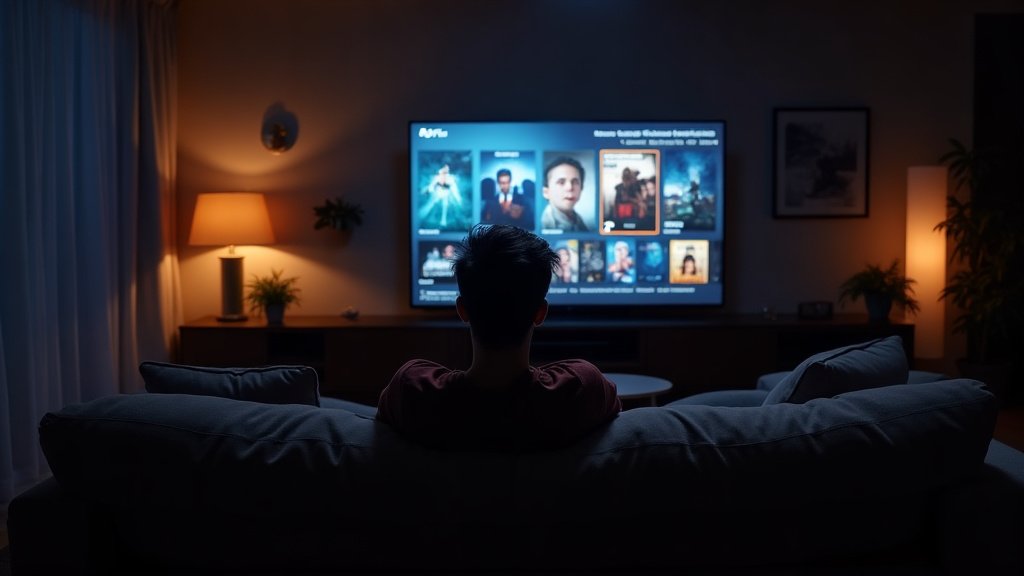
As the calendar hits November 20, 2026, the streaming landscape has shifted from a race for sheer volume to a strategic battle for Average Revenue Per User (ARPU). For subscribers navigating the cluttered release schedules of major platforms like Netflix, Hulu, and Max, the question isn’t just ‘what is new?’ but ‘what is worth my time?’ In this week’s release cycle, we see a distinct trend: platforms are leaning into ‘anchor content’—high-budget, limited series and legacy IP expansions—designed to maximize retention and minimize churn during the busy holiday lead-up. While casual browsing remains a staple of the streaming experience, the industry is increasingly using sophisticated data modeling to stagger releases, ensuring that no two ‘must-watch’ titles compete for the same Tuesday-night eyeballs. This week marks a pivotal moment where platform strategies reflect the broader economic reality of 2026: quality over quantity, and ad-tier integration over pure-play subscription growth.
Key Highlights
- Anchor Content Focus: Major streamers are pivoting to tentpole weekly releases rather than the traditional ‘all-at-once’ binge model, specifically for high-budget dramas debuting this week.
- Ad-Tier Saturation: Over 65% of new subscribers this month are opting for ad-supported tiers, signaling a permanent change in consumer tolerance for commercials in exchange for lower monthly costs.
- The Rise of the ‘Super-Bundle’: Industry data indicates a 14% increase in household reliance on aggregate streaming bundles as platforms seek to combat individual service fatigue.
- Algorithmic Personalization: Platforms have updated their recommendation engines this week to prioritize titles with higher completion rates rather than click-through rates, aiming to improve user stickiness.
The New Landscape of November 2026
The streaming ecosystem of late 2026 is defined by a paradox: we have more content than ever, yet consumers report ‘choice paralysis’ at record levels. As Mashable and other industry trackers have noted, the sheer volume of releases arriving on platforms like Netflix, Hulu, and Max on November 20, 2026, requires a curated approach to consumption. The industry is moving away from the ‘wild west’ growth phase of the early 2020s, entering a period of consolidation and refinement.
The Shift to Sustainable Growth
For the end of Q4 2026, streaming giants are prioritizing profitability. This has led to a noticeable shift in content investment. Instead of the massive quantity of mid-tier content that characterized the 2022-2024 era, current strategies favor ‘anchor’ titles—series that act as a primary reason for a subscriber to maintain their account. These titles are often released on a weekly cadence, a direct acknowledgment that the ‘binge-release’ model often leads to rapid subscriber churn once the season is consumed. By extending the lifecycle of a single hit series over 8-10 weeks, platforms stabilize their monthly active user (MAU) metrics, effectively reducing the volatility of their subscription numbers.
The Economic Impact of Ad-Tiers
Perhaps the most significant development in the streaming sector this year is the normalization of the ad-supported tier. In 2026, the industry has successfully bridged the gap between linear television’s traditional revenue model and the on-demand convenience of digital streaming. With ad-supported subscriptions now representing the majority of new sign-ups, platforms have gained a massive secondary revenue stream. This shift has fundamentally changed the user experience; ‘ad-breaks’ are no longer jarring interruptions but are being integrated as ‘sponsored content blocks’ that often feature high-production value, making the viewing experience feel closer to premium broadcast television than early-internet streaming. For the user, this means lower monthly costs but a different psychological relationship with the screen.
Algorithmic Curation and the ‘Human Touch’
This week’s releases are also being subjected to a new generation of AI-driven curation. Platforms have quietly rolled out updates that prioritize ‘completion rate’—the percentage of viewers who finish an entire series—over mere ‘view duration.’ This shift is designed to combat the ‘infinite scroll’ effect that plagues many users. By promoting content that viewers actually finish, platforms are betting that user satisfaction will lead to long-term loyalty. Interestingly, we are seeing a concurrent rise in ‘human-curated’ categories within the UI, a nod to the fact that algorithms, while powerful, often struggle to capture the cultural zeitgeist or the emotional nuance that a human critic provides. The curation lists appearing this week are a hybrid: AI-optimized for retention, but wrapped in human-curated collections designed to make the platform feel like a boutique experience rather than a data silo.
Historical Context and Future Predictions
To understand where streaming is going, one must look at where it came from. The trajectory from 2020 to 2026 mirrors the evolution of cable TV, albeit at a much faster pace. We started with content abundance, followed by platform fragmentation, and now we are entering the era of the ‘Super-Bundle.’ We predict that by early 2027, the market will stabilize around 3-4 primary ‘hub’ services that aggregate content from smaller providers, essentially recreating the ‘cable package’ but with modern tech infrastructure. The economic implication is clear: platforms will succeed based on their ability to aggregate, not just produce. For the consumer, this suggests that the ‘streaming wars’ are effectively over, replaced by a ‘streaming utility’ model where access is integrated into our broader digital lives, from telecommunications to credit card rewards programs.
FAQ: People Also Ask
Why is the streaming service I use raising prices in Q4 2026?
Price hikes in late 2026 are largely attributed to the rising costs of production and the need to offset the lower revenue generated by ad-supported tiers. Platforms are shifting the cost burden toward premium, ad-free users to protect overall margins.
Are weekly releases better than binge releases for consumers?
Data suggests that weekly releases foster more community discussion and social media ‘buzz’ compared to binge releases, which tend to be consumed rapidly and forgotten. Weekly formats generally result in higher long-term brand awareness for the specific title.
What are FAST channels, and why are they becoming more popular?
FAST (Free Ad-Supported Streaming TV) channels are gaining traction because they offer a ‘lean-back’ experience. Unlike VOD (Video on Demand), where the user must choose what to watch, FAST channels act like traditional linear TV, reducing decision fatigue for viewers in 2026.
How is AI influencing the shows being produced this week?
AI is being used in the pre-production phase to analyze past viewer data, helping creators identify which genre tropes and character archetypes perform best. While this does not replace human writing, it acts as a ‘guardrail’ to ensure that new content has a higher probability of finding an audience.