The Los Angeles County Department of Public Health has issued a critical emergency order requiring the operators of the Chiquita Canyon landfill to provide immediate, indefinite hotel accommodations for residents of the Val Verde community. This directive follows a prolonged and escalating environmental crisis characterized by the emission of a noxious, hazardous plume of decomposing garbage and landfill gases. The facility, located near Santa Clarita, has been under intense scrutiny after an exothermic reaction—a process where waste material undergoes chemical decomposition that generates excessive heat—began in a portion of the site known as ‘Cell 2,’ leading to significant airborne contaminants that have severely compromised the air quality for nearby neighborhoods.
Key Highlights
- Emergency Relocation: Landfill operator Waste Connections is under a binding health order to fund hotel stays for residents most severely impacted by the continuous odors and chemical emissions.
- The Chemical Culprit: The reaction has released significant levels of dimethyl sulfide (DMS) and benzene, forcing local officials to intervene to protect the health of the Val Verde community.
- Exothermic Reaction: Unlike a traditional fire, this is an ongoing chemical process deep within the landfill that generates heat and gas, complicating traditional firefighting and containment methods.
- Regulatory Pressure: The landfill has been the subject of hundreds of violation notices and multiple lawsuits from both residents and the South Coast Air Quality Management District (SCAQMD).
The Anatomy of an Environmental Disaster: Inside the Chiquita Canyon Crisis
The Science of the Smoldering Cell
At the heart of the crisis lies an engineering and environmental failure within Cell 2 of the Chiquita Canyon landfill. Since May 2023, operators have been contending with an anomalous ‘exothermic reaction.’ In waste management terms, this is not a conventional fire that can be extinguished with water or foam. Instead, it is a persistent chemical reaction where organic waste decomposes at an accelerated rate, creating immense internal heat—reaching temperatures well exceeding 150 degrees Fahrenheit in some areas. As the waste cooks, it releases a cocktail of byproduct gases, primarily dimethyl sulfide (DMS), which is responsible for the pervasive, sickening stench that has permeated the homes of thousands of Santa Clarita residents.
The reaction creates a feedback loop: as the temperature rises, it accelerates the chemical decomposition of the surrounding waste, which in turn generates more gas and heat. Engineers and waste experts have struggled to stabilize the cell, as traditional capping methods meant to seal in landfill gas have proven insufficient against the sheer pressure and volume of the gases being generated. The inability to fully encapsulate these emissions has turned the landfill into a continuous source of atmospheric pollution, affecting not only the immediate vicinity but also spreading to broader areas of the Santa Clarita Valley depending on wind patterns.
Health Implications and the Regulatory Response
For the residents of Val Verde, a community located in the shadow of the landfill, the situation has moved beyond mere nuisance into a full-scale public health emergency. The Los Angeles County Department of Public Health has taken the rare step of issuing an emergency order precisely because of the potential long-term exposure to toxic compounds. While dimethyl sulfide is the primary source of the ‘rotten egg’ odor, monitoring stations have detected volatile organic compounds (VOCs) that carry greater health risks. Benzene, a known carcinogen, has been detected at levels that have alarmed both environmental regulators and the public.
The emergency health order is a direct mandate for Waste Connections to mitigate the impact on human health. By forcing the provision of hotel accommodations, the county has acknowledged that the facility is, for the time being, unfit for nearby residential occupancy. This order represents a significant escalation in regulatory intervention. For months, the South Coast Air Quality Management District (SCAQMD) and other agencies have issued ‘Notices of Violation,’ but these financial penalties have clearly failed to incentivize a solution, necessitating the recent, more aggressive ‘Order for Abatement’ that forces real-time relief for the population.
The Economic and Legal Quagmire
The economic impact of the Chiquita Canyon disaster is cascading. Beyond the immediate costs of funding hotel rooms, laundry services, and food stipends for displaced families—costs which the landfill operator is now legally required to cover—the facility faces a massive wave of litigation. A class-action lawsuit is currently winding through the courts, filed on behalf of residents who have seen their property values plummet, their health deteriorate, and their quality of life decimated.
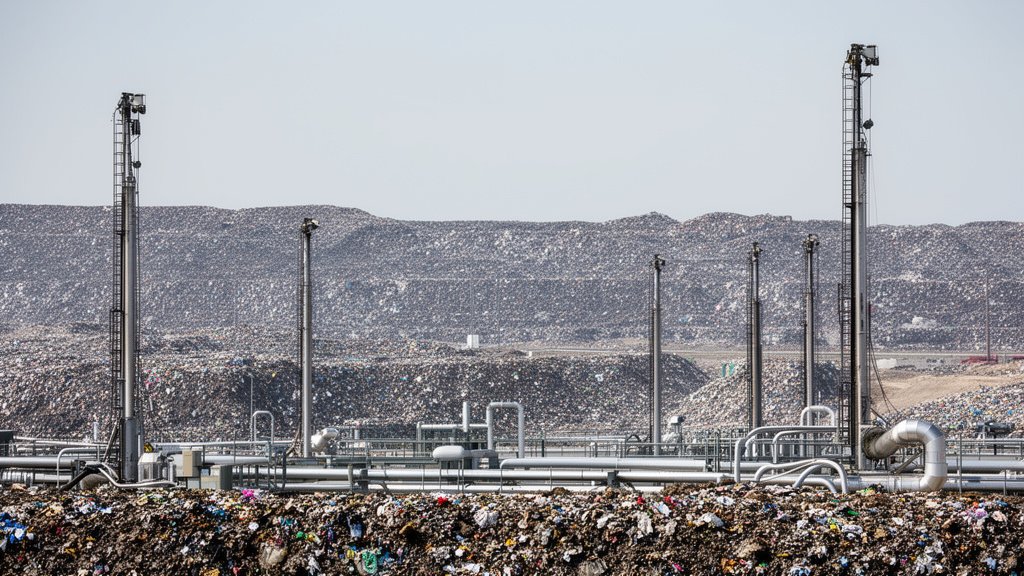
Furthermore, the operational costs for Waste Connections are ballooning. The company has spent millions on ‘gas extraction wells,’ specialized cooling equipment, and additional staff to manage the site. Yet, every week that the exothermic reaction persists, the company faces increasing pressure to cease operations entirely. The economic friction is not just between the operator and the residents; it is a battle involving local government revenue, waste disposal contracts for the entire Los Angeles region, and the massive liability of environmental remediation. If the landfill is forced to close prematurely, the city and county will face a significant waste-disposal deficit, creating an ironic and difficult tension between the need for environmental justice and the harsh reality of urban waste management infrastructure.
Forecasting the Future: Remediation and Long-Term Closure
The long-term future of Chiquita Canyon remains precarious. Expert geologists and waste engineers consulted by the state have suggested that an exothermic reaction of this scale can take years to fully stabilize or ‘cool.’ This means the displacement of residents is not a short-term inconvenience but could be a multi-year reality. The remediation plan involves drilling hundreds of deep-bore extraction wells to pull the gases and heat out of the landfill, essentially trying to ‘breathe’ for the mound of trash.
Ultimately, this crisis may serve as a blueprint for how California regulates mega-landfills. The public outcry has been so intense that state legislation is being drafted to increase monitoring requirements for large-scale disposal sites. The Chiquita Canyon case has exposed a flaw in the oversight of aging or over-capacity landfills, where the assumption of safety was based on outdated models of waste decomposition. As the site slowly cools, the primary goal for regulators will be to ensure that Waste Connections remains solvent enough to complete the expensive cleanup process while ensuring that the burden of the disaster does not fall on the shoulders of the very residents who were forced to live next to it.
FAQ: People Also Ask
Q: Is the Chiquita Canyon landfill on fire?
A: No, it is not a conventional fire. It is an exothermic reaction deep underground where chemical processes are generating heat and gas, which is significantly more difficult to ‘extinguish’ than a surface fire.
Q: What are the primary health symptoms reported by residents?
A: Residents have reported persistent headaches, nausea, respiratory irritation, eye irritation, and fatigue, which are commonly associated with exposure to dimethyl sulfide and volatile organic compounds (VOCs).
Q: How long will residents need to stay in hotels?
A: The timeline is currently indefinite. The emergency health order remains in effect as long as the landfill continues to emit dangerous levels of gas, and remediation efforts may take years to stabilize the site.
Q: Can the landfill be shut down immediately?
A: While local and state agencies have the authority to issue strict orders and fines, a total closure involves complex legal, environmental, and infrastructure challenges, as the facility handles a significant portion of Los Angeles County’s waste disposal.