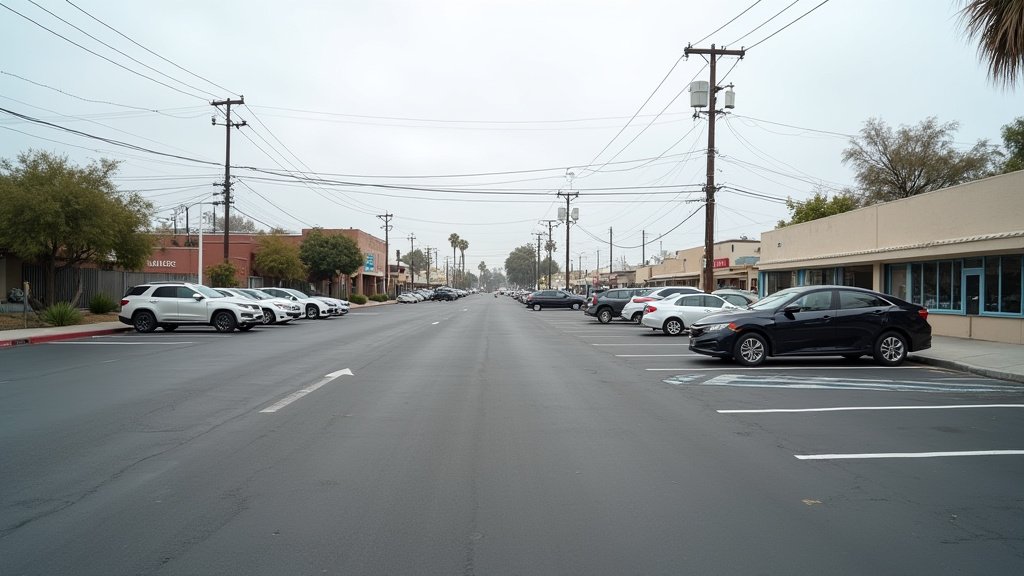
On October 17, a volatile enforcement operation in Long Beach, California, resulted in a U.S. citizen being hospitalized with a broken arm, an incident that has triggered a significant conflict between federal immigration agents and local law enforcement. The encounter, which occurred in a private parking lot, escalated rapidly after federal immigration agents deployed a taser, leading to a physical confrontation that ultimately drew the intervention of the Long Beach Police Department (LBPD). The department’s rare, public decision to order federal agents off the premises—coupled with explicit confirmation that local officers did not participate in the operation—has now ignited a broader debate regarding jurisdictional boundaries, the use of force, and the necessity for a congressional investigation into U.S. Immigration and Customs Enforcement (ICE) protocols.
Key Highlights
- The October 17 Incident: A U.S. citizen was hospitalized with a broken arm after being tased by federal immigration agents during an encounter in a Long Beach parking lot.
- Local Law Enforcement Stance: The Long Beach Police Department issued an immediate clarification, stating they did not participate in the immigration enforcement action and formally ordered the federal agents to vacate the secure area.
- Calls for Accountability: The severity of the injury and the resulting public standoff have led local advocates and officials to demand a federal oversight review and a full congressional investigation.
- Jurisdictional Tension: The incident underscores a growing friction between local municipal police departments and federal agencies operating within city limits without coordinated notification.
Jurisdictional Collision: When Federal Tactics Meet Local Oversight
The events of October 17 in Long Beach serve as a stark case study in the complex power dynamics between federal immigration enforcement and local police authorities. While federal agencies often operate with wide discretion, the Long Beach incident represents a notable point of friction. The LBPD’s intervention was not merely reactive; it was a firm assertion of local control. By ordering federal agents to leave a secure parking lot, the department signaled a rejection of the enforcement tactics deployed on their turf, particularly when those tactics resulted in the injury of a resident confirmed to be a U.S. citizen.
The Anatomy of the Escalation
Witnesses and subsequent police statements indicate that the situation began as an enforcement operation that quickly devolved into a physical altercation. The deployment of a taser against a citizen—who was later confirmed to be a U.S. citizen—resulted in a traumatic injury, specifically a broken arm requiring hospitalization. This detail is pivotal. When federal agents utilize “less-than-lethal” weapons like tasers, the risk of injury is often cited as manageable; however, the resulting hospitalization reframes the narrative from a standard arrest to a matter of potential excessive force. The involvement of LBPD personnel on the scene was the turning point. Police leadership, recognizing the volatility, acted to de-escalate by demanding the federal team’s immediate departure.
The Intersection of Rights and Oversight
This case touches upon the core of constitutional protection. Whether an individual is an immigrant or a citizen, the standard for the use of force remains the same, yet the implications differ when federal agencies act independently of local “know-your-rights” structures. Advocates are arguing that without oversight, federal agents are essentially operating in a legal vacuum within major cities, bypassing local notification procedures that typically govern police-citizen interactions. This has led to the current demand for a congressional investigation. The focus of such an inquiry would likely center on why the specific agents involved felt empowered to deploy force in that manner, and why communication protocols with the Long Beach Police Department failed to prevent the standoff.
Secondary Angles: Contextualizing the Crisis
To fully understand the weight of the Long Beach incident, one must look beyond the immediate event and examine three secondary factors influencing the outcome:
1. The Erosion of Local Trust: When federal agents act independently of local police, they complicate the “sanctuary” or “community policing” models many California cities have adopted. For immigrants and citizens alike, the blurred line between local police and federal immigration enforcement creates a chilling effect on community safety.
2. The Evolution of Federal Policy: This incident arrives at a time when ICE operations are under intense scrutiny regarding their “tactical” approach. Experts are monitoring whether this event signals a shift toward more aggressive, “raid-style” enforcement tactics, or if it remains an isolated failure of individual agent judgment.
3. The Legal Precedent for Inter-Agency Friction: Historically, local police departments and federal agencies maintain “memorandums of understanding” (MOUs). If those MOUs were ignored or bypassed on October 17, the legal fallout could reach beyond this single injury, potentially leading to new legislative requirements for federal agencies to notify local departments before initiating enforcement actions in densely populated urban centers.
FAQ: People Also Ask
Q: Did the Long Beach Police Department assist in the ICE operation?
A: No. The Long Beach Police Department has explicitly clarified that they did not participate in the immigration enforcement operation and subsequently ordered the federal agents to leave the location.
Q: What is the current status of the U.S. citizen injured in the incident?
A: The individual was hospitalized following the encounter with a broken arm, sustained after being tased by federal agents.
Q: Why are there calls for a congressional investigation?
A: The calls stem from concerns regarding federal overreach, the use of force against a U.S. citizen, and the lack of communication between federal immigration authorities and local law enforcement during the October 17 event.
Q: How does this impact future ICE operations in Long Beach?
A: The incident has effectively put federal agencies on notice. Future operations will likely face increased scrutiny and potential demands for prior notification to local authorities to avoid further public standoffs and jurisdictional conflicts.