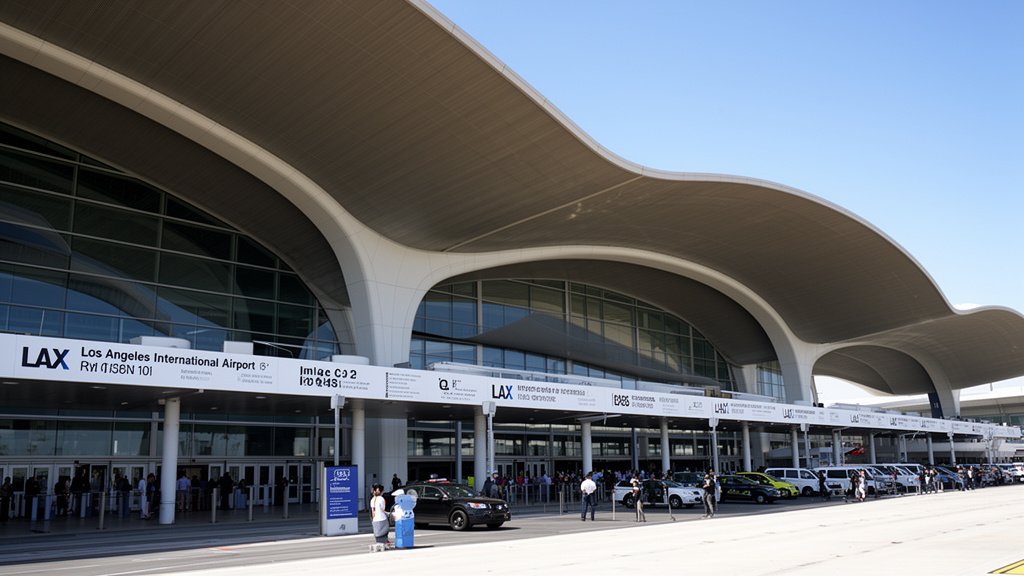
Federal authorities apprehended Wanying ‘Heather’ Zhang, a 34-year-old real estate agent based in Irvine, California, at Los Angeles International Airport (LAX) this week. Zhang, who was allegedly attempting to flee to Shanghai, faces serious charges relating to her purported role as an unregistered foreign agent operating on behalf of the Chinese government. The criminal complaint alleges that Zhang was tasked with a specific, high-profile surveillance mission: tracking the family members of a high-ranking Taiwanese official residing in the United States.
Key Highlights
- Targeted Surveillance: Zhang is accused of utilizing her real estate business as a cover to monitor the son of a prominent Taiwanese official.
- The LAX Interception: Federal agents detained Zhang at Los Angeles International Airport while she was reportedly in the process of attempting to board a flight to Shanghai, China.
- Legal Charges: The Department of Justice has charged Zhang with acting as an unregistered foreign agent, a violation of the Foreign Agents Registration Act (FARA).
- Counter-Intelligence Escalation: This arrest marks another significant chapter in the DOJ’s intensifying campaign against transnational repression and foreign influence operations within the United States.
Unveiling the Espionage Allegations
The arrest of Wanying ‘Heather’ Zhang has sent shockwaves through the Southern California business community, casting a harsh light on the vulnerability of legitimate professional industries to foreign intelligence interference. According to federal documents, Zhang did not operate as a traditional intelligence officer; rather, she allegedly leveraged her position as a real estate agent in Irvine—a hub of international commerce and residential investment—to gain proximity to high-value targets.
The Nature of the Surveillance
Investigators claim that Zhang’s primary directive was to collect intelligence on the son of a high-ranking Taiwanese official. While the specific nature of this “surveillance” remains a focal point of the ongoing legal proceedings, authorities suggest it involved monitoring the subject’s movements, professional engagements, and potentially his personal interactions. The use of a real estate professional to conduct this surveillance is particularly notable. Real estate often requires deep community integration, access to private residences, and the ability to ask intrusive financial and personal questions without raising suspicion. By embedding herself in the local market, Zhang allegedly gained the necessary cover to approach individuals who would otherwise be guarded against foreign intelligence services.
The Failed Flight to Shanghai
The timing of the arrest underscores the frantic nature of the investigation. Federal agents apprehended Zhang directly at LAX, preventing her departure to Shanghai. This interception suggests that the Department of Justice had been monitoring her activities closely and determined that she posed a significant flight risk. The attempted exit to China is viewed by prosecutors as a clear indicator of the operation’s backing; when foreign assets realize their cover is compromised, an immediate extraction or return to the host country is a standard procedure in state-sponsored espionage networks.
Legal Implications and the FARA Framework
At the core of the case against Zhang is the violation of the Foreign Agents Registration Act (FARA). This statute is designed to ensure that the U.S. government and the American public are aware of when individuals or entities are acting on behalf of a foreign power to influence U.S. policy or conduct activities that might undermine national security.
Understanding FARA Compliance
Many individuals assume FARA only applies to high-level lobbyists or diplomats. However, the DOJ has increasingly applied this law to “nontraditional” agents—private citizens, academics, and business professionals who are coerced or recruited to provide intelligence or suppress dissent on foreign soil. Zhang’s case is a textbook example of how the DOJ is closing the net on these operatives. Acting as a foreign agent without registering with the Attorney General is a felony, carrying stiff penalties. Prosecutors argue that the requirement to register provides transparency, which is vital in a democratic society where foreign influence can subtly sway local affairs and intimidate political opponents.
The DOJ’s Transnational Repression Crackdown
This arrest is not an isolated incident. It is part of a broader, sustained effort by federal agencies to tackle transnational repression—the practice of foreign governments harassing or monitoring their citizens (or those of neighboring nations like Taiwan) who are located abroad. By monitoring the families of officials, the goal is often to exert pressure, leverage, or silence, effectively extending the repressive apparatus of the Chinese government into American communities. The DOJ is signaling that U.S. soil is not a free-fire zone for foreign intelligence agencies to conduct these operations.
Geopolitical Tensions: The US-Taiwan-China Triad
The arrest must be viewed through the lens of the increasingly complex geopolitical climate involving Washington, Beijing, and Taipei. Taiwan remains a critical focal point in U.S. foreign policy, and the safety of its leadership and their families is a matter of strategic concern for American intelligence agencies.
Intelligence Dynamics
China’s efforts to monitor Taiwanese officials are widely documented, with Beijing viewing Taiwan as a breakaway province. Consequently, the intimidation or surveillance of Taiwanese officials—and by extension, their families—is considered a high-priority intelligence objective for the Chinese Ministry of State Security. By arresting Zhang, U.S. authorities are effectively disrupting a line of sight that Beijing was attempting to maintain on a sensitive diplomatic target. This move likely serves as a diplomatic deterrent, demonstrating that the U.S. is vigilant in protecting individuals from foreign intelligence encroachment, regardless of the target’s nationality.
FAQ: People Also Ask
What specific charges is Wanying ‘Heather’ Zhang facing?
Zhang faces charges related to acting as an unregistered foreign agent of the Chinese government, a direct violation of the Foreign Agents Registration Act (FARA).
Why was she arrested at an airport?
Federal agents arrested Zhang at LAX because she was attempting to board a flight to Shanghai, China. This was deemed a high flight risk, necessitating an immediate intervention by law enforcement before she could leave the jurisdiction of the United States.
How common are these types of ‘unregistered agent’ arrests?
The Department of Justice has significantly ramped up its investigations into foreign influence operations. While not a weekly occurrence, there has been a noticeable trend of identifying and charging individuals—often private business people—who facilitate intelligence gathering or harassment campaigns for foreign governments.
Does this case impact US-China relations?
Such cases almost invariably increase diplomatic friction. While the legal process is independent of executive foreign policy, these arrests serve as a constant reminder of the deep intelligence competition that characterizes the current era of U.S.-China relations.