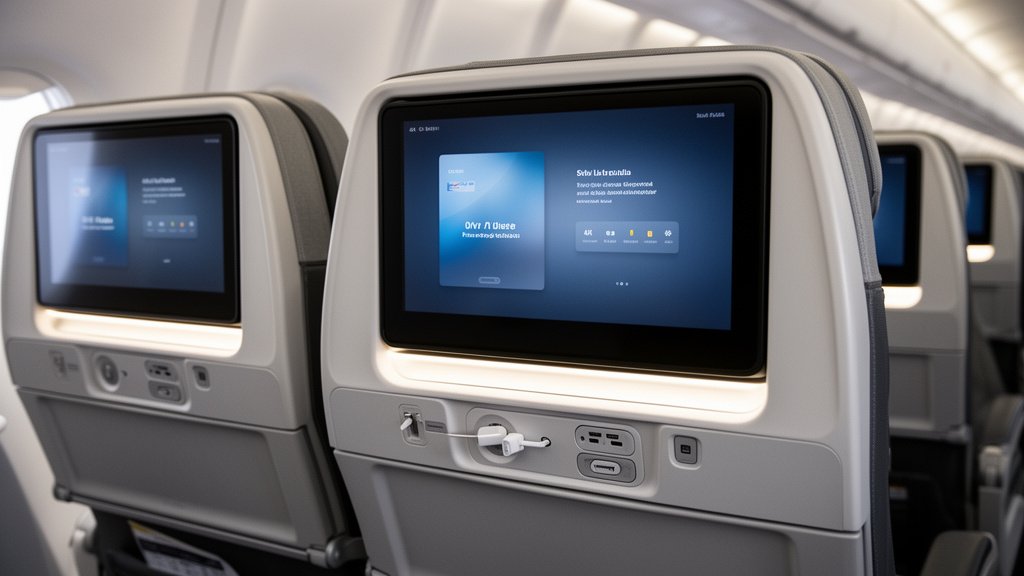
American Airlines is officially pivoting away from its previous “Bring Your Own Device” (BYOD) strategy, announcing a massive, comprehensive overhaul of its narrowbody fleet. This ambitious initiative aims to standardize the in-flight experience across its Airbus A319, A320, A321, and Boeing 737 aircraft. Passengers can expect a complete modernization, including the installation of 4K seatback entertainment screens, high-speed Starlink Wi-Fi, dedicated Bluetooth audio pairing at every seat, and upgraded USB-C charging ports. This move represents a significant capital investment designed to address persistent customer feedback regarding the lack of integrated entertainment options on domestic and short-haul international flights.
Key Highlights
- Universal 4K Entertainment: Every seat in the narrowbody fleet will feature high-definition 4K seatback monitors, replacing the reliance on passenger-owned tablets and smartphones.
- Next-Gen Connectivity: American is partnering with SpaceX for Starlink Wi-Fi, promising gate-to-gate connectivity that supports streaming, gaming, and remote work.
- Power and Audio: Each seat will be outfitted with modern USB-C fast-charging ports and native Bluetooth audio connectivity, allowing passengers to sync wireless headphones directly to the in-flight entertainment system.
- Expanded Premium Cabin: The retrofit includes an increase in premium seating capacity across the narrowbody fleet, addressing higher demand for business and first-class travel.
The Great Return of the Seatback Screen
The aviation industry is currently witnessing a definitive swing of the pendulum. For the better part of the last decade, carriers like American Airlines experimented with removing seatback screens to reduce aircraft weight—thereby saving fuel—and reducing maintenance complexity. The philosophy was simple: everyone carries a smartphone or a tablet; why pay to install and maintain heavy screens?
However, the consumer reality proved to be far more nuanced. Passengers consistently cited the lack of integrated screens as a major pain point. Using a personal device for long periods is ergonomically taxing, requires battery management, and disrupts the ability to “multi-screen”—for example, using a phone while watching a movie. Furthermore, the variability of the BYOD experience (varying screen sizes, operating systems, and connectivity issues) created friction. By installing 4K screens across its entire narrowbody fleet, American Airlines is acknowledging that the integrated seatback screen is not merely a “nice-to-have” amenity, but a core component of premium service expected by modern travelers. This is a clear response to competitors like Delta and United, which have heavily invested in high-quality seatback entertainment to maintain customer loyalty.
Engineering the Upgrade: A Logistical Undertaking
Executing a fleetwide retrofit of this scale is a monumental engineering challenge. American Airlines operates hundreds of narrowbody aircraft, many of which were not designed with the power, cooling, or structural wiring required for 4K video systems at every seat.
Installing these systems requires deep cabin modifications. Technicians must route new wiring harnesses through the cabin floor and side panels, upgrade power distribution units (PDUs) to handle the increased electrical load, and integrate the seatback hardware into the existing cabin seating structure. This often necessitates “heavy maintenance” cycles, meaning aircraft must be pulled from active service for weeks at a time. The logistical choreography required to cycle hundreds of aircraft through this upgrade process without significantly crippling flight schedules is a testament to the airline’s long-term commitment to this service upgrade.
The Role of Starlink and Connectivity
The integration of SpaceX’s Starlink Wi-Fi is the connective tissue of this upgrade. Legacy satellite internet systems on aircraft have historically been plagued by high latency and low bandwidth, which often led to “buffering” frustration for users. Starlink’s low-Earth orbit (LEO) satellite constellation changes the value proposition of in-flight connectivity entirely.
By providing near-fiber-like speeds, American ensures that the 4K screens are not just useful for pre-loaded movies, but also for interactive content, live television, and real-time flight data. This technological jump also addresses the “Bluetooth bottleneck.” Previous IFE systems were notoriously difficult to pair with consumer wireless headphones. The new hardware suite, specifically including native Bluetooth pairing, is designed to reduce the technical barriers for the average passenger, ensuring that the technology is intuitive rather than frustrating.
Economic and Strategic Implications
There are three distinct secondary angles to consider regarding this massive fleet investment:
1. The Premium Cabin Shift: Airlines have realized that the “leisure traveler” profile has changed post-2020. There is a higher propensity for passengers to pay for “Main Cabin Extra” or First Class. By increasing premium seating capacity during the retrofit, American is optimizing revenue per available seat mile (RASM). They are betting that the modern traveler prioritizes comfort and connectivity over the lowest possible ticket price.
2. Sustainability vs. Comfort: While the company claims modern electronics are more energy-efficient, installing hundreds of screens per plane still adds weight. Airlines are balancing this by using lighter-weight seat materials and advanced carbon-fiber composites in the cabin interior. This retrofit is a case study in how airlines are attempting to balance passenger comfort with strict emissions targets.
3. Brand Positioning: This is an attempt to standardize the American Airlines “product.” One of the largest complaints among frequent flyers has been the “lottery” of flying American: you might get a brand-new A321neo with all the bells and whistles, or an aging 737-800 with no screens and spotty Wi-Fi. By standardizing the cabin experience across the narrowbody fleet, American is signaling to the market that they intend to compete on consistency, not just network reach.
FAQ: People Also Ask
Q: Will this upgrade apply to all American Airlines flights?
A: The upgrade is focused on the narrowbody fleet (Airbus and Boeing 737 aircraft). Widebody aircraft (used for long-haul international flights) are generally already equipped with seatback entertainment, though they may receive different connectivity upgrades in the future.
Q: When will the retrofitting process be complete?
A: American Airlines has not provided a single hard completion date, as the rollout is tied to heavy maintenance schedules. The process is a multi-year project involving hundreds of aircraft.
Q: Will the new Starlink Wi-Fi be free?
A: While American has not disclosed the specific pricing structure for Starlink, the industry trend is moving toward ad-supported free Wi-Fi or tiered plans. Passengers should expect varying access levels depending on loyalty status and ticket class.
Q: Does this mean American is removing the ability to stream to personal devices?
A: No. The new setup is designed to supplement personal devices. Passengers will still be able to use their own phones and tablets, and the new seatback screens will work alongside personal device connectivity, not replace it.