Officers from the Los Angeles Police Department (LAPD) were involved in a fatal shooting on [Date] after responding to reports of an individual acting erratically and swinging a baseball bat at passing vehicles near a freeway onramp. The incident, which triggered a significant law enforcement response and disrupted local traffic, is currently under intense investigation by the department’s specialized units. While details regarding the individual’s identity and the precise timeline of the confrontation are still being synthesized, the event has once again highlighted the volatility and life-altering decisions police officers face during high-stress interactions in public spaces.
Investigative Protocols and Law Enforcement Response
The Sequence of Events
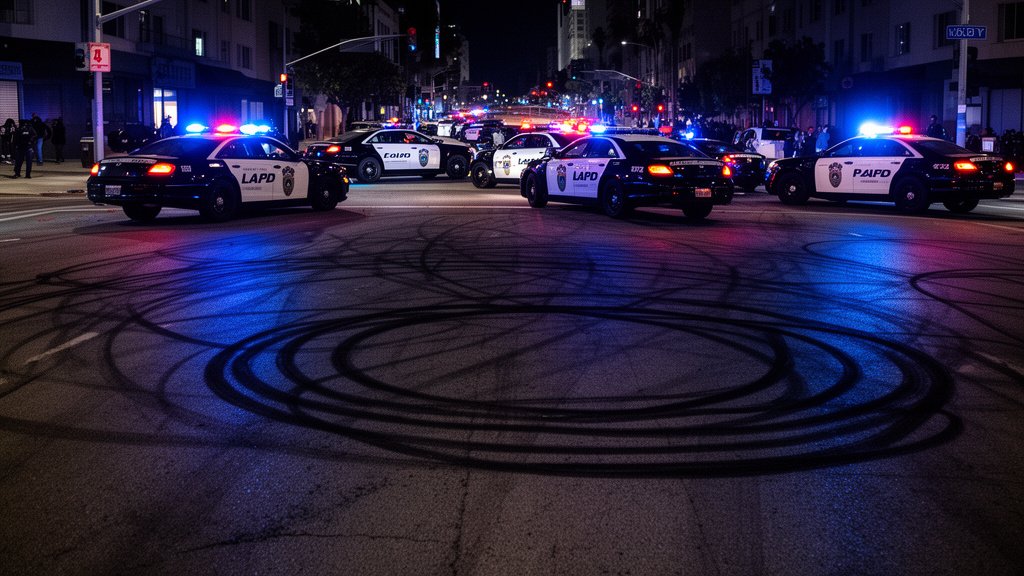
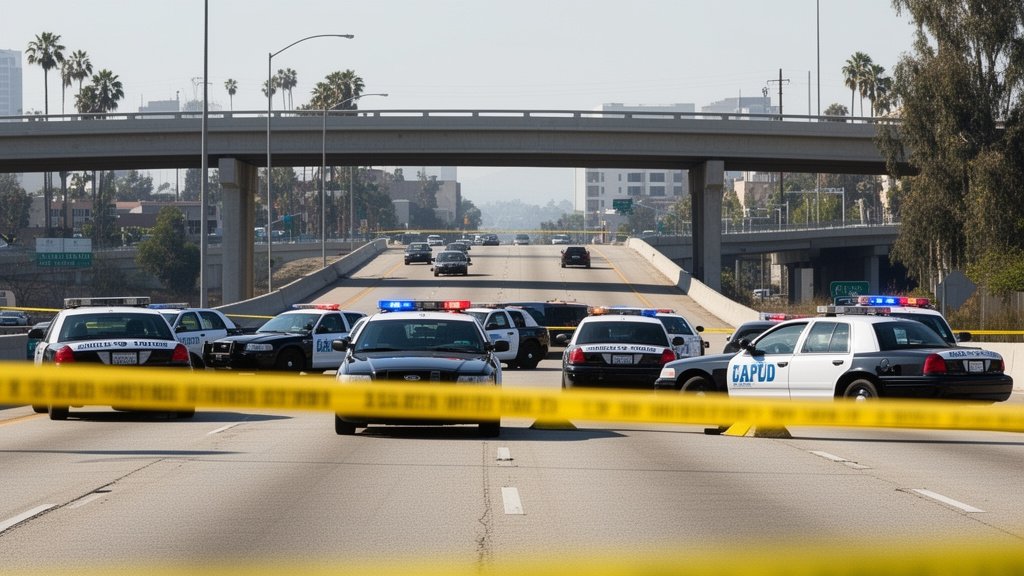
Preliminary reports indicate that patrol officers arrived at the scene following multiple distress calls from motorists traversing the area. Witnesses reported the individual was obstructing traffic and aggressively wielding a baseball bat at moving vehicles, creating an immediate public safety hazard. As officers attempted to de-escalate the situation and command the individual to drop the weapon, the confrontation reportedly escalated, leading to the use of lethal force. The individual was pronounced dead at the scene by emergency medical services. The specific location, while busy, was quickly cordoned off to preserve the integrity of the scene and allow for a thorough forensic examination.
Investigative Oversight and Accountability
In the wake of any officer-involved shooting (OIS), the LAPD activates a rigid investigative protocol. The Force Investigation Division (FID) immediately assumes control, tasked with gathering evidence, reviewing body-worn camera (BWC) footage, and interviewing civilian witnesses. This process is designed to ensure maximum transparency and objective analysis. Furthermore, the Office of the Inspector General (OIG) provides independent oversight, ensuring that the investigation adheres to both department policies and constitutional standards. This multi-layered approach is intended to provide the public and the victim’s family with a factual account of the incident, free from speculative assumptions.
The Intersection of Public Safety and Mental Health
This incident underscores the complex intersection between law enforcement and mental health crises. Often, reports of individuals acting erratically in public turn out to be related to underlying mental health episodes rather than criminal intent. LAPD officers are increasingly trained in de-escalation techniques, yet these strategies are often complicated by the presence of weapons. When a subject is armed—even with a blunt object like a baseball bat—and presents an immediate threat to the safety of commuters or officers, the tactical window for verbal de-escalation can shrink rapidly. The debate continues regarding how cities can better deploy unarmed mental health responders to situations that present a clear, immediate danger, a topic that remains central to ongoing discussions between local government and community advocacy groups.
Freeway Infrastructure and Security Challenges
Freeway onramps and arterial roads present unique challenges for law enforcement. Unlike a controlled environment, these zones are high-velocity areas where any pedestrian presence is inherently dangerous. Motorists caught in these situations often have limited room to maneuver, making them vulnerable targets for anyone attempting to interfere with traffic flow. This incident has raised questions regarding traffic management protocols and how law enforcement can secure these critical junctions more effectively without compromising the safety of officers or the public. The coordination between the LAPD and the California Department of Transportation (Caltrans) is frequently scrutinized when such events occur, as the physical layout of the city’s infrastructure often forces officers to intervene in high-risk zones.
Community Reactions and Policy Implications
Community stakeholders in Los Angeles remain deeply concerned about the frequency of OIS events. Activists and local leaders are calling for faster release of body-camera footage to provide clarity for the public. As the investigation progresses, the findings will be reviewed by the Los Angeles Board of Police Commissioners, a civilian oversight body that will ultimately determine if the officers’ actions were consistent with the department’s use-of-force policy. This incident serves as a grim reminder of the heavy burdens placed on police officers who are tasked with maintaining order in a rapidly changing urban environment where the unpredictable behavior of a single individual can lead to a fatal outcome within seconds.
FAQ: People Also Ask
What happens immediately after an LAPD officer-involved shooting?
Immediately following an OIS, the area is secured by perimeter units. The Force Investigation Division (FID) is deployed to take over the scene, while the Office of the Inspector General (OIG) is notified to monitor the investigation. Officers involved in the shooting are typically removed from the field while an initial administrative review is conducted.
How long does an internal investigation into an OIS usually take?
Investigations are thorough and can take months. The timeline includes processing forensic evidence, reviewing body-worn camera footage, interviewing witnesses, and compiling the findings for the Board of Police Commissioners. There is no set deadline, as the priority is accuracy.
Is the body-worn camera footage released to the public?
Under current California law and LAPD policy, body-worn camera footage related to critical incidents is generally released to the public, typically within 45 days, unless there is a specific legal reason to delay it, such as protecting the integrity of an ongoing criminal investigation.
What are the main entities involved in this review process?
The primary entities involved include the LAPD’s Force Investigation Division (FID), the Office of the Inspector General (OIG), the Los Angeles Board of Police Commissioners, and potentially the California Department of Justice, depending on the specific circumstances of the case.