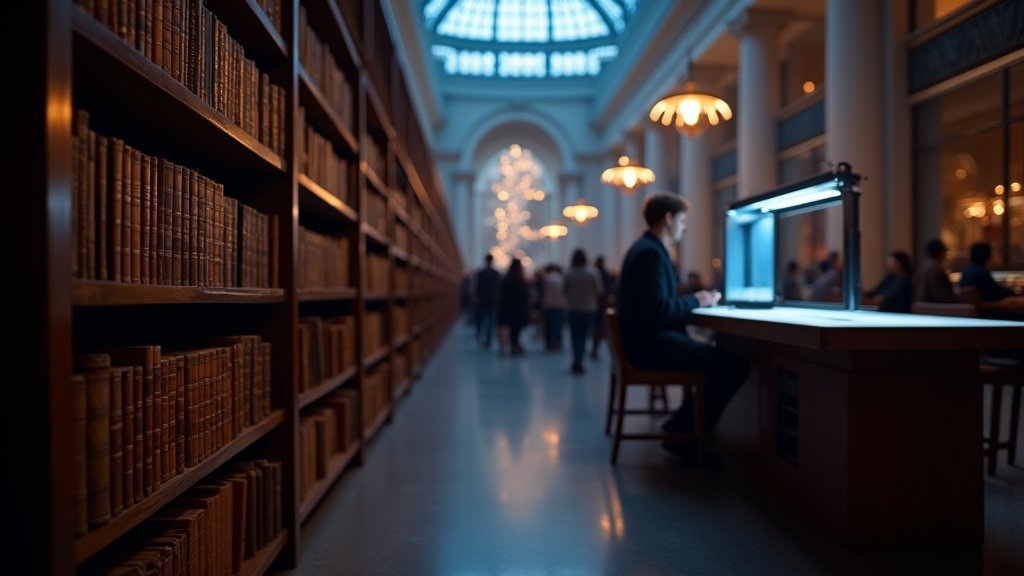
The Los Angeles Central Library—a crown jewel of the city’s architectural and cultural landscape—has officially turned 100. To commemorate this monumental milestone, the city is transforming its historic downtown hub into an after-hours playground. The “Night at the Library: A Century of Light” festival invites the public to bypass standard operating hours and roam the storied stacks, engaging with immersive art installations, live performances, and local culinary delights. This celebration isn’t merely a birthday party; it is a profound recognition of the institution’s resilience, from surviving arson and earthquakes to its evolution into a modern-day “third space” in the heart of downtown Los Angeles.
Key Highlights
- Centennial Celebration: The Richard J. Riordan Central Library, dedicated in 1926, is celebrating a year-long “Central 100” anniversary, highlighting its transformation from a standard book repository into a city-wide cultural engine.
- After-Hours Immersion: The “Night at the Library” festival features over 200 artists and activations, including performances by the Bob Baker Marionette Theater and the Los Angeles Master Chorale.
- Beyond Books: The event emphasizes the library’s modern role, showcasing community-focused innovations like the Octavia Lab, maker spaces, and digital inclusion initiatives.
- Architectural Iconography: The celebration honors the library’s unique Egyptian-revival architecture and its journey from a 1920s construction project to a registered historic landmark.
A Century of Light: Reimagining the Public Library
The Los Angeles Central Library has always been more than a facility for housing literature; it is a symbol of the city’s ambition. Dedicated in 1926, the building, designed by Bertram Goodhue, serves as a beacon of learning, often described as an architectural icon. As we mark its 100th year, the “Central 100” initiative seeks to remind Angelenos that libraries are dynamic engines of possibility. The “Night at the Library” event captures this ethos perfectly, pulling the community into the space after dark to experience the library not just as a silent reading room, but as a vibrant, living organism.
Architectural Resilience and Historical Context
To understand the magnitude of this 100-year celebration, one must look back at the building’s tumultuous history. The library has faced severe threats, including major arson fires in 1986 that devastated vast swaths of the collection, and the recurring specter of seismic activity common to the Los Angeles basin. Each time, the institution didn’t just rebuild—it evolved. The restoration efforts were not merely about patching up plaster or restocking shelves; they were about modernizing for the next century. Today, the Central Library stands as a testament to the city’s commitment to preserving its civic heart against the pressures of time and urban change.
The ‘Third Space’ Phenomenon
In an era where digital consumption often leads to social fragmentation, libraries have emerged as vital “third spaces”—physical locations distinct from home and the workplace. This is a primary angle of the Central 100 campaign. The programming at the Central Library now includes everything from the Octavia Lab, a technology-driven maker space, to culinary history series like “Tastebound.” The library provides equity, offering free access to tools, internet, and mentorship that might otherwise be gated by socioeconomic barriers. During the “Night at the Library” festival, the inclusion of local food trucks, DJ sets, and experimental art installations demonstrates that the library is actively trying to break the stigma of being a “quiet, dusty archive.”
Cultural Revitalization and Future Predictions
The future of the library system, as outlined by the Library Foundation of Los Angeles (LFLA), focuses on deep community engagement. By hosting large-scale, paid, and ticketed events, the library is finding creative ways to fundraise while remaining accessible to the masses. The fundraising goal of $10 million for the centennial campaign is indicative of the institution’s long-term vision: maintaining physical infrastructure while expanding digital and educational footprints. Looking forward, the Central Library is positioned to continue its role as a digital sanctuary, closing the divide for residents who lack high-speed connectivity or access to advanced creative technologies.
The Intersection of Art and Civic Duty
What makes the “Night at the Library” so unique is the curated collision of high-art and popular culture. Having the Los Angeles Master Chorale perform alongside the whimsical Bob Baker Marionette Theater creates a juxtaposition that mirrors the diversity of Los Angeles itself. This approach to programming is a strategic shift for public institutions worldwide. By inviting the city’s creative class—poets, puppeteers, and musicians—into the library, the administration is successfully branding the space as a creative incubator. This model could set a precedent for other metropolitan library systems looking to remain relevant in a post-internet world.
FAQ: People Also Ask
Q: Is the “Night at the Library” festival free to attend?
A: While the library offers many free resources and events, the “Night at the Library” festival is a paid, ticketed event designed to support the library’s ongoing centennial fundraising campaign.
Q: Can anyone visit the Central Library to see the exhibits?
A: Yes, the Central 100 exhibits and general collection tours are open to the public during normal operating hours throughout the centennial year.
Q: What is the significance of the Richard J. Riordan Central Library?
A: It is the anchor of the Los Angeles Public Library system, renowned for its distinct architecture and for surviving two major arson fires in 1986, which forced a massive and successful restoration effort.
Q: How can I find more information about the Central 100 events?
A: You can visit the Los Angeles Public Library (LAPL) website or the Library Foundation of Los Angeles (LFLA) portal to view the full calendar of centennial programming, including workshops, podcasts, and future festival dates.