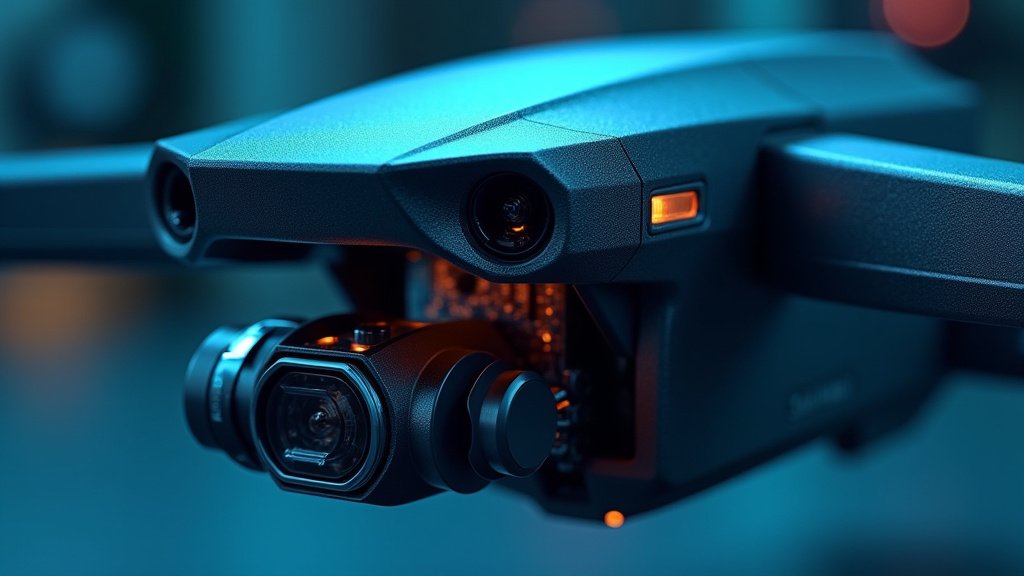
Skydio, the San Mateo-based titan of the drone industry, has officially declared a massive, $3.5 billion investment strategy aimed at decoupling its production lines from foreign reliance and supercharging domestic American manufacturing. This multi-billion dollar commitment, spread over the next five years, represents more than a simple capacity expansion; it is a strategic repositioning of the U.S. aerospace sector, aimed at securing the supply chain for autonomous systems against a backdrop of increasing geopolitical tension. By leveraging a new initiative dubbed ‘Skyforge,’ the company seeks to build the most resilient, high-capacity drone manufacturing ecosystem in the West, promising to create over 2,000 direct jobs and thousands more across the domestic supplier network.
Key Highlights
- $3.5 Billion Commitment: A five-year investment plan focused on scaling domestic U.S. manufacturing capabilities to meet unprecedented demand for autonomous aerial systems.
- Strategic ‘Skyforge’ Program: Launch of a new manufacturing initiative designed to bring critical suppliers in-house, accelerating production and reducing reliance on Chinese components.
- Massive Job Creation: The expansion is projected to generate 2,000 new Skydio roles and an additional 3,000 jobs within the broader U.S. aerospace supply chain.
- Scaling Production: Construction of a new, massive manufacturing facility—five times larger than current operations—to serve the defense, public safety, and critical infrastructure sectors.
The Sovereign Supply Chain: America’s New Drone Frontier
For nearly a decade, the commercial and defense drone landscape has been dominated by a singular paradox: while U.S. innovation gave birth to modern robotics, the manufacturing pipelines were inextricably linked to overseas entities. Skydio’s recent announcement serves as the definitive punctuation mark on the end of that era. By pledging $3.5 billion into a comprehensive expansion of domestic production, the company is not merely scaling up; it is architecting a sovereign supply chain. This is a crucial development in an age where the integrity of autonomous systems—from the silicon chips to the battery chemistries—is as important as the code that flies them.
The Geopolitics of Autonomous Flight
The reliance on non-domestic supply chains for dual-use technology—tech that serves both civilian infrastructure and military defense—has become a flashpoint for national security. Recent years have seen an escalation in the drone-related arms race, where intelligence, surveillance, and reconnaissance (ISR) capabilities are paramount. Skydio’s move to localize manufacturing is a direct response to these vulnerabilities. By bringing the production of critical subsystems, such as optics, specialized circuitry, and power systems, under the umbrella of ‘Skyforge,’ the company is insulating itself from the volatile global logistics landscape. This shift reflects a broader ‘reshoring’ movement in the United States, where industrial policy is being rewritten in real-time to prioritize national resilience over the low-cost, high-risk models of the past.
Skyforge: A Masterclass in Industrial Vertical Integration
The heart of this expansion is ‘Skyforge,’ a program that challenges the traditional vendor-manufacturer relationship. Instead of simply purchasing components from the open market, Skydio is inviting critical suppliers to co-locate within its new, massive manufacturing footprint. This creates a hyper-efficient ‘ecosystem’ approach. By granting these suppliers access to Skydio’s own engineering talent and specialized manufacturing space, the company is effectively incubating a new generation of American drone component makers. This vertical integration allows for rapid iteration—essential in the high-stakes world of autonomous robotics where technological cycles are measured in months, not years.
The Economic Ripple Effect
Beyond the defense implications, the economic impact of a $3.5 billion infusion into the California-based aerospace sector is profound. With 2,000 new positions at Skydio and an additional 3,000 roles estimated across the supplier network, the project is a significant catalyst for high-skill job growth. This investment validates the viability of high-tech manufacturing in California, counteracting the narrative that the state’s high operational costs render it incapable of supporting large-scale industrial projects. The focus on public safety agencies, utility companies, and defense departments ensures that this employment is tethered to stable, long-term government and institutional contracts, providing a buffer against the boom-and-bust cycles typical of consumer tech.
The Future of Autonomous Aviation
Looking ahead, Skydio’s scale-up is likely to force the hand of competitors and regulators alike. As the facility—which will be five times the size of its current footprint—comes online, the sheer volume of output will alter the economics of drone adoption. We are moving toward a reality where autonomous surveillance is no longer a luxury but a utility. From infrastructure inspections that prevent grid failures to sophisticated defense applications, the ‘always-on’ nature of these drones requires a manufacturing base that can scale at the speed of software. Skydio is betting that by controlling the hardware floor, they will define the next decade of autonomous aviation. The integration of AI into these platforms—already a Skydio hallmark—will be amplified by a factory floor that can turn designs into physical assets with unprecedented speed and security.
Competitive Differentiation
The drone market has seen a ‘culling of the herd,’ where many startups have failed due to under-capitalization or inability to navigate the complex regulatory environment of defense contracting. Skydio’s ability to secure this funding and maintain momentum suggests that it has successfully navigated the ‘valley of death’ that plagues most hardware startups. By focusing on dual-use technology—serving the private sector and the military with the same foundational tech—they have diversified their revenue streams, making them more resilient than companies solely dependent on unpredictable Department of Defense procurement cycles. This diversified strategy, combined with their new manufacturing muscle, places them in a tier of their own.
FAQ: People Also Ask
Q: What is the primary reason for Skydio’s $3.5 billion investment?
A: The investment is driven by a need to expand manufacturing capacity to meet ‘extraordinary demand’ from government, public safety, and defense clients, while simultaneously securing the supply chain to rely less on foreign components.
Q: What is the ‘Skyforge’ program mentioned by Skydio?
A: Skyforge is a new manufacturing initiative where Skydio invites its key suppliers to co-locate with them. This allows Skydio to provide them with engineering talent and manufacturing space, thereby fostering a domestic ecosystem for drone components.
Q: How many jobs will this project create?
A: The expansion is expected to create over 2,000 direct new jobs at Skydio and support the creation of an additional 3,000 roles across its U.S. supply chain.
Q: Does this move affect the consumer drone market?
A: While Skydio previously had a consumer drone arm, this investment is focused on professional, enterprise, and defense applications. The move reflects the company’s strategic pivot toward high-demand sectors like critical infrastructure and military use.