The Los Angeles Police Department is aggressively expanding its ‘Drone as First Responder’ (DFR) program, integrating advanced unmanned aerial systems into the city’s emergency response infrastructure. While the department touts these autonomous units as a transformative tool capable of slashing response times and minimizing danger to officers, the rapid deployment of Skydio-manufactured drones has triggered significant backlash regarding privacy, surveillance, and the potential for persistent monitoring of civil protests. As of April 2026, the intersection of public safety and digital oversight has become one of the most contentious issues facing the city of Los Angeles.
Key Highlights
- Rapid Deployment: The DFR program has grown from experimental testing to a sophisticated network with multiple docking stations across city divisions, logging over 1,700 flights in a short period.
- Technological Edge: The LAPD utilizes Skydio X10 drones, capable of high-resolution thermal imaging and long-distance license plate recognition, enabling officers to assess threats remotely.
- Surveillance Controversy: Critics, most notably the ‘Stop LAPD Spying Coalition,’ argue that the drones are being weaponized to monitor constitutionally protected protests, citing data from recent rallies.
- Operational Efficiency: Police officials argue the drones provide crucial situational awareness, allowing for de-escalation by providing real-time data to ground units before they arrive.
The Rise of the Autonomous Sky Patrol
The fundamental shift in how the LAPD manages its airspace represents a broader national trend in municipal policing: the transition from manned aviation—traditionally slow to mobilize and expensive to maintain—to the instantaneous, on-demand capabilities of drone technology. The DFR program is designed to fundamentally change the geometry of emergency response in a city as geographically complex as Los Angeles.
The Mechanics of the DFR Network
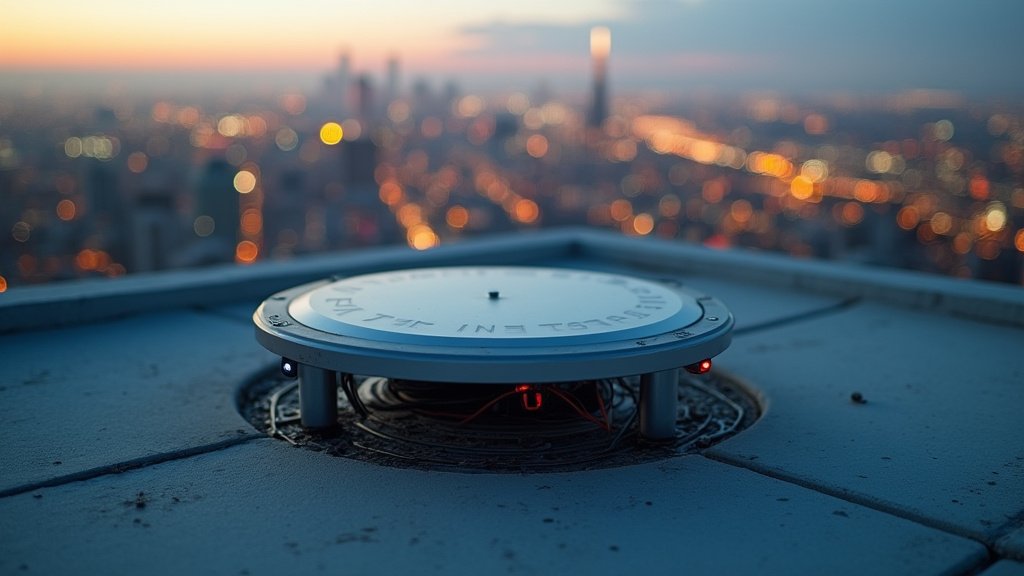
At the heart of this initiative is a decentralized network of docking stations. Unlike traditional drones that require manual flight by an on-site pilot, the LAPD’s current fleet is designed to be autonomous. When a 911 call is placed, a drone can be remotely dispatched from the nearest rooftop station. This allows the device to arrive on the scene significantly faster than patrol vehicles. These units, primarily supplied by Skydio, are equipped with a suite of sensors designed for high-altitude persistence. They provide a ‘god’s eye view’ that was previously reserved for rare, high-stakes incidents involving helicopters, now brought down to the level of routine police calls.
Efficiency vs. Ethics
The department justifies this investment through the lens of public safety. According to internal reports, the DFR program provides real-time situational awareness that can dictate whether an officer engages with a suspect or retreats to de-escalate. By seeing a situation before arriving, dispatchers can theoretically filter out false alarms or de-prioritize non-critical calls, optimizing resource allocation. However, this logic is precisely what fuels the critics. The capability to be ‘everywhere at once’ suggests a level of permanent surveillance that was previously impossible. When a tool is efficient, it becomes easier to use, and when it is easy to use, it becomes more frequent. This ‘mission creep’ is the core concern of privacy advocates who fear that the DFR program will eventually evolve into a default monitoring system for ordinary citizens.
The Surveillance ‘Mission Creep’ and Public Trust
The most intense scrutiny of the LAPD’s drone program stems from documented instances where the technology was utilized beyond the scope of traditional ‘first responder’ emergency calls. Flight data, which has been made accessible via public records and reporting, reveals that drones have been hovering over political demonstrations, including protests against local and federal policies. This has created a direct conflict with First Amendment protections.
The Protest Monitoring Controversy
While the LAPD maintains that drones are used at the request of an incident commander to ensure public safety—not to record First Amendment activity—the technical reality of the equipment makes this distinction difficult for the public to accept. Modern drones do not need to ‘record’ to facilitate surveillance. An operator viewing a live feed can track, identify, and coordinate the movement of crowds, effectively creating a ‘digital fence’ around protesters. The ‘Stop LAPD Spying Coalition’ has pointed to these flight patterns as evidence that the department is moving toward a model of predictive policing that relies on aerial monitoring of political speech, a move they argue chills the right to assemble.
The Skydio Connection
The partnership between the LAPD and Skydio, a California-based technology firm, further complicates the narrative. Skydio’s hardware is not merely consumer-grade technology; it includes sophisticated software capable of automated object tracking, license plate identification from extreme distances, and multi-drone coordination. When this hardware is integrated into a police department’s operational workflow, it becomes a dual-use technology. The same AI that tracks a barricaded suspect can, with minor adjustments, track a vehicle leaving a protest or follow an individual through a neighborhood. This lack of clear, codified boundaries on what the AI is permitted to ‘see’ and ‘track’ is the primary friction point between the department and its oversight boards.
The Future of Urban Airspace
As the LAPD looks to expand its DFR network to even more divisions, the city is essentially building a new layer of infrastructure. This is not just about police cars or radios; it is about the management of the air above our heads.
Economic and Strategic Implications
From an economic standpoint, drones are undeniably more cost-effective than keeping a fleet of Eurocopter helicopters in the air. The fuel costs alone are astronomical compared to electric drone recharging stations. However, the ‘cost’ of the program should not just be measured in dollars; it must be measured in the erosion of trust. If the public perceives the sky as a hostile, surveilled environment, the relationship between the community and the police will inevitably fracture. The city council faces a difficult balancing act: approving the funding necessary for modern, efficient policing while simultaneously drafting policies that strictly prohibit the use of these tools for indiscriminate surveillance of innocent residents.
Preparing for a Persistent Future
The technological trajectory is clear: the integration of AI-assisted surveillance in local law enforcement is accelerating. Whether through better sensor resolution, longer battery life, or more autonomous software, the capabilities of these drones will only increase. For the citizens of Los Angeles, the question is not whether the technology will improve, but whether the legal and oversight frameworks will be robust enough to keep pace. The current debate over the DFR program is likely a precursor to a much larger nationwide discussion about what happens when the panopticon goes mobile.
FAQ: People Also Ask
Q: Are the LAPD drones equipped with facial recognition technology?
A: The LAPD has consistently stated that the drones are not equipped with facial recognition software. However, critics often argue that the high-resolution sensors and integration with other police databases effectively allow for the same type of tracking, even if specific facial recognition algorithms are not explicitly active.
Q: Can citizens request to see drone footage?
A: Current policies generally restrict access to drone footage, treating it as evidence in ongoing investigations. While the department has touted a public portal for transparency, it currently offers only limited visibility into flight times and locations, rather than the raw video data itself.
Q: What is the main argument for the DFR program?
A: The primary argument is operational efficiency and officer safety. By deploying a drone to a 911 call before human officers arrive, the department claims it can better assess the severity of a situation, prevent the unnecessary deployment of patrol units, and potentially de-escalate volatile situations from a distance.
Q: How do the drones ‘see’ at night?
A: The Skydio drones used by the LAPD are equipped with thermal imaging (infrared) cameras. These sensors detect heat signatures, allowing the drones to monitor activity in complete darkness, which is a major factor in the privacy concerns raised by local advocacy groups.