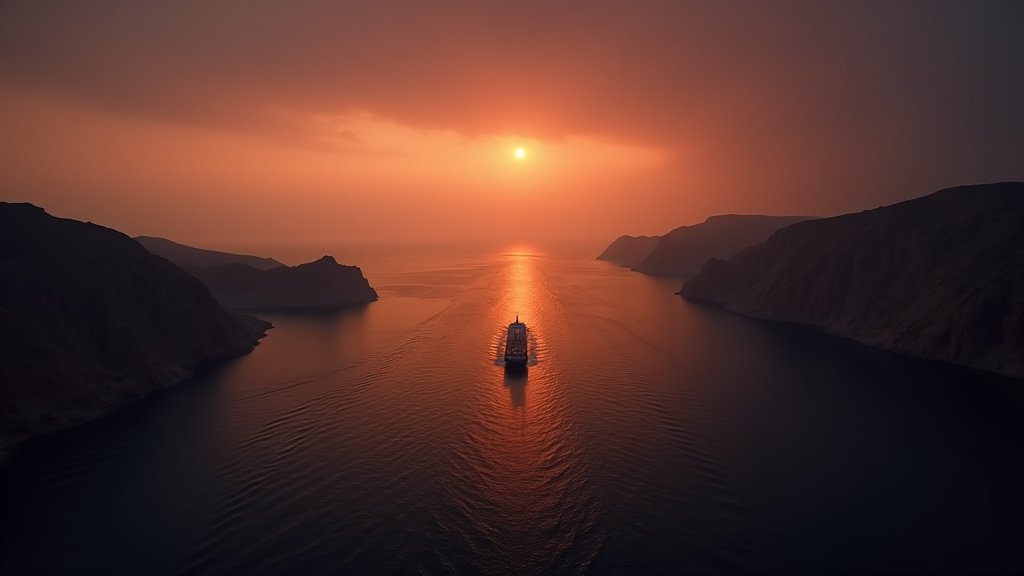
President Trump has called for international cooperation to ensure the free flow of commerce through the Strait of Hormuz, amid reports of U.S. Marines being dispatched to the vital waterway. The President’s statement underscores the strategic importance of the Persian Gulf chokepoint and signals a potential escalation in regional tensions.
Key Highlights:
- President Trump is seeking international support to reopen the Strait of Hormuz.
- U.S. Marines are reportedly being sent to the region.
- The move highlights the strategic significance of the Strait of Hormuz.
- Tensions in the Persian Gulf region may be escalating.
Navigating Geopolitical Tensions in the Strait of Hormuz
The Strait of Hormuz, a narrow waterway connecting the Persian Gulf to the open ocean, is a critical chokepoint for global energy supplies. Approximately 30% of the world’s seaborne oil trade passes through this strategic passage. Recent events, which have led to President Trump’s call for international intervention, suggest a heightened risk to maritime security in the region. The President’s emphasis on ‘other countries’ aiding in the reopening implies a desire for a multilateral approach, potentially diffusing direct confrontation while asserting the United States’ commitment to freedom of navigation.
Strategic Importance and Economic Ramifications
The economic implications of any disruption to the Strait of Hormuz are profound. A significant blockage could lead to a sharp increase in global oil prices, impacting economies worldwide. The deployment of U.S. Marines is a clear signal of intent to maintain the flow of commerce, but also raises concerns about potential military engagements. This dual approach – diplomatic calls for cooperation coupled with military posturing – reflects a complex strategy to manage regional security challenges.
Diplomatic Maneuvers and Military Readiness
President Trump’s administration has consistently prioritized maintaining stability in key global shipping lanes. His call for other nations to assist in reopening the Strait of Hormuz could be interpreted as an effort to share the burden of security and build a broader coalition. This diplomatic push, however, is being paralleled by tangible military action. The reported movement of U.S. Marines indicates a readiness to enforce maritime security through direct means if diplomatic efforts falter.
Historical Context of Hormuz Tensions
The Strait of Hormuz has long been a focal point of geopolitical tension. Throughout history, control or disruption of this waterway has been a significant factor in regional conflicts and global energy markets. Past incidents have demonstrated the vulnerability of shipping in the area and the swift global economic consequences. The current situation echoes these historical patterns, with nations asserting their interests and employing a mix of diplomatic pressure and military presence.
Entities Involved and Regional Dynamics
The geopolitical landscape surrounding the Strait of Hormuz involves numerous key entities. These include major oil-producing nations within the Persian Gulf, international shipping conglomerates, and military powers with vested interests in regional stability. The United States’ role as a guarantor of maritime security in the region is paramount. Understanding the relationships and historical interactions between these entities is crucial to comprehending the current dynamics and potential future developments.
FAQ: People Also Ask
What is the Strait of Hormuz and why is it important?
The Strait of Hormuz is a narrow strait between the Persian Gulf and the Gulf of Oman. It is one of the world’s most important oil transit points, with about 20-30% of the world’s total oil consumption passing through it annually. Its strategic location makes it vital for global energy security.
What does it mean to ‘reopen’ the Strait of Hormuz?
‘Reopening’ the Strait implies ensuring that maritime traffic, particularly oil tankers and commercial vessels, can navigate through it safely and without hindrance. This typically involves deterring threats, such as naval blockades or attacks, and maintaining freedom of navigation.
What is the role of U.S. Marines in this context?
The deployment of U.S. Marines suggests a proactive stance to ensure maritime security. They may be tasked with protecting shipping lanes, responding to potential threats, or participating in naval exercises designed to deter aggression and maintain freedom of navigation.
Why is President Trump asking other countries for help?
By calling for other countries to help, President Trump may be seeking to build an international coalition to share the responsibility and cost of securing the Strait. This approach can lend greater legitimacy to actions taken and distribute the burden of deterrence and enforcement.