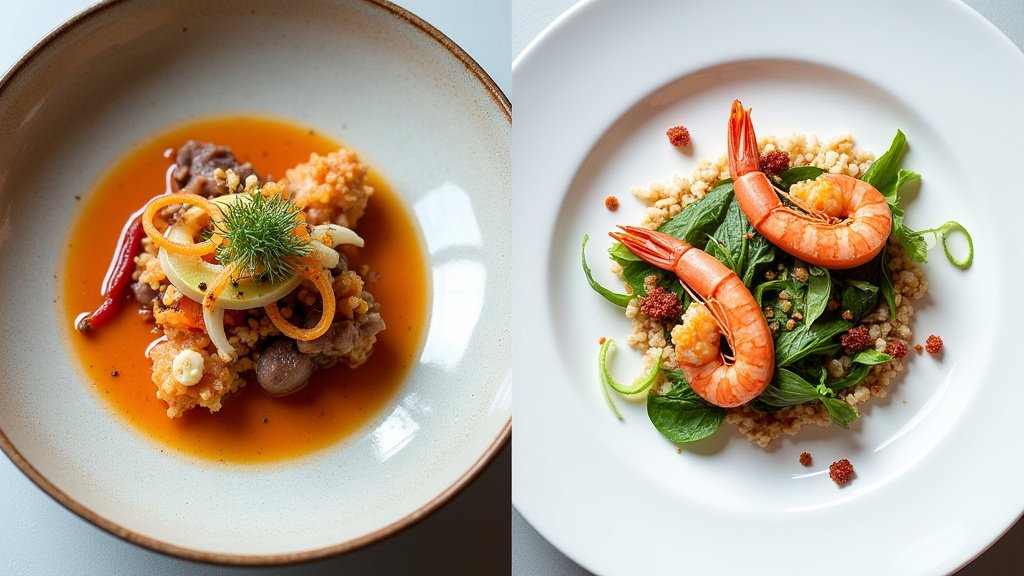
The California culinary scene has long been a powerhouse of innovation, but the 2026 Bon Appétit Best New Restaurants list confirms a shifting center of gravity. With the release of this year’s highly anticipated rankings, the magazine has identified only two Southern California establishments that successfully capture the current zeitgeist of American dining: Broken Spanish Comedor in the heart of Los Angeles and Little Mountain in the coastal enclave of Montecito. These selections represent a departure from traditional fine dining tropes, favoring instead a synthesis of rigorous technique, hyper-regional sourcing, and a distinct lack of pretension that resonates with the modern diner.
Key Highlights
- Elite Recognition: Broken Spanish Comedor (Los Angeles) and Little Mountain (Montecito) are the only Southern California establishments to crack the prestigious 2026 Bon Appétit Best New Restaurants list.
- Cultural Impact: Both restaurants signify a movement toward deeply personal, culturally rooted cuisine that challenges conventional definitions of ‘upscale’ dining.
- Regional Diversity: The selection highlights the geographic and culinary breadth of Southern California, spanning the dense, experimental urbanity of Los Angeles to the refined, ingredient-focused coast of Santa Barbara County.
The New Guard: Broken Spanish Comedor and Little Mountain Redefine SoCal Dining
The annual ritual of awaiting the Bon Appétit Best New Restaurants list often triggers debates over the direction of the national food conversation. In 2026, the inclusion of just two Southern California restaurants—Broken Spanish Comedor and Little Mountain—speaks volumes about the current culinary climate. It is not necessarily a reflection of a shortage of talent in the region, but rather an indication of the extremely high bar set by the magazine’s criteria this year. The list favors venues that act as cultural touchstones, providing not just sustenance, but a narrative-driven experience that reflects the complexity of the current American experience.
Redefining Mexican Cuisine: The Rise of Broken Spanish Comedor
Located in Los Angeles, Broken Spanish Comedor has been lauded for its bold refusal to adhere to the standard expectations of contemporary Mexican cuisine. The restaurant’s philosophy is rooted in a deconstructionist approach that simultaneously honors heritage while pushing the boundaries of what is possible in a modern kitchen. By integrating locally sourced, seasonal California produce with traditional heirloom corn and specialized chiles, the kitchen creates a dialogue between two worlds that is both surprising and deeply familiar.
Observers have pointed to the restaurant’s commitment to the ‘comedor’ spirit—an invitation to sit, share, and experience a community-focused meal. The technical execution, particularly in their masa program and complex, slow-simmered sauces, has earned them accolades for precision that rivals the city’s most storied fine-dining establishments. For Los Angeles, a city that often prides itself on the accessibility of its taco culture, Broken Spanish Comedor serves as an elevated bridge, proving that regional Mexican cuisine can be both profoundly intricate and deeply soulful.
Coastal Elegance: The Montecito Magic of Little Mountain
Moving north to Montecito, the atmosphere shifts significantly. Little Mountain has captured the attention of critics through a focus on what can best be described as ‘coastal rustic’ elegance. Montecito is a demanding market; the clientele expects a level of service and quality that is world-class, yet the town’s vibe is relentlessly relaxed. Little Mountain navigates this tension by focusing on a hyper-local supply chain, sourcing nearly 90% of its produce from farms within a 30-mile radius.
This extreme commitment to locality manifests in a menu that changes not just by season, but often by the day. Critics have praised the kitchen’s ability to highlight the natural flavor profiles of the region’s bounty—from Santa Barbara spot prawns to coastal-foraged greens—without over-manipulating the ingredients. It is an exercise in restraint. In an era where culinary complexity is often equated with ingredient density, Little Mountain has found success by doing less, but doing it with impeccable timing and a keen sense of balance.
Analyzing the 2026 Culinary Landscape
The inclusion of these two specific restaurants on the Bon Appétit list provides a broader look at the trajectory of the food industry in the latter half of the 2020s. We are witnessing a clear divergence: on one hand, the continued urban exploration of heritage and fusion (Broken Spanish Comedor), and on the other, the doubling down on hyper-localism and environmental stewardship (Little Mountain). Both models are responses to a public that is increasingly educated, demanding transparency, and seeking an authentic connection to the land and labor that produces their meal.
This shift is not merely aesthetic; it is economic. Restaurants that can successfully manage these sourcing chains and provide high-value narratives are proving to be more resilient in an inflationary market. By investing in the supply chain and fostering deep connections with local producers, both Broken Spanish Comedor and Little Mountain have secured a level of public loyalty that is hard to manufacture. They are not just dining rooms; they are hubs of their respective communities.
The Future of SoCal Gastronomy
As we look beyond the 2026 list, the influence of these two establishments will likely be felt across the region. We can expect to see a wave of imitators, but the secret to their success is not a specific technique or a signature dish—it is the integrity of their vision. For other aspiring restaurateurs in Southern California, the lesson is clear: Bon Appétit is not rewarding flash-in-the-pan gimmicks. They are looking for endurance, consistency, and a sincere commitment to the identity of the place in which the restaurant resides. Whether in the concrete density of Los Angeles or the rolling hills of Montecito, the most celebrated kitchens of the future are those that stay rooted while reaching for innovation.
FAQ: People Also Ask
Q: How many restaurants from Southern California were included in the list?
A: Only two Southern California establishments were featured on the 2026 Bon Appétit Best New Restaurants list: Broken Spanish Comedor in Los Angeles and Little Mountain in Montecito.
Q: What makes Broken Spanish Comedor stand out?
A: Broken Spanish Comedor is recognized for its innovative, deconstructionist approach to traditional Mexican cuisine, blending high-level technique with heritage ingredients and a communal dining philosophy.
Q: Why was Little Mountain recognized by Bon Appétit?
A: Little Mountain in Montecito earned its spot through a rigorous commitment to hyper-local sourcing and a minimalist, ingredient-focused style that highlights the unique agricultural products of the Santa Barbara coastal region.
Q: Does being named to this list guarantee future success?
A: While inclusion on the Bon Appétit list is a major industry milestone that significantly increases visibility and demand, long-term success still depends on the restaurant’s ability to maintain its standards, manage operational costs, and evolve with the changing needs of its community.