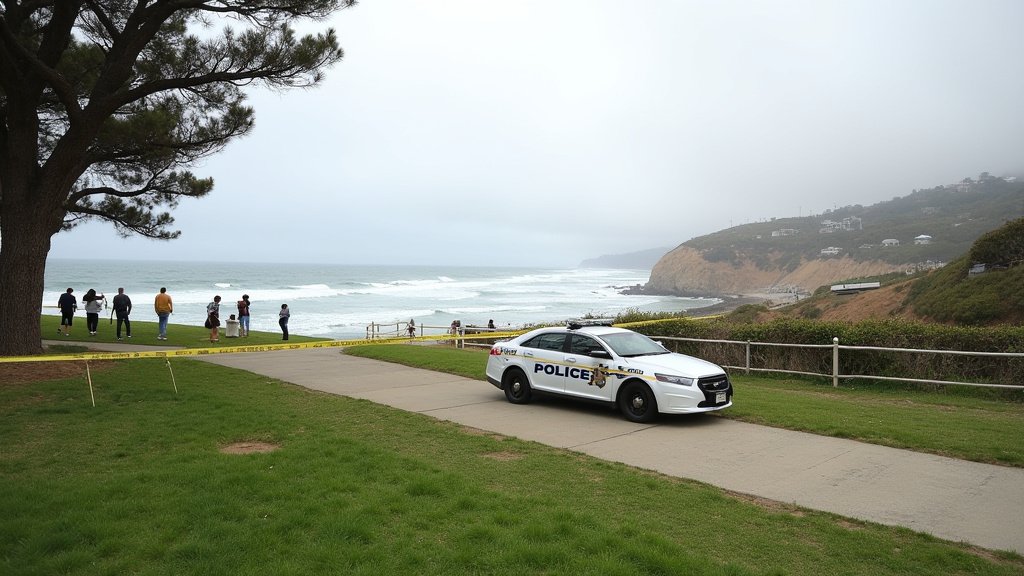
A Santa Monica police officer fatally shot a suspect who reportedly charged at officers while armed with a knife in the prominent Palisades Park near Ocean Avenue. The incident, which occurred during a standard patrol intervention, has prompted a major investigation by the Santa Monica Police Department (SMPD) and regional law enforcement partners, highlighting the ongoing challenges of managing public safety in high-density, tourist-heavy urban spaces.
Key Highlights
- The Incident: An officer-involved shooting (OIS) resulted in the fatality of a suspect who confronted police with a knife.
- Location: The confrontation took place in Palisades Park, a historic and highly frequented public space along the Pacific Ocean in Santa Monica.
- Investigation Protocols: The SMPD, typically in conjunction with the Los Angeles County District Attorney’s Office or specialized investigative units, has launched a formal review of the shooting to determine adherence to use-of-force policies.
- Public Impact: The area around Ocean Avenue was temporarily closed to allow for forensic processing, impacting local foot traffic and tourism operations.
The Anatomy of the Palisades Park Shooting
The events at Palisades Park unfold at the intersection of a popular recreational area and a critical law enforcement jurisdiction. According to preliminary reports, the Santa Monica Police Department was responding to reports of a disturbance when the confrontation escalated. The suspect, identified as armed with a bladed weapon, reportedly charged at the officers, leaving the responding personnel with minimal time to de-escalate. The decision to use lethal force is a threshold event for any department, necessitating a rigorous post-incident investigation.
Investigating the Use of Force
In California, officer-involved shootings are subjected to intense scrutiny. Under updated state laws and internal SMPD policy, the investigation is expected to be comprehensive. This involves the collection of body-worn camera (BWC) footage, witness statements, and forensic ballistic analysis. The goal is to establish a clear timeline of the suspect’s approach, the distance between the parties, and whether the officer’s response was proportional to the immediate threat posed by the suspect. Such investigations are standard but critical, as they dictate not only the legal outcome for the officer but also potential policy shifts regarding how the department handles similar mental health or crisis-driven interactions in the future.
Palisades Park: A High-Profile Venue
Palisades Park is more than just a public space; it is an iconic Santa Monica landmark stretching 26 acres along the bluffs. Because of its proximity to the Santa Monica Pier and the bustling Ocean Avenue district, the park draws thousands of daily visitors, ranging from tourists to local residents. The occurrence of a violent crime and subsequent police shooting in such a visible, high-traffic environment naturally amplifies public concern. Local business owners and residents often demand a balance between accessible public space and enhanced security presence, especially as urban centers across the region grapple with homelessness and mental health crises.
Crisis Intervention and Urban Safety
The incident in Palisades Park serves as a sobering reminder of the volatility inherent in policing modern urban environments. The suspect’s reported behavior—charging at officers—suggests a level of escalation that defies standard verbal de-escalation tactics.
The Challenge of Rapid Escalation
Law enforcement experts often distinguish between ‘disturbed’ individuals and ‘imminent threats.’ When a suspect produces a lethal weapon and initiates a charge, the window for non-lethal intervention, such as Tasers or pepper spray, shrinks to seconds. This reality often puts police in a position where they must prioritize their survival and the safety of the public over the neutral capture of the individual. This case will likely reignite the debate over whether officers, even with extensive Crisis Intervention Training (CIT), are adequately equipped to navigate such abrupt, life-or-death scenarios without the use of lethal force.
Beyond the Tape: The Human Toll
While investigations focus on legalities and policy, the community must also contend with the broader implications of such events. The loss of life in a public park is a traumatic event for witnesses and the community at large. As Santa Monica continues to evolve, the challenge remains: how to maintain a welcoming atmosphere in world-class parks while ensuring the safety of those who work and play there. The incident highlights the persistent need for better integration between law enforcement, mental health services, and social outreach programs to identify and assist individuals in crisis before they reach a breaking point that necessitates police intervention.
FAQ: People Also Ask
1. What happens immediately following an officer-involved shooting in Santa Monica?
The Santa Monica Police Department immediately isolates the scene to preserve evidence. Investigators from the department, often alongside the Los Angeles County District Attorney’s Office and the Department of Justice, begin documenting the scene, interviewing witnesses, and reviewing footage from body-worn cameras to build an accurate account of the incident.
2. Are officers required to use non-lethal methods first?
State law and department policies emphasize the use of de-escalation; however, these policies generally contain exceptions for ‘imminent threats.’ If a suspect brandishes a lethal weapon and poses an immediate threat of death or serious bodily injury to the officer or others, the use of lethal force is legally permitted under California law.
3. How is the public kept informed during such investigations?
Agencies typically release updates through official press briefings and news releases. While the investigation is ongoing, transparency is often managed carefully to avoid compromising the legal integrity of the case, though footage may eventually be released in accordance with public record laws.
4. Is Palisades Park considered a high-crime area?
Palisades Park is a popular tourist destination. While it is generally well-patrolled, the area’s high traffic and public nature make it a frequent site for encounters involving law enforcement, ranging from minor ordinance violations to serious criminal disturbances, reflecting broader urban public safety challenges.