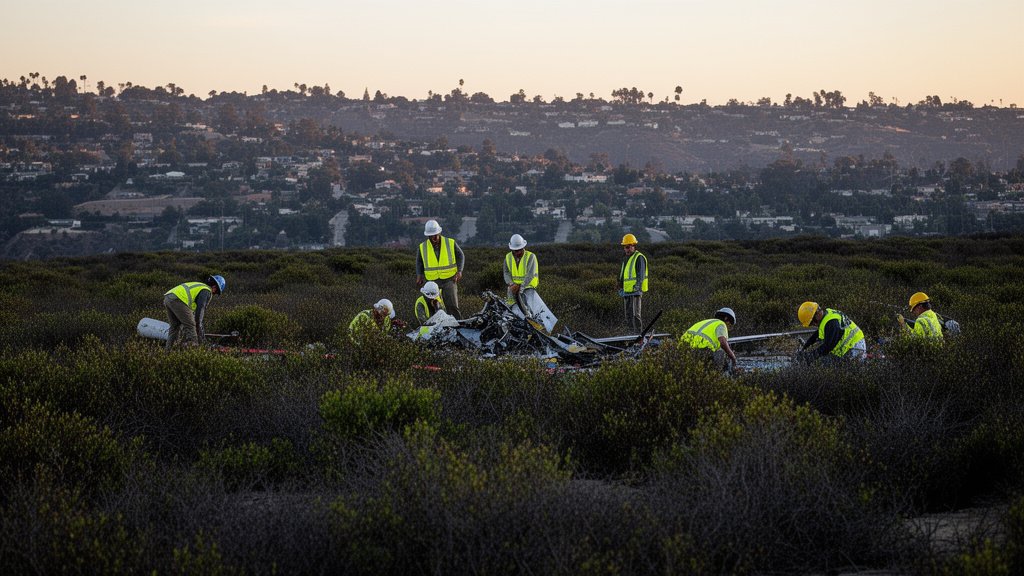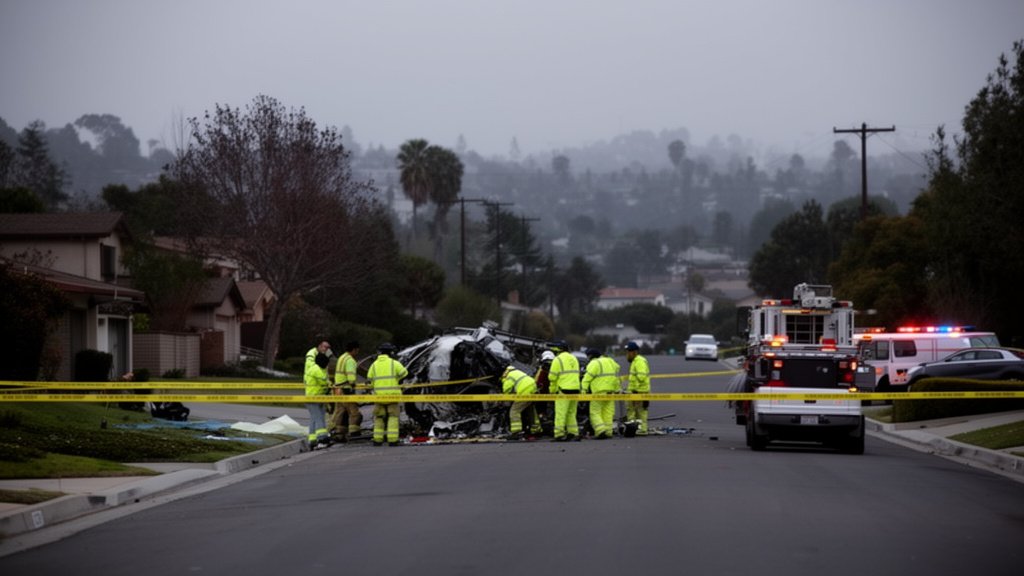
The intersection of criminal conduct and vehicular tragedy reached a somber milestone this week as legal proceedings began against 36-year-old Bailee Lynn Rios. Following a high-impact collision in the Chatsworth district of Los Angeles, prosecutors have filed two counts of second-degree murder against the driver. The incident, which entangled an SUV, a municipal public transit bus, and a news helicopter performing aerial coverage of the event, has sent shockwaves through the community, forcing a rigorous re-examination of traffic safety, aerial news gathering protocols, and the legal definition of ‘implied malice’ in California criminal law.
Key Highlights
- Formal Charges: Bailee Lynn Rios, 36, has been charged with two counts of second-degree murder regarding the Chatsworth collision.
- Complex Collision: The incident involved a three-way interaction between Rios’s SUV, an LA city bus, and a news helicopter that was monitoring the situation.
- Legal Threshold: The filing of murder charges rather than vehicular manslaughter indicates prosecutors believe the conduct met the high threshold of ‘implied malice’—a conscious disregard for human life.
- Ongoing Investigation: Authorities are currently analyzing crash telemetry and witness statements to establish the exact sequence of events that led to the helicopter’s involvement.
The Legal Threshold: Why Second-Degree Murder?
The decision by the Los Angeles District Attorney’s Office to pursue second-degree murder charges—rather than the more common vehicular manslaughter charges—represents a significant escalation in the judicial response to this incident. In California, securing a conviction for second-degree murder in a traffic-related death requires the prosecution to prove ‘implied malice.’ This is a specific legal doctrine often referred to as the ‘Watson Murder Rule,’ typically applied in DUI cases, but increasingly utilized in instances of extreme reckless driving.
Proving Implied Malice
To establish implied malice, the prosecution must demonstrate that the defendant acted with a conscious disregard for human life. This goes beyond simple negligence or poor judgment. Evidence presented in court will likely focus on the speed, the presence of traffic at the time of the incident, and whether there were prior warnings or behaviors that should have alerted the driver to the extreme peril they were creating. The fact that the collision involved public transit—a high-occupancy vehicle—and a news aircraft effectively raises the stakes, as the potential for mass casualties was significantly elevated.
The Impact of California Penal Code
Under the relevant sections of the California Penal Code, this case will be scrutinized based on the ‘natural and probable consequences’ doctrine. The defense will likely argue that while the collision was tragic, the cascading effects—specifically the helicopter’s situation—were not directly foreseeable consequences of the initial impact. Conversely, the prosecution will argue that by initiating such a volatile event in a busy urban corridor, the defendant set in motion a sequence of destruction that they are legally responsible for, regardless of the individual complexities of each vehicle involved.
The Anatomy of the Chatsworth Incident
The events in Chatsworth underscore the extreme vulnerability of urban infrastructure to single-point failures. An urban bus route, by its nature, concentrates individuals in a single, large target. When an SUV is introduced into that equation with high velocity, the physics of the collision are often catastrophic.
The Role of Aerial Media
This incident is unique due to the involvement of the news helicopter. News stations in the Los Angeles basin operate with a ‘real-time’ mandate, often rushing aircraft to the scene of significant accidents or police pursuits. This case brings a secondary, albeit crucial, question to the forefront: the safety risks associated with news gathering. When helicopters hover to capture live footage, they must maintain altitude and distance, but they are also navigating complex air traffic control environments complicated by smoke, debris, or erratic driver behavior below. The investigation will undoubtedly probe whether the helicopter was operating within FAA and station safety guidelines, and whether the ground incident directly compromised the aircraft’s stability.
Secondary Perspectives and Systemic Impacts
1. Evolution of Vehicular Liability
Historically, ‘road rage’ or reckless driving resulted in manslaughter charges. However, as urban density increases, courts are shifting toward stricter accountability. This case may set a precedent for how future prosecutors handle ‘chain reaction’ accidents, where the driver’s initial action causes a cascade of secondary injuries across multiple distinct environments (the bus, the road, and the air).
2. Public Transit Infrastructure Security
This incident highlights a major vulnerability in public transit: the lack of physical shielding. As LA Metro continues to expand its reach, this case will likely reignite debates about protected lanes, physical barriers, and the need for enhanced collision avoidance technology on heavy transit vehicles.
3. The Future of Drone vs. Manned Aviation for News
With the proliferation of high-resolution drones, many media organizations are shifting away from manned helicopters for breaking news. This tragedy may accelerate that transition. Drones, while they pose their own risks, do not involve the lives of pilots and camera operators in the same way, potentially changing the liability landscape for news organizations covering chaotic accident scenes.
FAQ: People Also Ask
What does ‘second-degree murder’ mean in this context?
In California, second-degree murder means that the accused acted with ‘implied malice.’ It does not require premeditation (like first-degree murder) but requires showing that the person knowingly performed an act that was dangerous to life and did so with a conscious disregard for the danger to others.
Was the news helicopter involved in the actual collision?
While the helicopter was covering the incident, investigators are currently determining if the crash was a direct result of the SUV-bus collision (e.g., debris, wind shear, or emergency maneuvering) or a separate event that occurred during the coverage of the crash site.
What are the potential penalties for these charges?
If convicted of two counts of second-degree murder, the defendant faces a significant prison sentence, potentially ranging from 15 years to life for each count, depending on sentencing enhancements, priors, and judicial discretion regarding consecutive vs. concurrent sentencing.
When is the next court appearance?
Specific dates are determined by the Los Angeles Superior Court docket; however, the initial arraignment is the standard next step to formally enter a plea and begin the discovery process between the DA and the defense counsel.
Is the bus driver being investigated?
As is standard in multi-vehicle collisions involving public transit, the bus driver will be part of the investigation. However, based on current reporting, the charges are focused solely on the driver of the SUV, Bailee Lynn Rios, suggesting that the initial investigation points to her actions as the primary cause.