West Hollywood’s nightlife landscape underwent a dramatic shift this week with the grand opening of Mic Drop Karaoke, a sprawling, 6,000-square-foot entertainment complex located on the iconic Santa Monica Boulevard. Eschewing the dim, cramped aesthetic often associated with traditional karaoke bars, Mic Drop has opted for a bold, ambitious design philosophy: treating amateur performance with the reverence of a stadium concert. With its blend of Art Deco inspiration, 1970s maximalism, and high-fidelity production technology, the venue aims to redefine how Angelenos interact with performance-based social entertainment. For the city’s nightlife aficionados, this isn’t just a new spot to grab a drink; it is an architectural and experiential statement on the future of interactive socializing.
Key Highlights
- Concert-Grade Production: The venue’s centerpiece “Main Stage” features professional-grade audio systems, dramatic concert lighting, and haze machines, creating an authentic performer’s experience for patrons.
- Scalable Hospitality: The space accommodates diverse group sizes with 13 private karaoke suites, ranging from intimate 6-person rooms to massive 45-person party spaces, all featuring lavish velvet soundproofing.
- Global Catalog: The venue boasts a digital catalog of over 60,000 songs, catering to a diverse, international audience expected in the heart of West Hollywood.
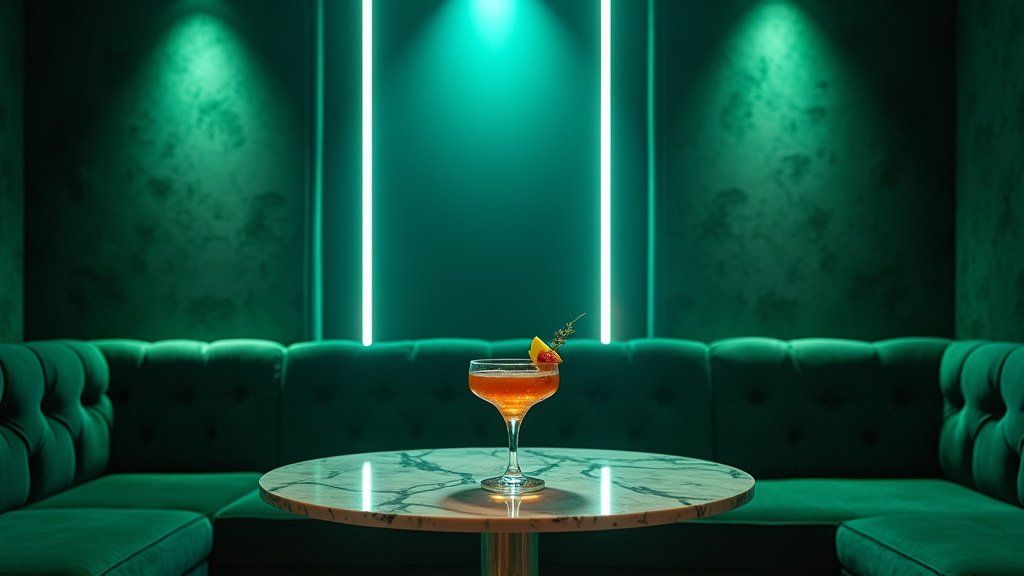
- Curated Mixology: The menu features music-inspired cocktails such as the “Fiona Appletini” and “Mezcalifornication,” alongside group-friendly novelties like the crystal “Tower of Power” beverage service.
The Architecture of Social Performance
At the heart of the Mic Drop experience is a fundamental reimagining of what a karaoke venue should be. For decades, the industry standard for karaoke in Los Angeles—often centered in Koreatown—was defined by a sense of intimacy and, occasionally, concealment. These spaces were about the private group bubble. Mic Drop, however, is leaning into the performative. The venue’s primary “Main Stage” is designed to break the barrier between the audience and the artist. By installing professional-grade acoustic treatment, automated spotlights that track the performer, and a stage layout reminiscent of mid-sized concert halls, the operators have effectively gamified the act of being the center of attention.
This shift reflects a broader trend in hospitality: the “experiential economy.” Patrons are no longer satisfied with passive consumption; they want to be active participants in the environment. The design team behind the project clearly understood that in a city obsessed with Hollywood dreams, giving the average customer a chance to stand under a professional spotlight—even for three minutes—is a high-value commodity. The use of lavish velvet wall treatments throughout the private suites serves a dual purpose: it provides the necessary soundproofing to ensure that a power ballad in one room doesn’t bleed into the disco-pop set in the next, while also evoking the luxurious, tactile feel of a high-end recording studio. This is not just a place to sing; it is a place to document the experience, with the interior design meticulously planned to be as photogenic as it is functional.
The Intersection of Tech and Atmosphere
The technological backbone of the venue is arguably its most impressive, if invisible, asset. While the glitz of the “Tower of Power” crystal drink towers might capture the eye, the true success of a 6,000-square-foot facility rests on its ability to manage sound and flow. The integration of 60,000+ tracks requires a robust digital backbone that allows for seamless queue management, preventing the typical “dead air” periods that often kill the momentum of a night out.
Moreover, the atmospheric lighting controls in the private suites are an exercise in precision. By allowing users to control their own environment—adjusting haze, strobe speed, and color temperature—Mic Drop has essentially provided customers with their own touring production crew. In an era where short-form video content dominates, the ability to curate the exact visual “vibe” of one’s performance is not just a novelty; it is a marketing imperative for the business. The venue acts as a content creation studio disguised as a lounge, where the lighting design is intentionally calibrated to look good on camera without the need for additional filters.
Why West Hollywood Was the Strategic Choice
West Hollywood remains one of the most competitive hospitality markets in the world. For a venue of this scale to succeed, it must balance the high expectations of a local clientele with the transient allure of tourist traffic. Santa Monica Boulevard serves as the perfect artery for this strategy. The area has long been a cultural touchpoint for nightlife, but it has historically lacked a venue that bridges the gap between a high-energy dance club and a private lounge.
Mic Drop fills a specific gap in the WeHo ecosystem. Many local bars are strictly for dancing or strictly for socializing. By adding a layer of active entertainment—singing—the venue extends the dwell time of its guests significantly. When customers have a suite for two to three hours, they are more likely to engage with the “upscale shared plates and pizzas” and the cocktail program. This shift from high-churn bar service to long-form group reservation models is a defensive move against rising real estate costs. When you have 6,000 square feet to maintain, you need a business model that encourages patrons to settle in, order another round, and maximize the utility of their time in the space.
The Future of Group Entertainment
Mic Drop represents a maturation of the karaoke bar. We are moving away from the era of the sticky-floor, questionable-microphone experience. The modern karaoke venue is looking to emulate the high-end “experience” centers that have exploded in popularity across major metropolitan cities. These venues are less about the singing itself and more about the curation of a night out.
By incorporating elements like Mezcal-forward mixology and Instagram-ready presentation, Mic Drop is signaling that nightlife in 2026 is about aesthetic synergy. Every element—from the Art Deco-inspired architecture to the specific name of the cocktails—is part of a cohesive brand story. For the hospitality sector, this serves as a case study: provide the stage, provide the tools, and let the customer become the main attraction. As the industry continues to evolve, we can expect to see more venues adopting this “concert-venue” DNA, transforming the simple act of social gathering into a full-scale production.
FAQ: People Also Ask
Q: How much does it cost to book a room at Mic Drop?
A: While pricing can fluctuate based on demand and group size, private room rentals start at $60 per hour, offering various tiers depending on room capacity and day of the week.
Q: Can I perform on the main stage if I don’t book a private room?
A: Yes, the venue encourages guests to sing on the main stage for free, provided there is availability. It operates on a first-come, first-served basis for walk-ins, though bottle service tables can be reserved for guaranteed seating near the action.
Q: What is the capacity for the private rooms?
A: The 13 private suites are designed for flexibility, with small rooms suitable for 6 people up to larger suites capable of accommodating 45 guests, making it ideal for corporate events or large birthday parties.
Q: Does the venue offer food?
A: Yes, Mic Drop features a dedicated menu including shared plates and pizzas, designed to facilitate easy dining in a group setting without the need for formal seating arrangements.